



















About Hortense Mendel

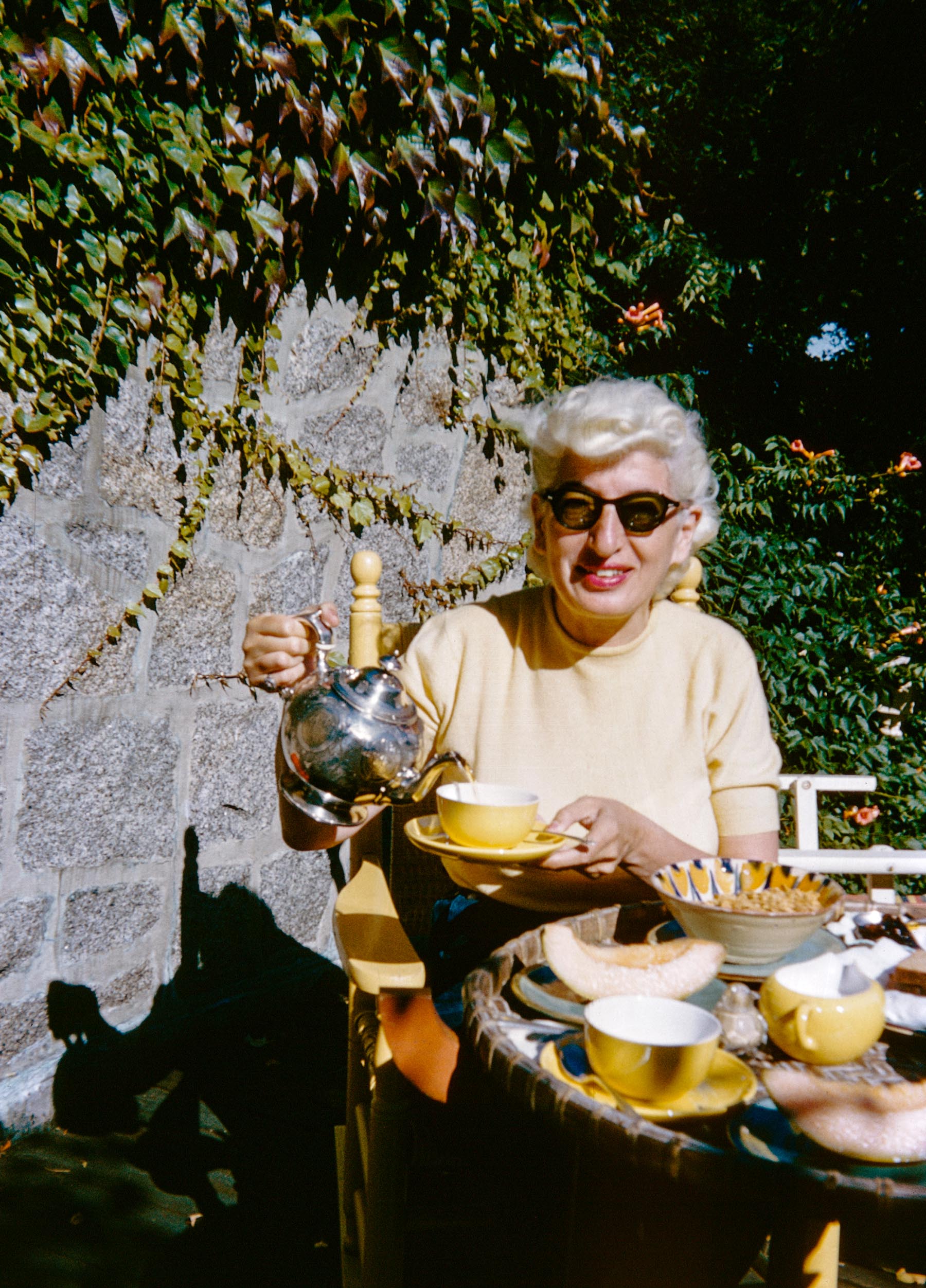
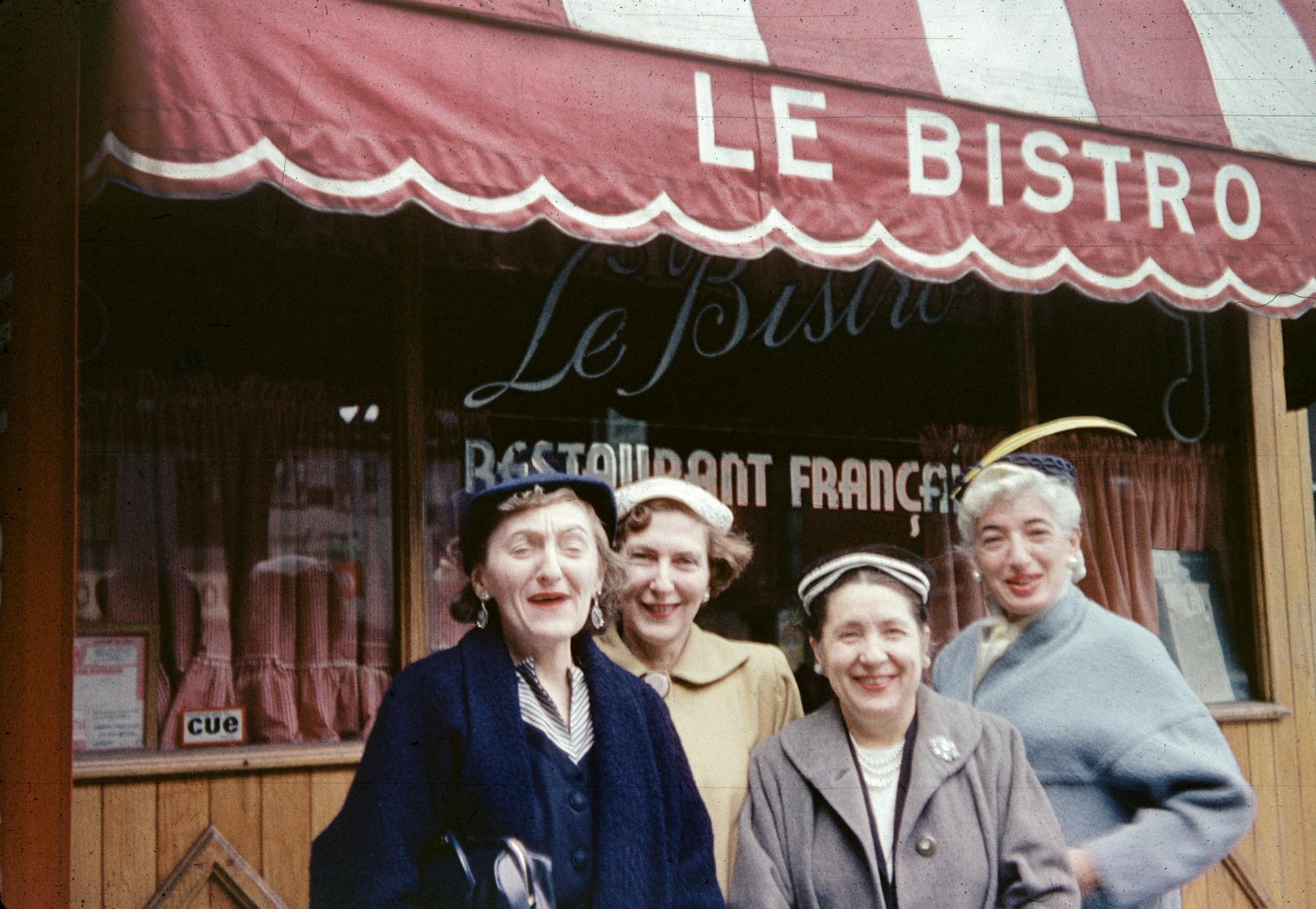
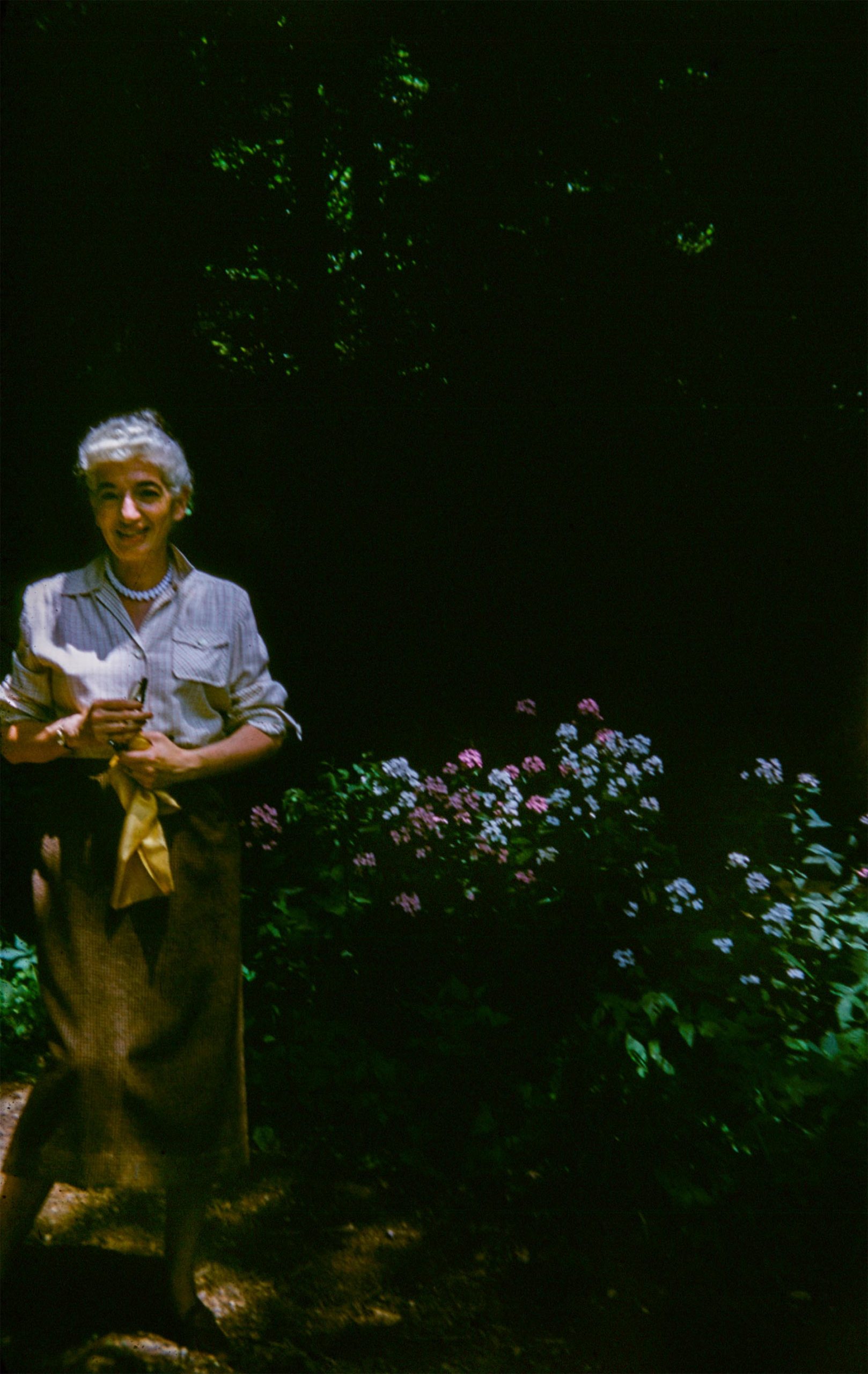
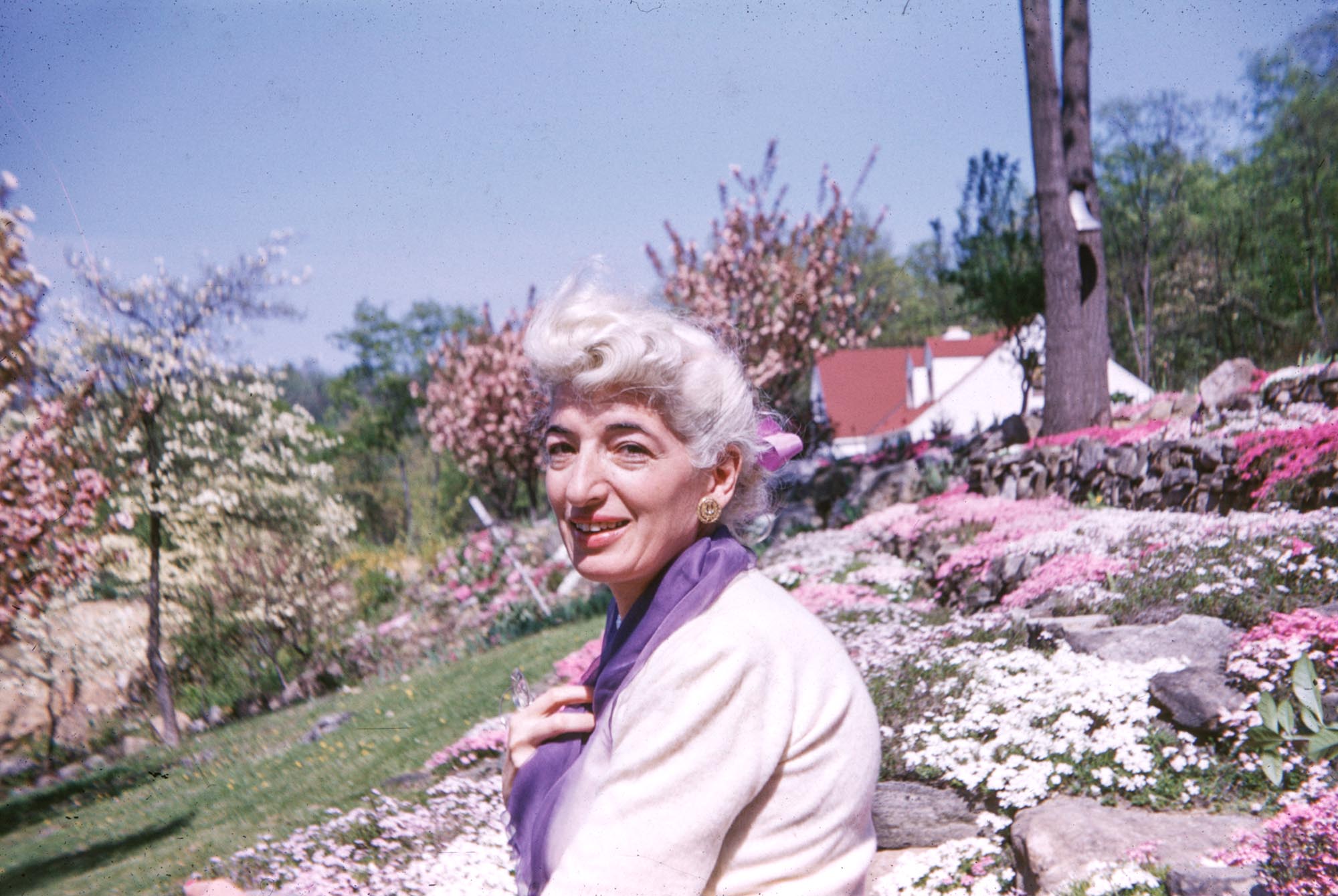
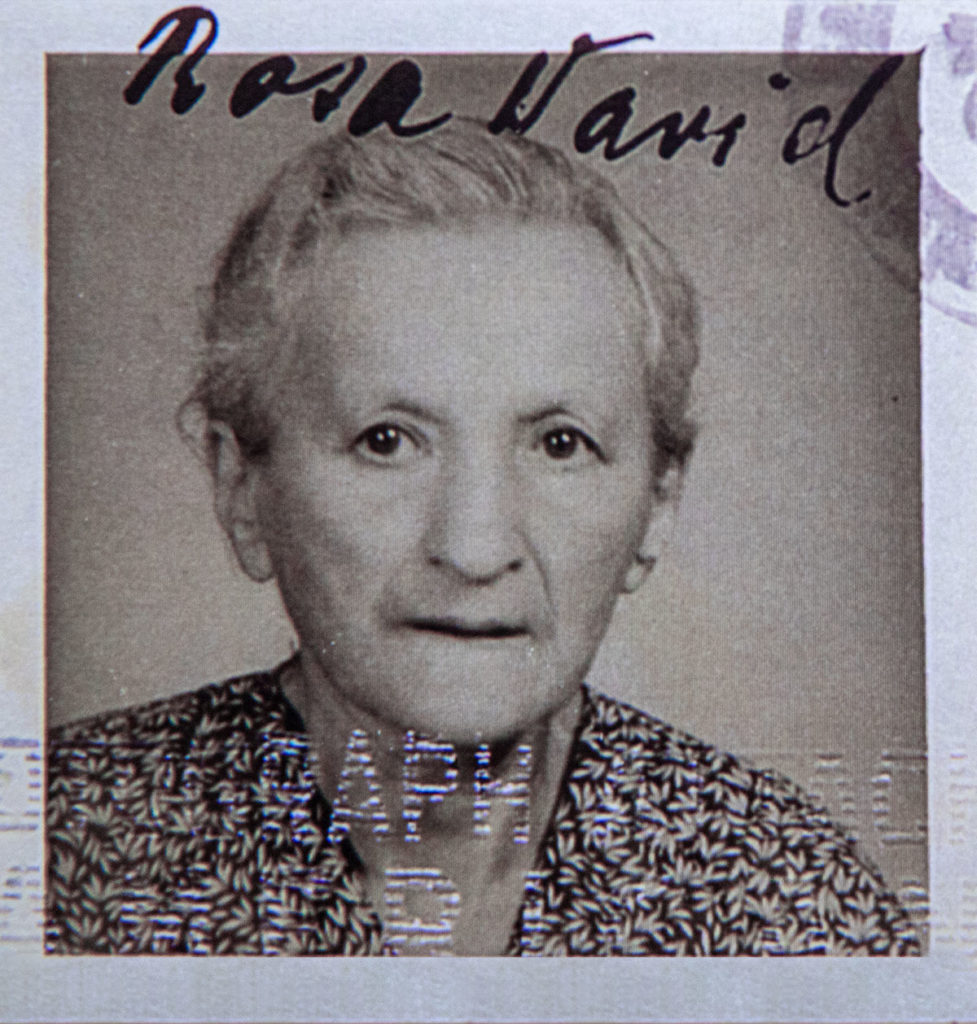
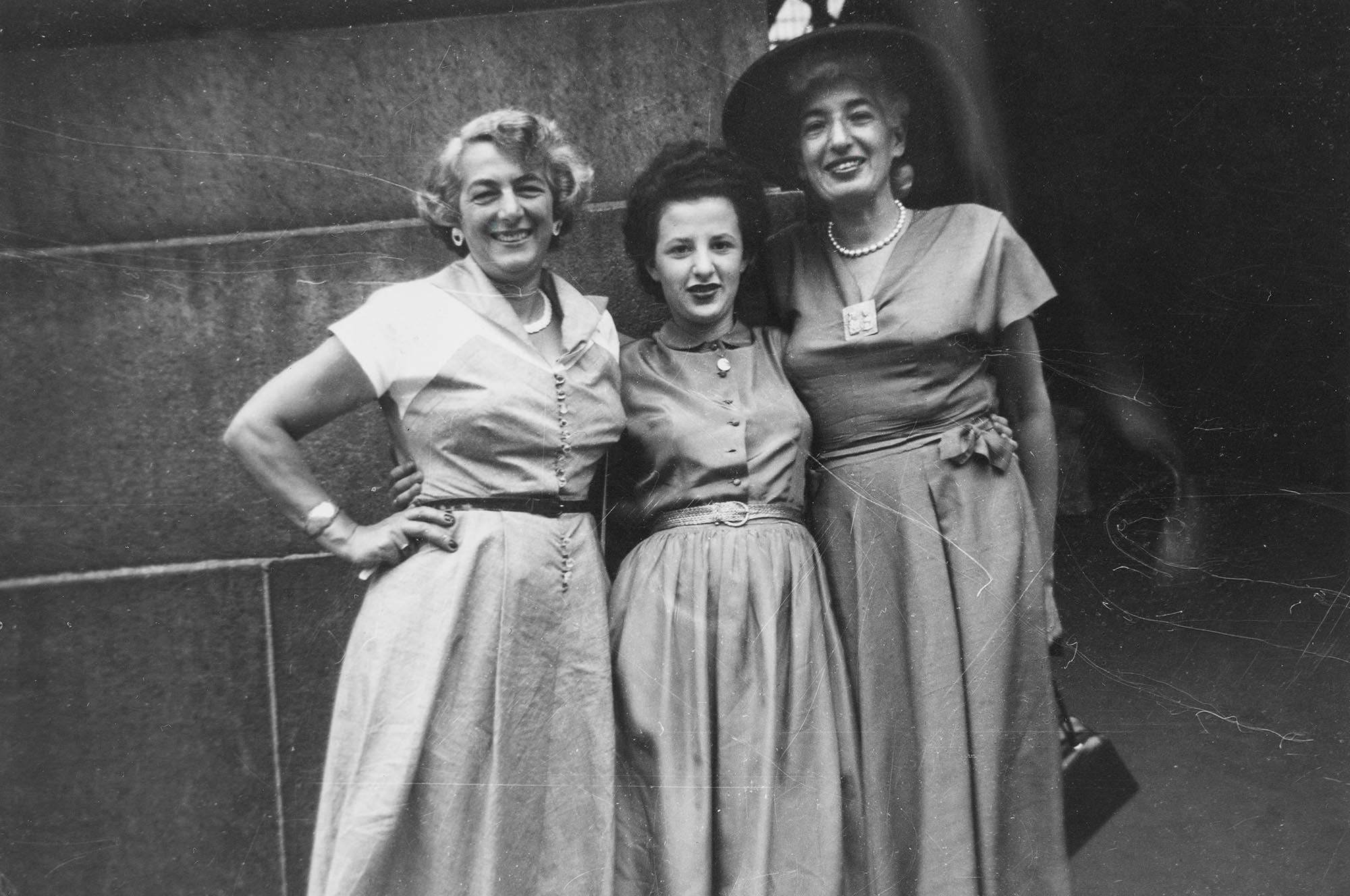
Hortense Mendel, 1900–1960, publicity director at the Composing Room, married Ismar David on June 3, 1953.
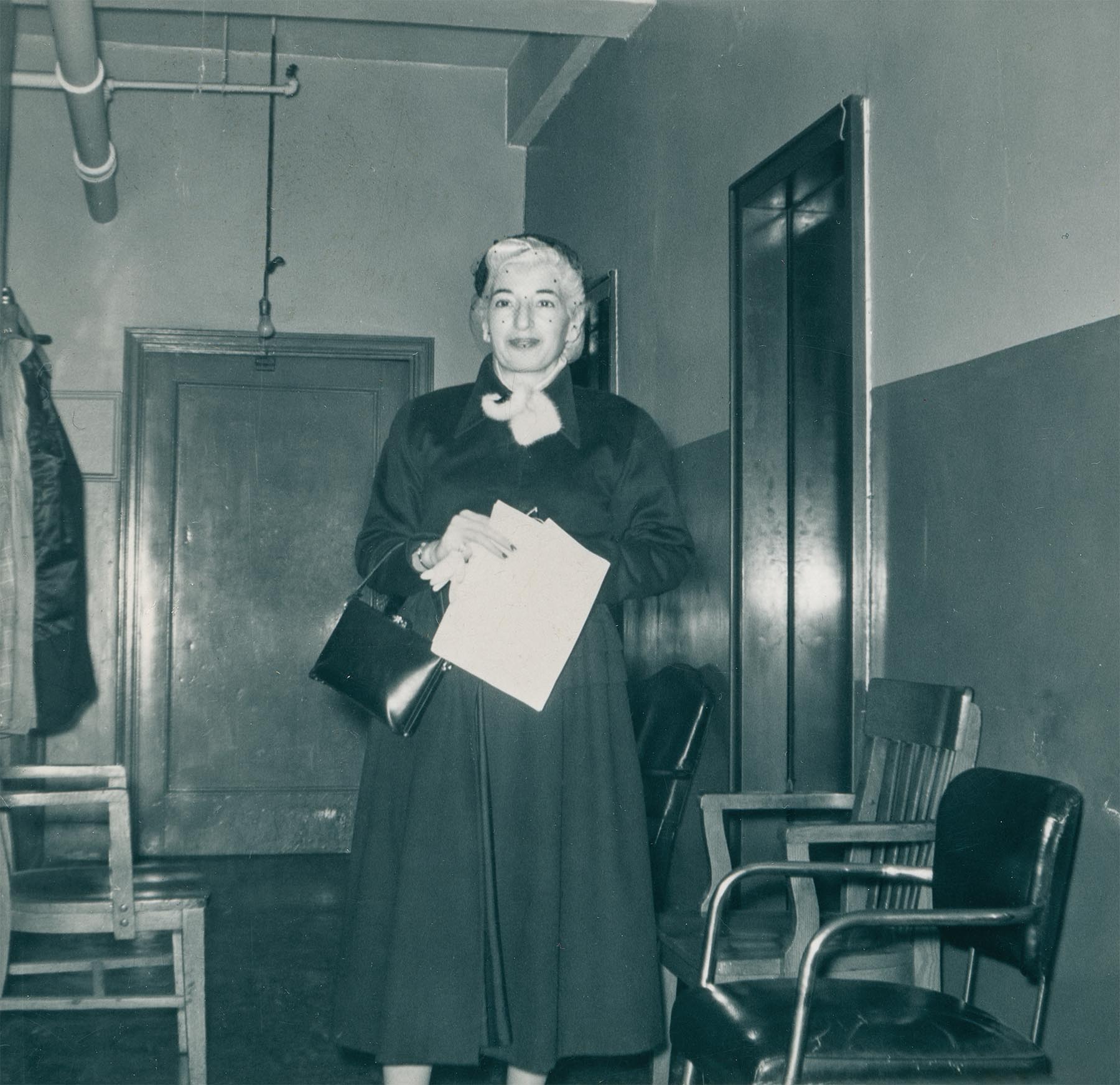
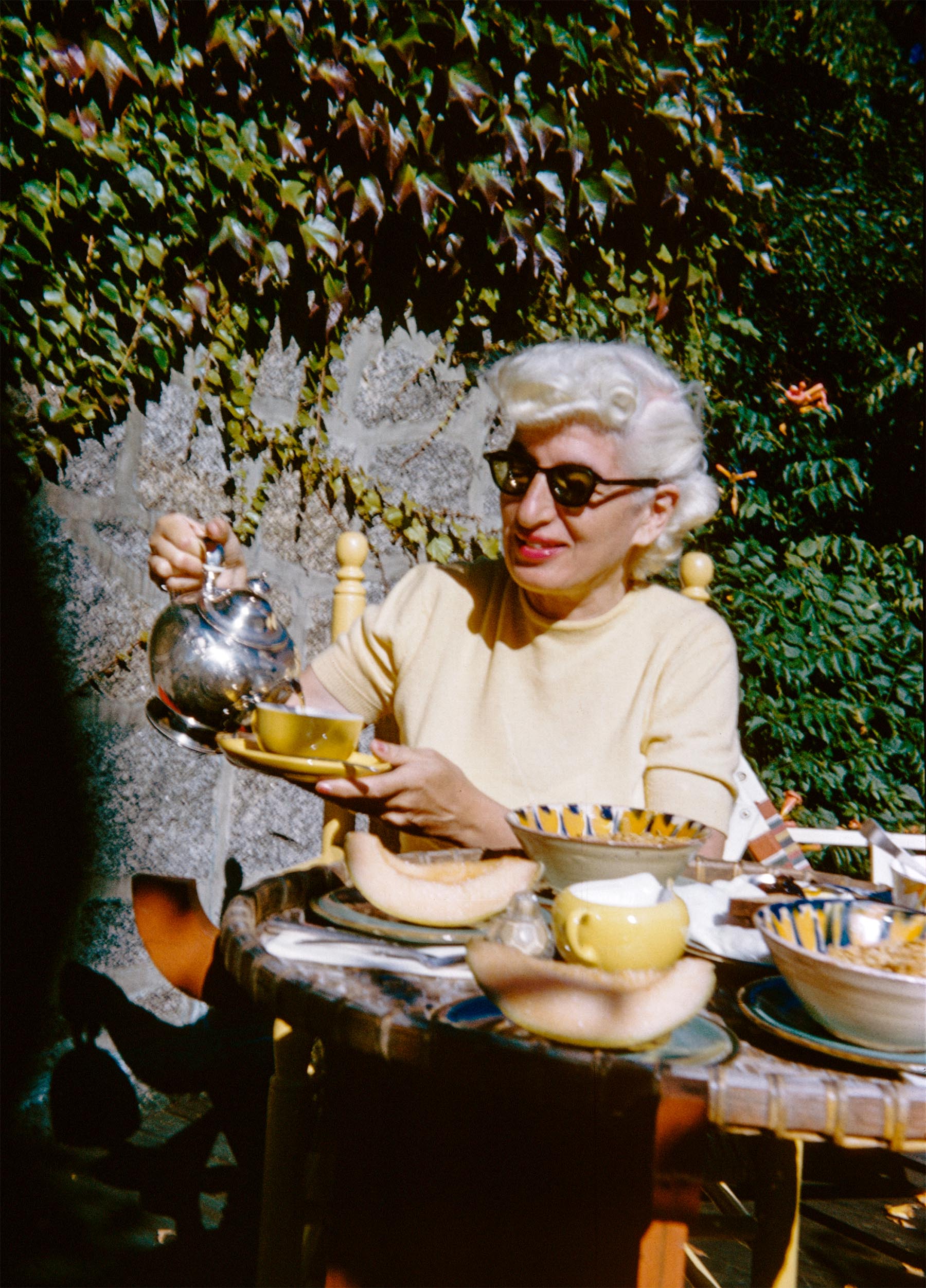
Hortense Mendel, undated
An undated snapshot of Hortense Mendel.

Hortense Mendel was born in New York City on November 19, 1900, the daughter of a German-born father and a New York-born mother. When she applied for her first passport in 1925 for a trip to Europe with her widowed mother, the clerk described her as 5 feet 9½ inches tall with a low, wide forehead, dark brown eyes, a long nose, large-full lips, a medium chin and a sallow complexion. Her face was oval and she wore eyeglasses. In those days, she was a secretary- stenographer.

She had already worked for various advertising agencies and art magazines before The Composing Room’s magazine, PM, noted her brief vacation in December 1935, after Amalgamated Agency, where she had been production manager, went out of business. She joined The Composing Room in 1936, where she served as typographic consultant and handled publicity. She was associate editor, with Robert Leslie, of PM, later A-D. From 1944, she co-curated the exhibitions that the firm began sponsoring in December of the year she began working there and is credited with identifying and promoting new talents, among them, Paul Rand. Her predecessor Percy Seitlin wrote:

It is easy to say that Bob Leslie has been lucky with his associates, and, as a matter of fact, it’s correct — he has. Miss Mendel has played an important part in conceiving and organizing some of the best shows A-D Gallery ever had, which is another way of saying some of the best shows in the art-in-industry field ever hung in this country. Since her name first appeared in connection with the gallery, there have been exhibits of Lester Beall, Paul Rand, Hugo Steiner-Prag, Alex Steinweiss, Ladislav Sutnar, Ben Rose and Will Burtin. Also a collection of Clarence Hornung’s early Americana, the work of the Book Jacket Designers’ Guild and a show on lettering and calligraphy.1Seitlin, Percy, The Story of the A-D Gallery, AIGA Journal, May 1949, vol. 2, #1.

She co-founded an informal group of women in the graphic arts. (Book designers Freda Browne and Alma Reese Cardi, art director Sybil Hastings, Sally Michaels and Alice Roberts were members.2Robert Leslie Papers, New York Public Library Manuscripts Division. She presumably first met Ismar David in 1947, when Helen Rossi arranged for him to meet Leslie. She would write to David from Havana in 1949, “I did not dream that I would miss you so much nor that I would feel almost guilty in my enjoyment of any beauty because you too were not beside me.”3Mendel, Hortense to Ismar David, undated letter.

At Mendel’s sudden, premature death from a heart attack, she had been married to David for six and a half years. Friends and colleagues remembered her vivacity, enthusiasm, warmth and hard work. As a 24-year-old, she had entered handwriting contest in the New York Daily News, won $10 and received this assessment from the graphologist: “This is the hand of a ‘go-getter’ and nothing short of a tie-up on the subway can keep Hortense away from her objective. She is snappy, lively, insistent and determined.”4New York Daily News, November 13, 1924, p. 14. He was spot on.
Hortense Mendel’s Hebrew Primer
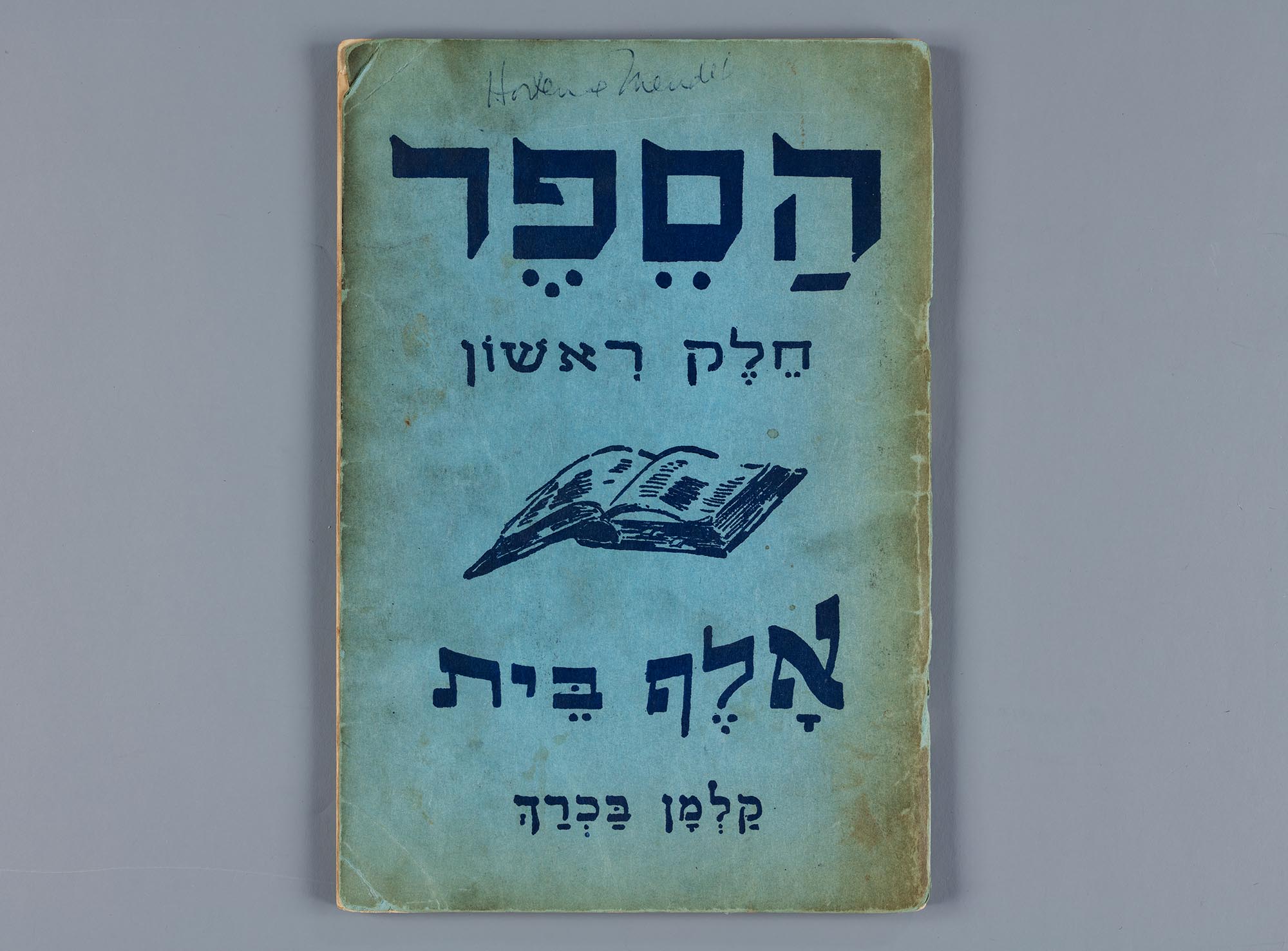
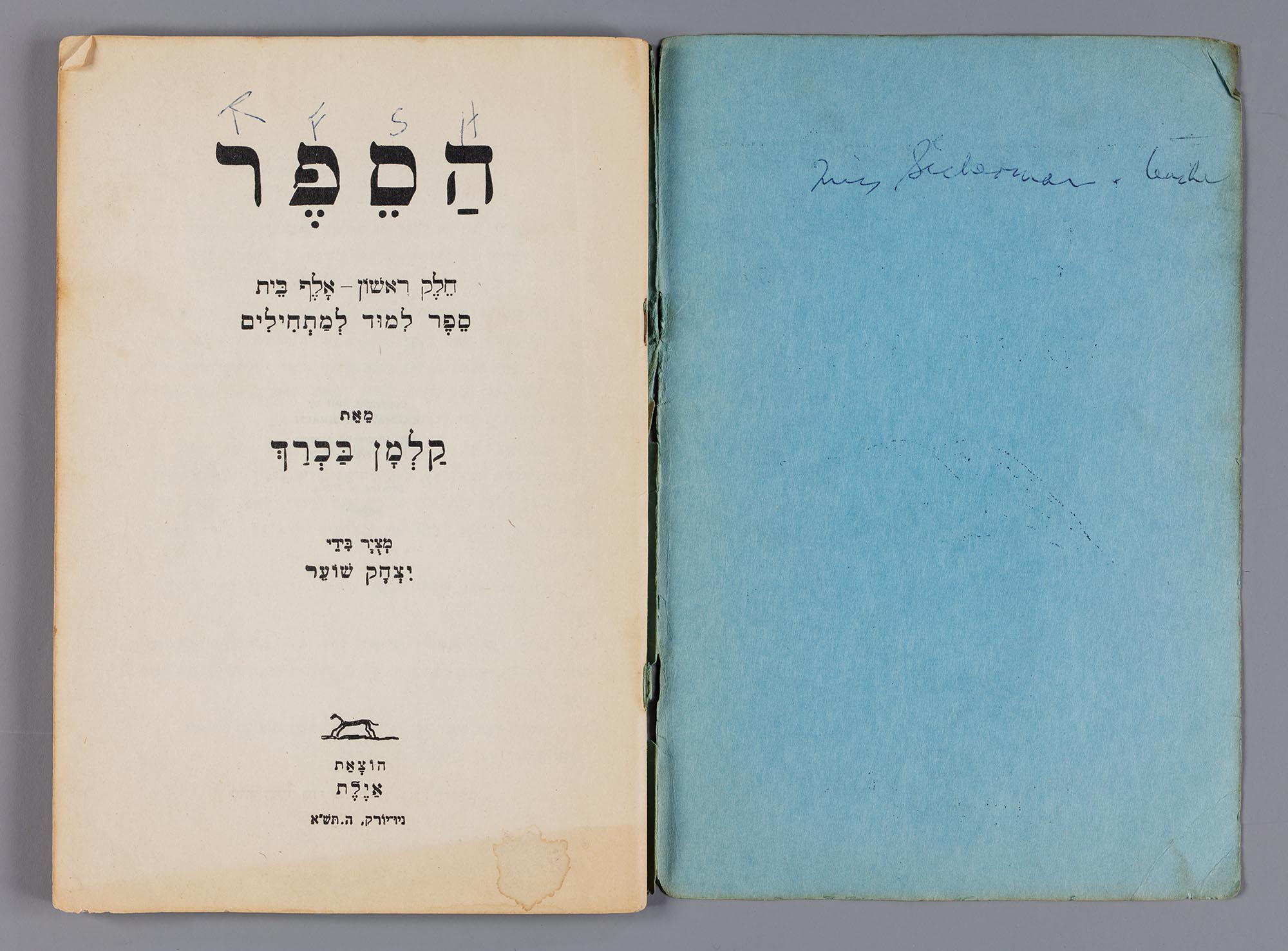
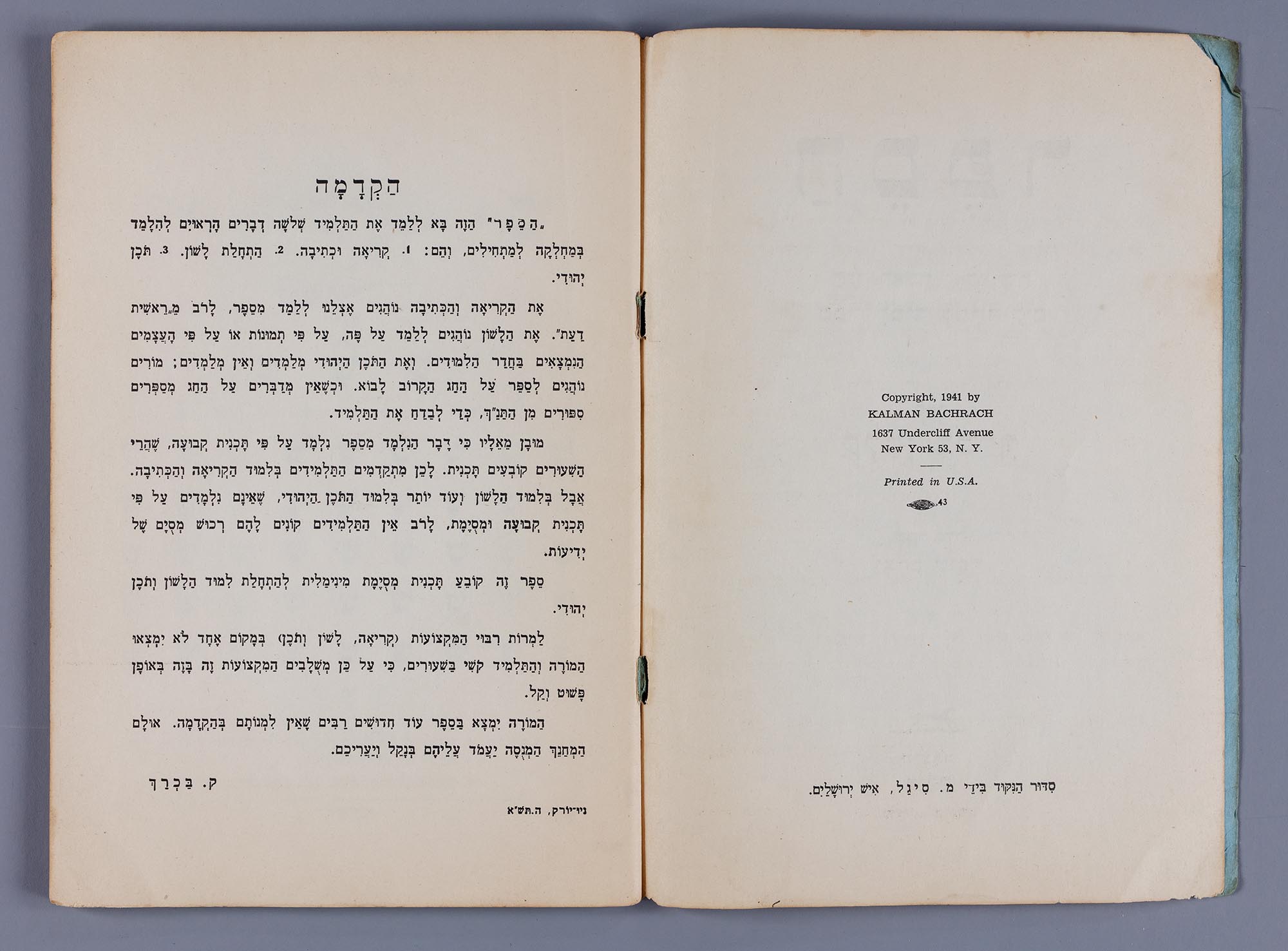
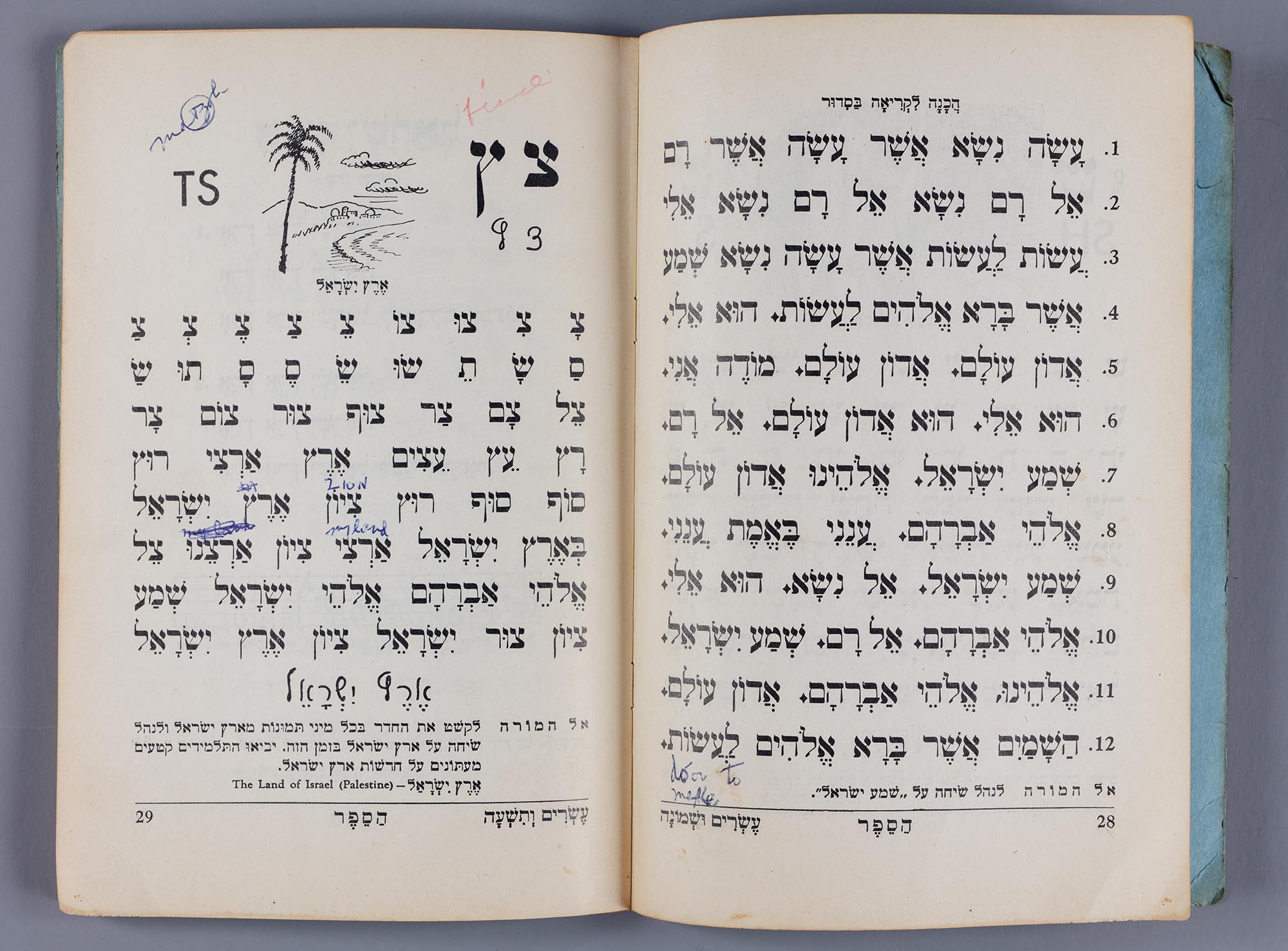
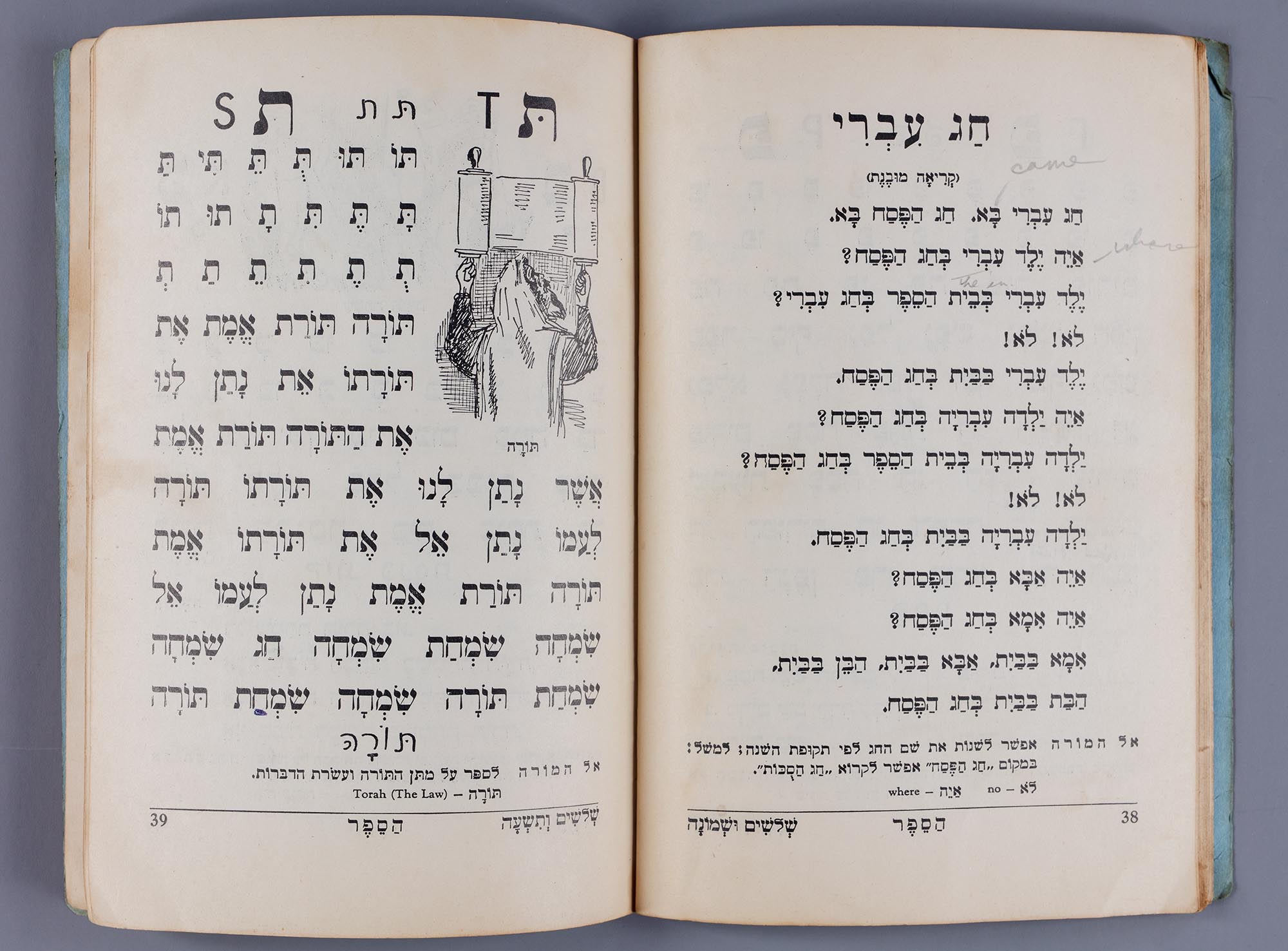
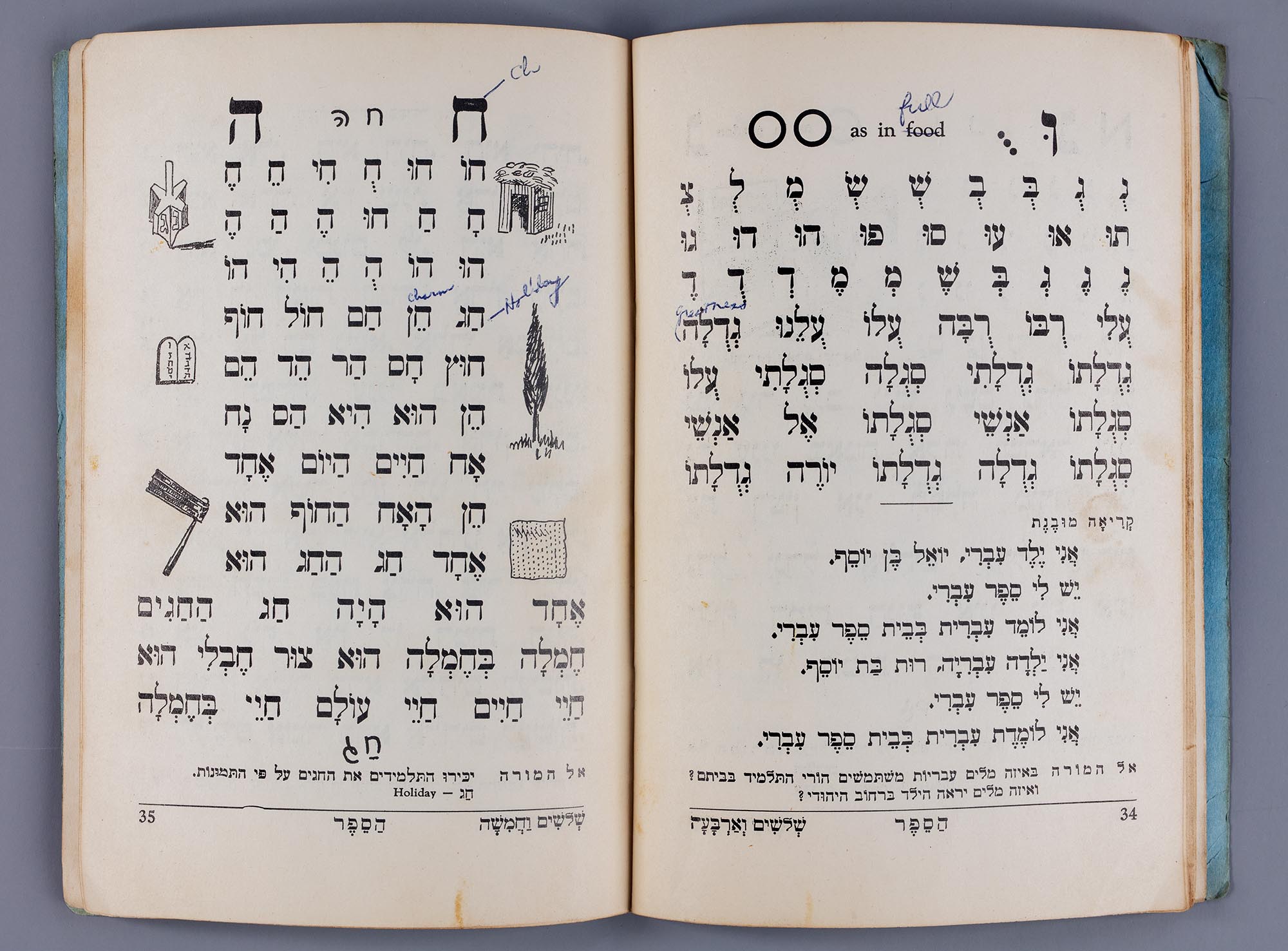
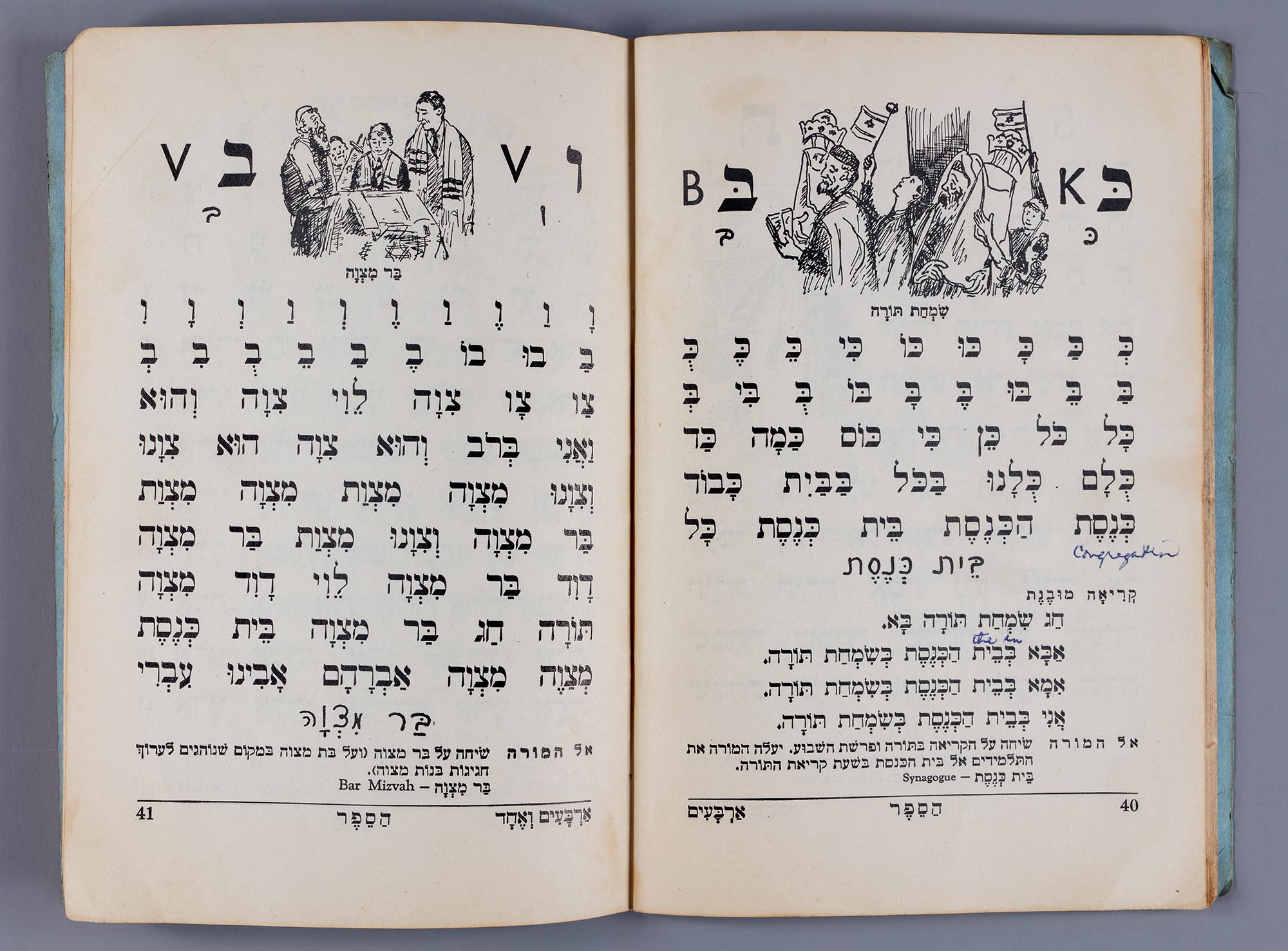
A few pages from a beginning Hebrew book, part one, the alef-bet, by Kalman Bachrach, published in New York in 1941.
Posted in M

About Hans Orlowski

Hans Otto Orlowski, 1894–1967, graphic artist, teacher at Städtische Kunstgewerbe- und Handwerkerschule Berlin-Charlottenburg.

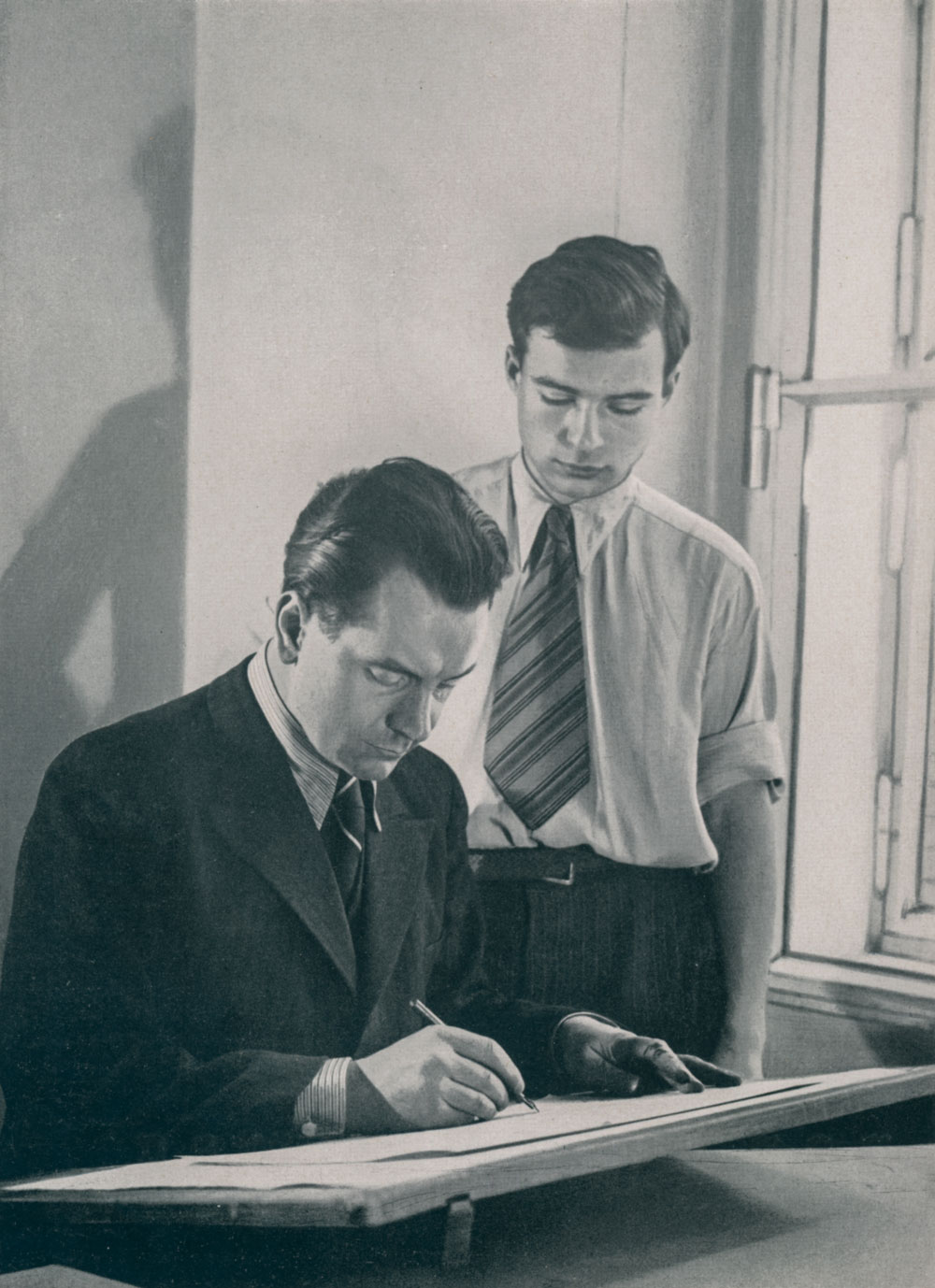
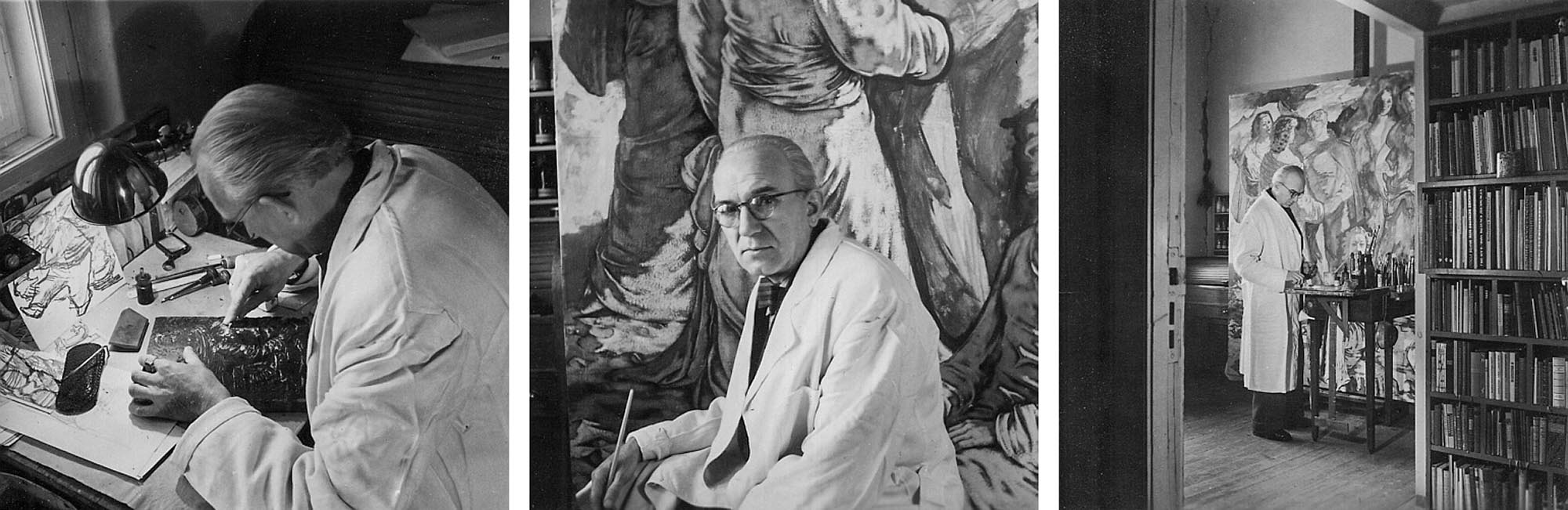
Hans Otto Orlowski
From a series of portraits of Hans Orlowski, January 26, 1946.

Fritz Eschen, photographer, Deutsche Fotothek

Hans Orlowski was the son of a master tailor, who moved his family from Insterburg, in East Prussia to nearby Königsburg, then to Potsdam, then finally to the Charlottenburg neighborhood in Berlin. In 1911, Orlowski began studies at the Städtische Kunstgewerbe- und Handwerkerschule Berlin-Charlottenburg, but World War I intervened. He was wounded in Serbia early on and thereafter worked as a draftsman in the War Ministry. Returning to his studies in Charlottenburg at the end of the war, he began teaching there in 1921 and was named professor in 1931. The school building, as well as Orlowski’s workshop, apartment and much of his work, was bombed out during the Second World War. After 1945 Orlowski taught at the Hochschule für Bildende Künste and was director of the department of applied arts. Concerning his own work, he was strict and self-critical,1os, Mit der Kraft der Phantasie, Preußische Allgemeine but he remained prodigiously creative—he is said to have worked in the last hours before his death2Osman, Silke, “…wenn Schönheit Verstnd bekommt, Das Ostpreußenblat. Hamburg, February 25, 1989, p. 7.” —painting in oil, tempera and mixed media, while, of course, continuing to produce wood cuts. He illustrated over 120 books, later favoring classics like, Dostoevsky’s Grand Inquisitor (1953), Schiller’s Kassandra (1959) and Orpheus and Eurydice (1961) and The Psalms (1961).

On August 3, 1962, David wrote to publisher Wolfgang Tiessen seeking to purchase Orlowski’s Psalter and asking about the 68-year-old artist. An exchange of letters followed, with Tiessen going so far as to contact Orlowski on David’s behalf. On August 16th, Tiessen wrote:

Heute kam auch ein Brief von Herrn Prof. Orlowski, der gerade in Urlaub am Luganer See ist, und zwar bis Anfang Oktober, (Adress: Carnago bei Lugano, Schweiz; Pension Deserto).

Er schreibt: “…Meines ehemaligen Schülers Ismar David erinnere ich mich noch sehr deutlich als einen sehr sympathischen und begabten Menschen. Es wird mich immer freuen, Nachricht von ihm zu erhalten.“3Letter from Wolfgang Tiessen to Ismar David, August 16, 1962. Ismar David papers, box 1, folder 5, Cary Graphic Arts Collection, RIT.

Today a letter from Prof. Orlowski, who is just now vacationing on Lake Lugano until the beginning of October, arrived. (Address: Carnago at Lugano, Switzerland, Pension Deserto).

He writes: “I still remember my former student Ismar David very distinctly as a very congenial and gifted person. I would be delighted to hear from him any time.”

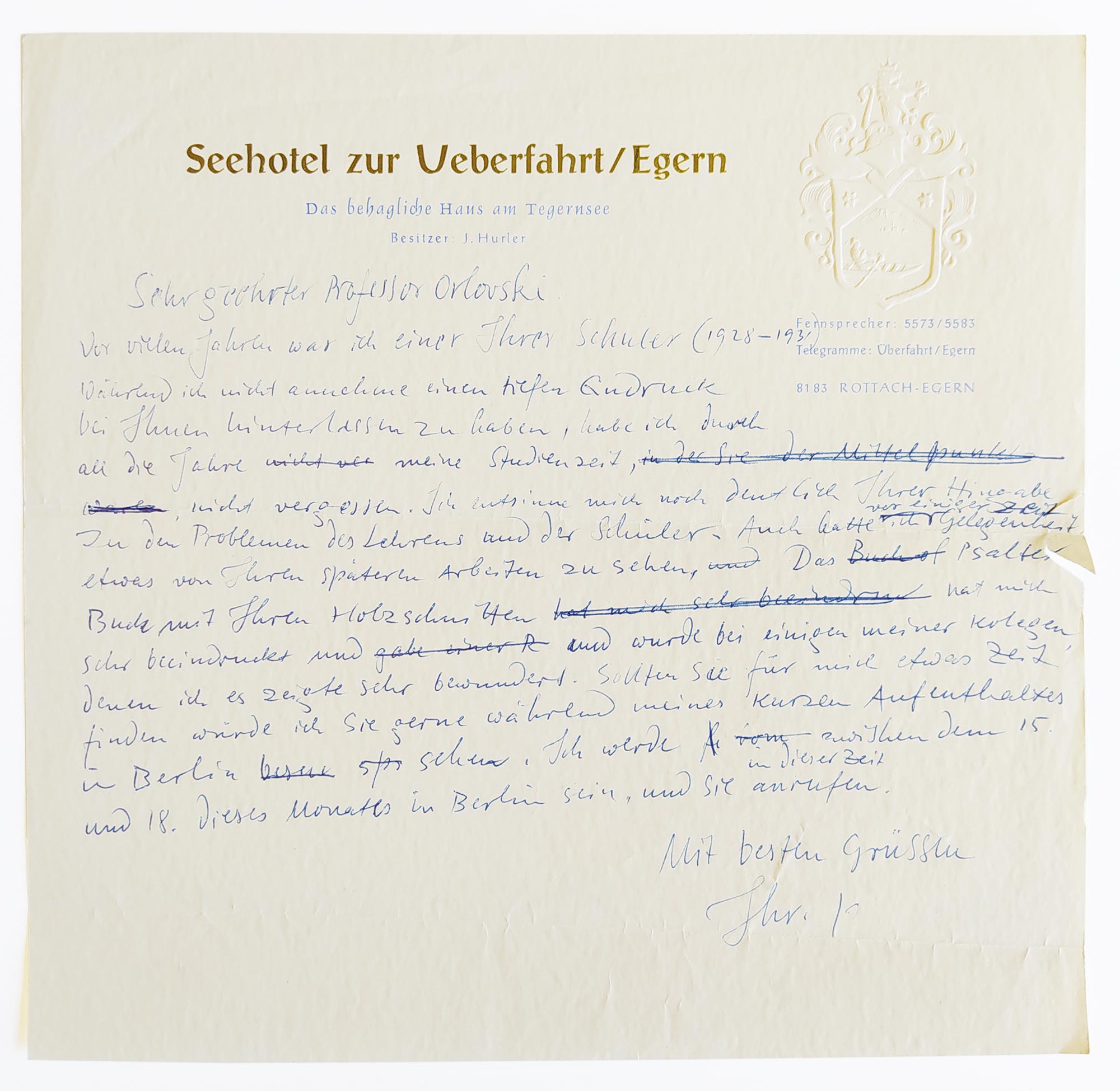
David travelled in Europe in the summer of 1963. In an undated draft, written on stationery from the Seehotel zur Ueberfahrt/Egern, an impressive hotel on the shore of the Tegernsee, David recalls the devotion that Orlowski demonstrated towards his students:

Sehr geehrter Professor Orlovski [sic]

Vor vielen Jahren war ich einer Ihrer Schüler (1928-1931)
Während ich nicht annehme einen tiefen Eindruck bei Ihnen hinterlassen zu haben, habe ich durch all die Jahre nicht ver meiner Studienzeit, in der Sie der Mittelpunk waren nicht vergessen. Ich entsinne mich noch deutlich Ihrer Hingabe zu den Problemen des Lehrens und der Schüler. Auch hatte ich vor einiger Zeit Gelegenheit etwas von Ihren späteren Arbeiten zu sehen, und Das Buch of Psalter Buch mit Ihren Holzschnitten hat mich sehr beeindruc hat mich sehr beeindruckt und gabe einer R und wurde bei einigen meiner Kollegen denen ich es zeigte sehr bewundert. Sollten Sie für mich etwas Zeit finden würde ich Sie gerne während meines kurzen Aufenthaltes in Berlin besuc sp sehen. Ich werde f vom zwischen dem 15. und 18. dieses Monates in Berlin sein und Sie anrufen.

Mit besten Grüssen
Ihr. I

Dear Professor Orlowski

Many years ago, I was one of your students (1928-1931)
While I don’t imagine I made a deep impression on you, I have not forgotten, through the years, the period of my studies. I can still remember clearly your dedication to the problems of teaching and of the students. Also, I had the opportunity some time ago to see your later work. The Book of Psalms with your woodcuts impressed me very much and some of my colleagues, to whom I showed it, admired it very much. If you could find some time for me, I would very much like to see you during my short stay in Berlin. I’ll be in Berlin between the 15th and 18th of this month and will call you.

Best regards
Your I

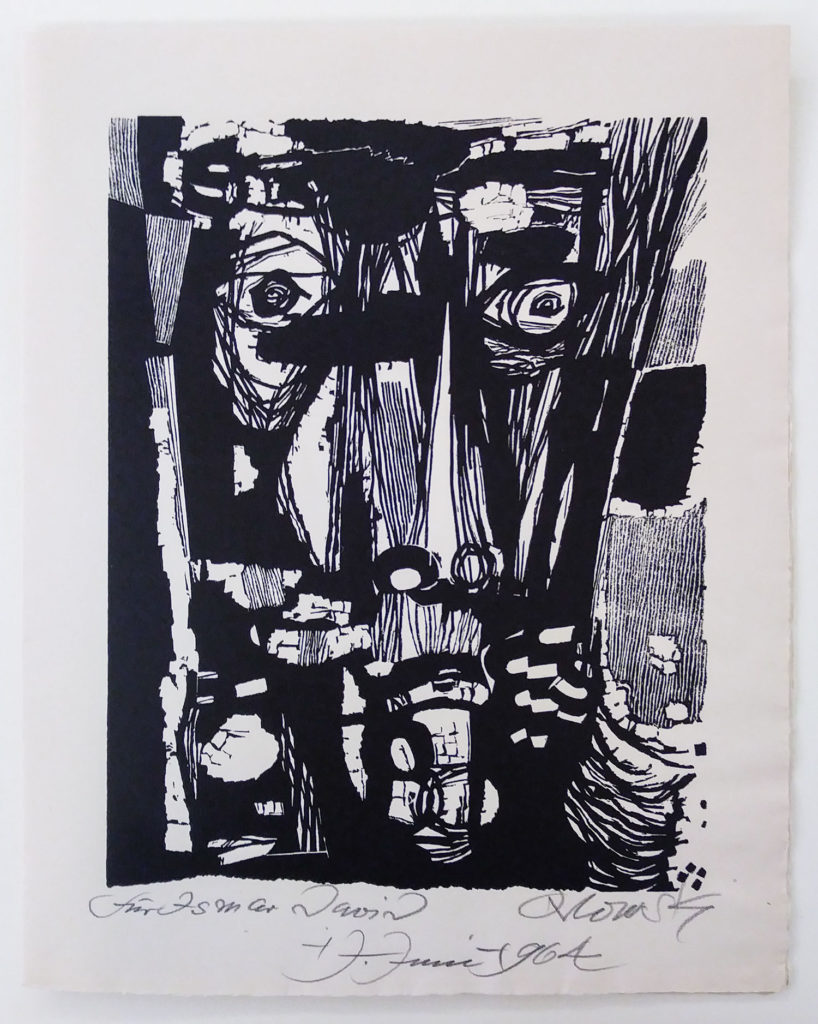
Wood cut print by Hans Orlowsky
Wood cut print by Hans Orlowsky, inscribed to Ismar David. Ismar David papers, box 11, folder 257, Cary Graphic Arts Collection, RIT.
Posted in O

About Johannes Boehland

Johannes Boehland, 1903–1964, graphic designer, calligraphy teacher at Städtische Kunstgewerbe- und Handwerkerschule Berlin-Charlottenburg.

Johannes Boehland
Johannes Boehland and a student From Johannes Boehland, Eine Monographie by Fritz Hellweg,
Heintze & Blanckertz, Berlin-Leipzig, 1938

Edward Johnston begat Anna Simons who begat Rudolf Weiß, who begat Johannes Boehland. Boehland, as a dedicated teacher at Hochschule für bildende Künste Berlin, Meisterschule für Graphik und Buchgewerbe Berlin and the städtischen Kunstgewerbe- und Handwerkerschule Berlin-Charlottenburg begat countless calligraphers, among them Ismar David.

Johannes Boehland was the son of two painters Richard Boehland and Flora Gaillard. His education exposed him to many forms of fine and commercial art and he was adept at drawing and painting as well as calligraphy and graphics. However, Boehland felt a calling for teaching early on and it is as a teacher that he arguably made his greatest contribution. In the 1956, Ismar David wrote to him:

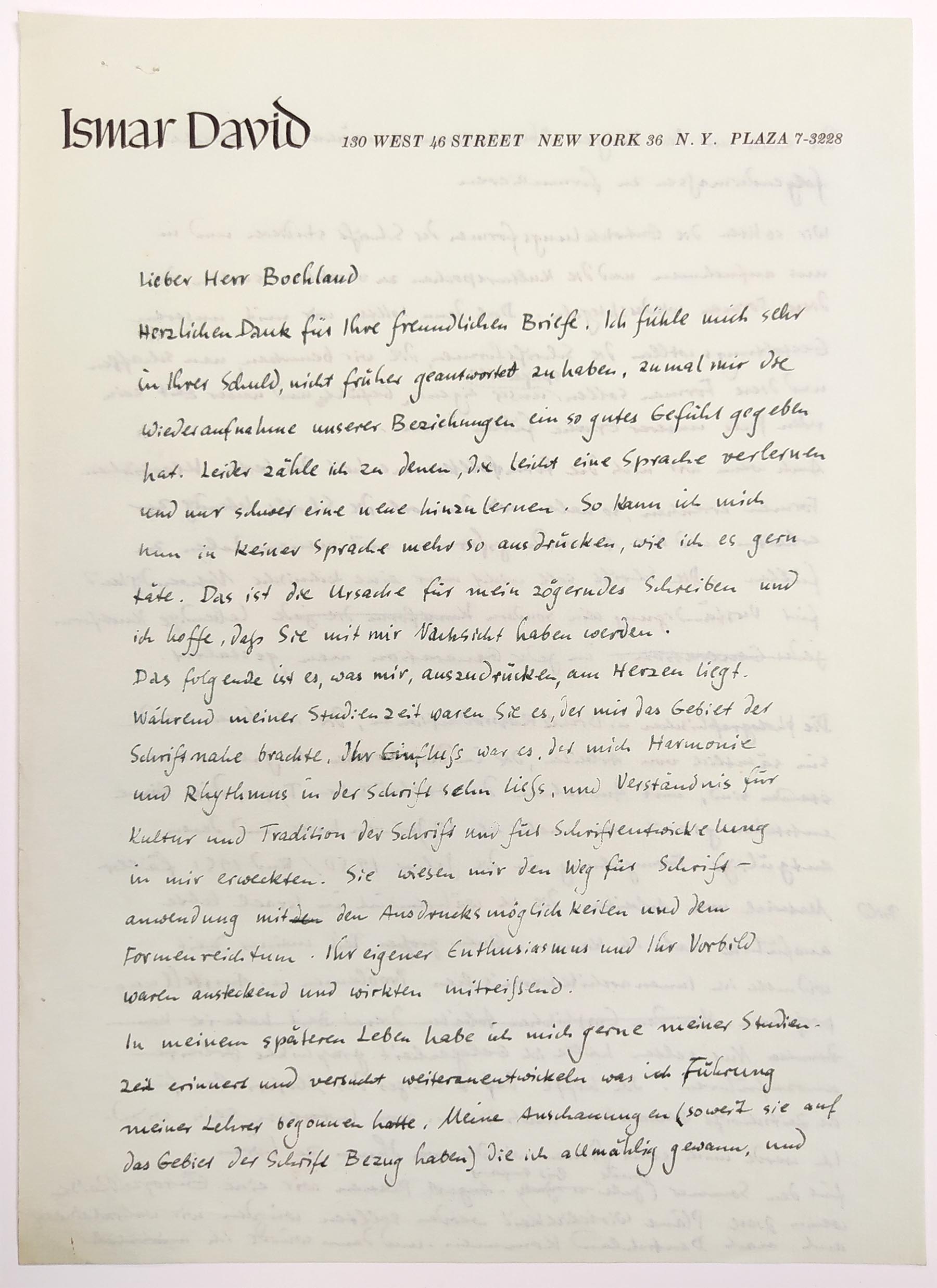
Dear Mr. Boehland,

Many thanks for your friendly letter. I am very sorry not to have answered you sooner, particularly because the resumption of our relationship gave me such a good feeling. Unfortunately, I am one of those who easily forget a language and only learn new one with difficulty. So now I can’t express myself in any language as I would like. That’s the cause of my belated writing and I hope that you will have forbearance with me.

The following is an expression of what I care deeply about.
During my student years, it was you who brought the subject of writing close to me. Your influence let me see the harmony and rhythm in writing, woke in me an understanding of the culture, tradition and development of writing. You showed me how to apply expressive possibilities and the richness of form to writing. Your own enthusiasm and example were infectious and thrilling.

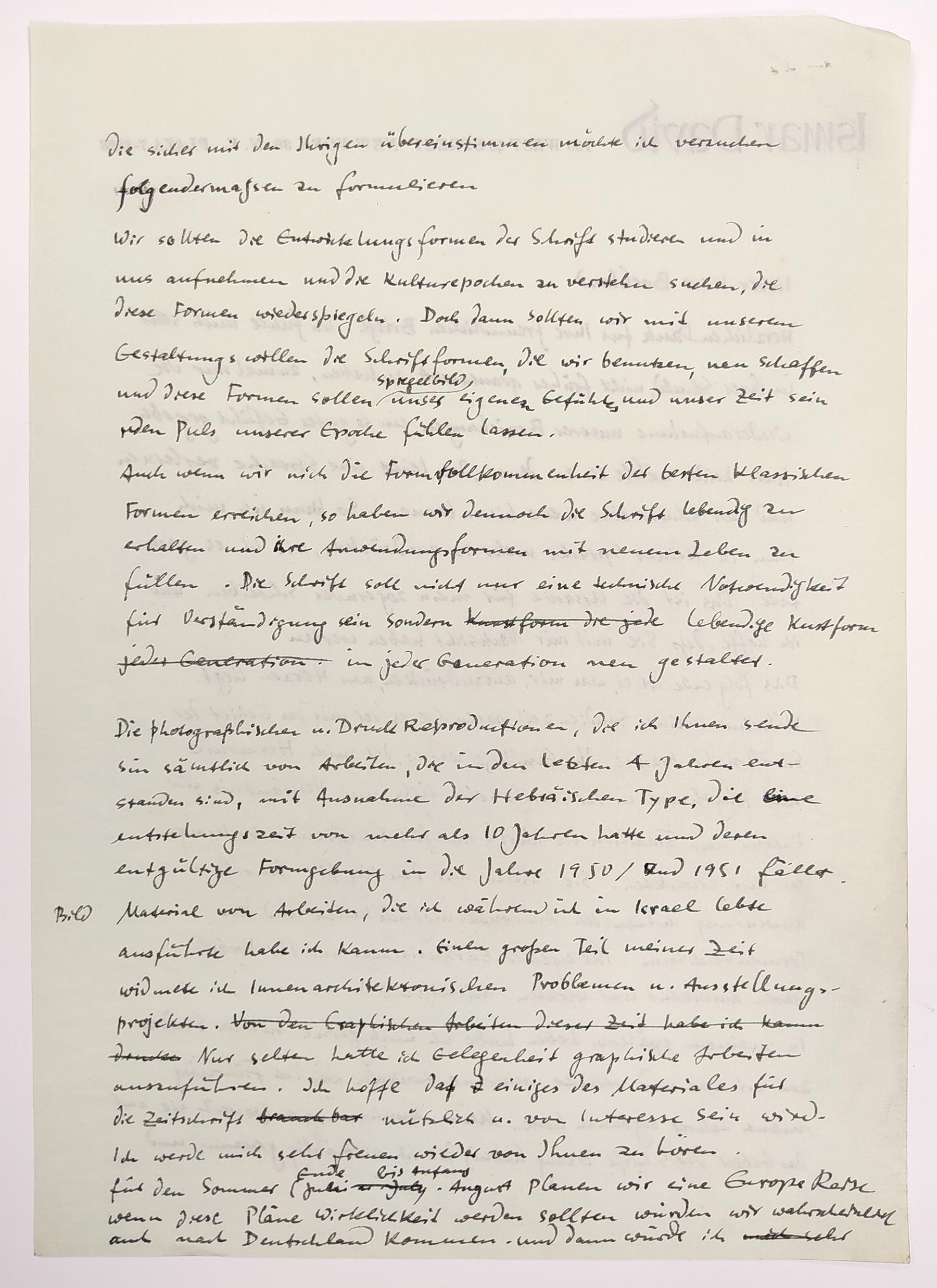
In my later life, I remember my student years with pleasure and have tried to further develop what I began under the guidance of my teacher. I would like to try to formulate my view (as far as it concerns the area of writing) which came to me gradually, and surely coincides with yours, as follows:

We should study and absorb the development of writing forms and try to understand the cultural epochs that these styles reflect. We should then re-make these writing forms that we use with our creative will and these forms should mirror our own feelings and our time. [We should let them] feel the pulse of our era.

Even if we don’t reach the perfection of form of the best classical forms, we nevertheless have to keep writing alive and to fill the forms, as applied, with new life. Writing should not only be a technical necessity for communication, but also a living form of art, which is newly shaped in each generation.
The photographic and printed reproductions that I send to you are all from work created in the last four years, with the exception of the Hebrew Type, that took more than ten years to develop, the final contours of which were delivered in 1950/51. I hardly have any material from the time I lived in Israel. I devoted a large portion of my time to interior architectural problems and exhibition projects. I only rarely had the opportunity to carry out graphic work. I hope that some of the material can be useful and of interest for the journal.

I would be very happy to hear from you again. We plan a trip to Europe in the summer (end of July to the beginning of August) and if these plans become a reality, we would probably also come to Germany and then I would…

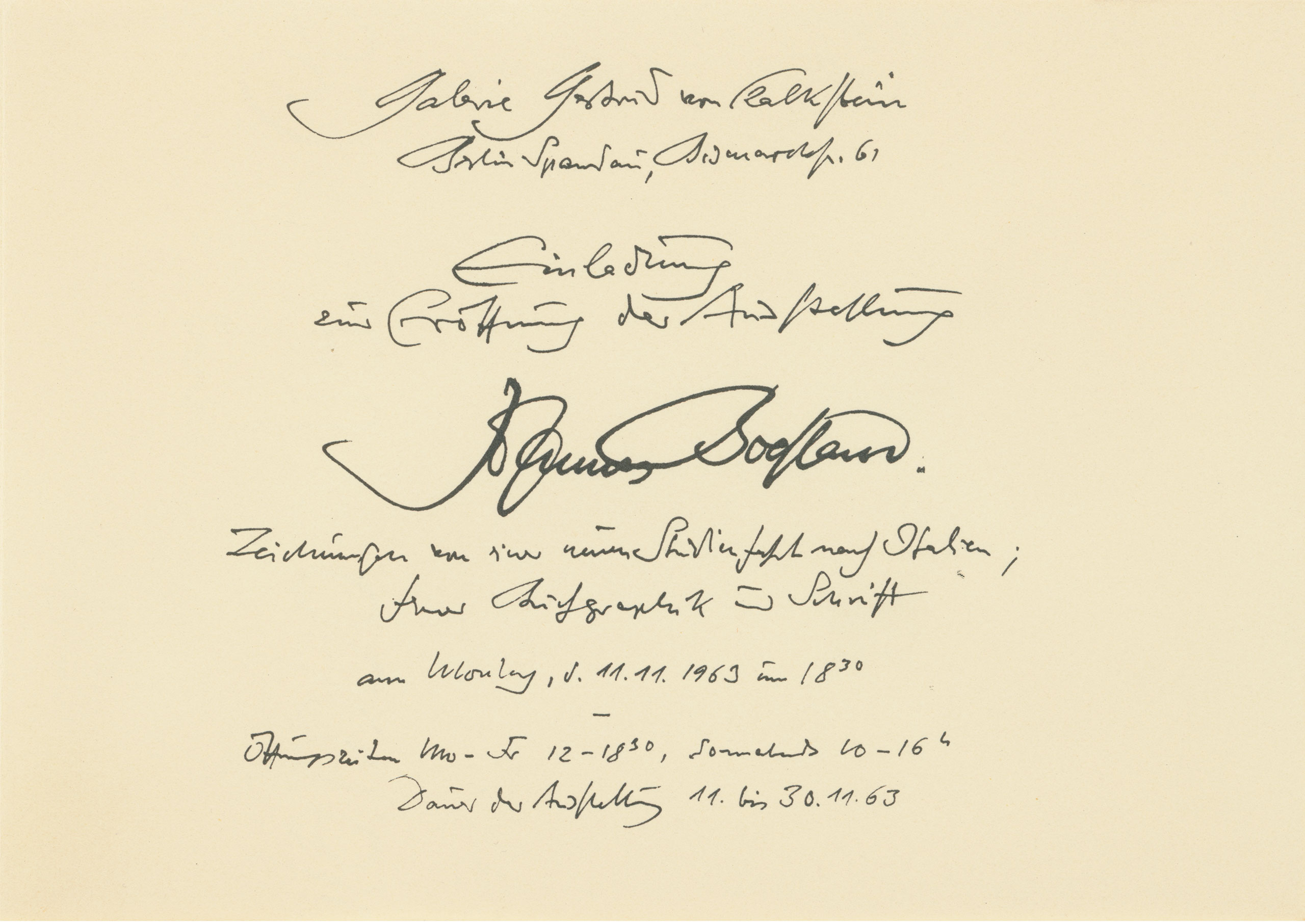
Invitation by Johannes Boehland, 1963
Gertrud von Kalkstein Galerie, Berlin Spandau, Bismarckstrasse 61
Invitiation to the opening of the exhibition Johannes Boehland. Drawings from a recent study trip to Italy; and from book graphics and lettering on Monday November 11, 1963 at 6:30.
Open Monday-Friday 12-6:30 pm, Sunday 10 am-4 pm
Duration of the exhibition November 11-30, 1963

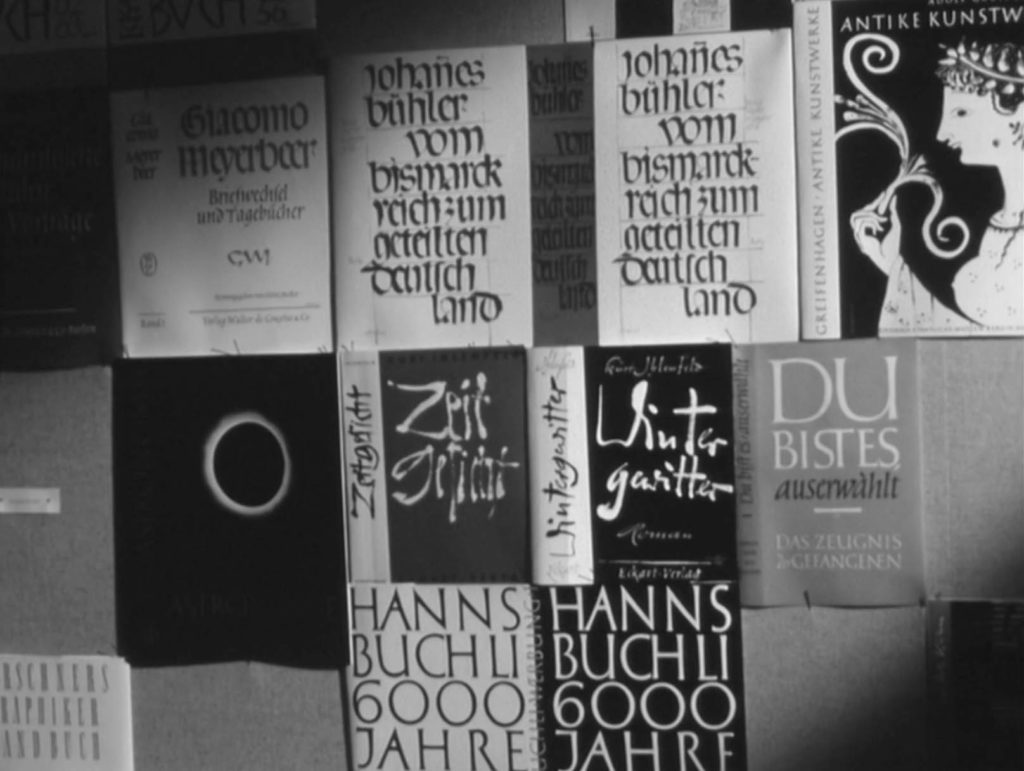
Frame from an SWR television video about Johannes Boehland
Frame from a 1963 video about a Boehland Exhibition at the Gutenberg Museum in Mainz from German television channel SWR.
Posted in B

A Man for All Seasons

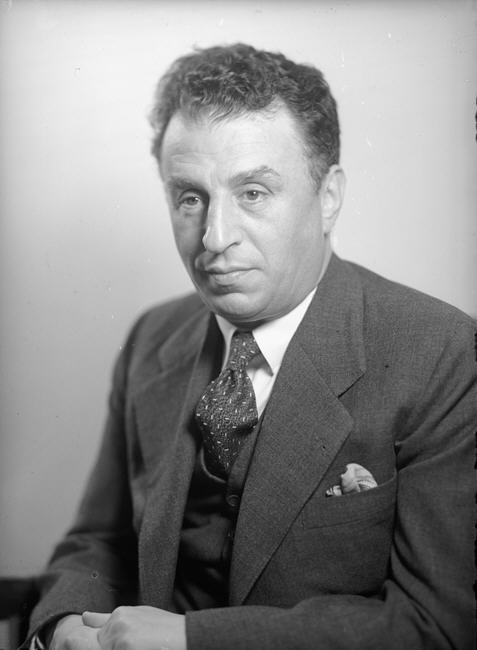
Ernst Mechner, 1895–1956, Head of Berlin office of the Keren Kayemet Leisrael, film-maker, map planner, graphic designer, writer.

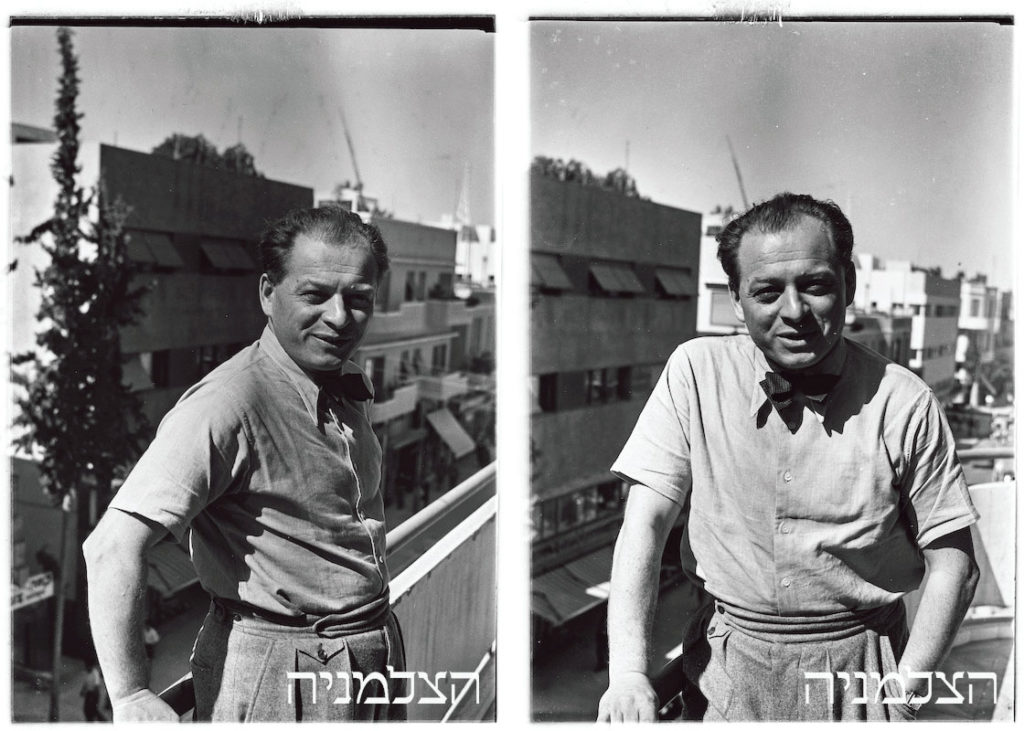
Ernst Mechner
Ernst Mechner, Tel Aviv 1938.Photo by Rudi Weissenstein

In 1932, Ernst Mechner headed the Berlin office of the Jewish National Fund. As part of the leadership involved in production of the Golden Book, he was instrumental in bringing Ismar David to Jerusalem.

Berlin, December 8, 1931

Concerning: Ismar David.

I’m informing you about a thorough conversation, that I had with the young artist. He is only 21 years old and a rare type among West European Jews. He is by profession a craftsman, namely, a trained house painter and has only recently turned to decorative arts. Now he is mostly busy with the restoration of antique objects. His serious view of the importance of a solid craftsmanship as a basis for every artistic endeavor is especially impressive. It’s a concept that is still very rare among us Jews.

In a letter to you, Mr. David has offered to execute the design himself. He would only require that his travel and accommodation for 14 days be paid for. The front cover can be used in the present form, hence the rest will require only two weeks.

Mr. D. would, however, also be willing, to do the work here, which would have many advantages, because the procurement of the, in some places, very rare materials, is easier here and the hand tools are available. Over there, we would run into difficulties acquiring the materials.

I don’t know what you’ve decided about the execution of the design. But I think if £35 has already been paid, then we shouldn’t let the design remain unfinished. And surely, the artist himself , when he’s also a craftsman, can make the thing better than another [person], especially since it will probably be a hopeless effort to find someone there who has mastered this unusual technique.

Mr. David is not a Zionist. He has a positive Jewish attitude, but is completely immersed in his art. He could, if given the commission to execute the work, whether in Berlin or in Jerusalem (in which case naturally much more closely), form a long term association with us. If you arrange for him to come over there with the tourists who come for the Maccabia Games, the matter will be extraordinarily cheap, and I would recommend it to you.

With Zion’s Greeting,
Dr. Ernst Mechner
Keren Kajemeth Leisrael

Posted in M

A Brief Biography

Benzion Wolff David, 1870–1930, father.

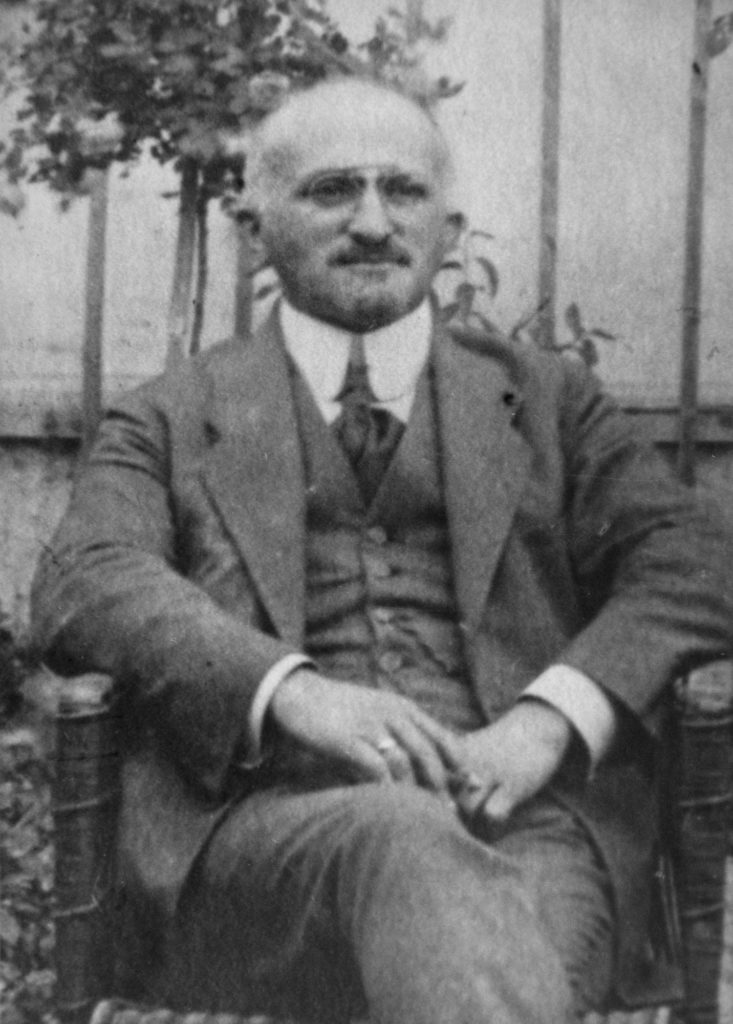
Benzion Wolff David
Benzion Wolff David in an undated photograph. Photo courtesy of Hannah Wende.

Benzion Wolff David was a bit of a mystery, even to his son, who could vaguely recall meeting one of his uncles, but knew little more than that his father came from the north of Germany.

Thanks to records preserved in the City Archive we know that Benzion’s father, Selig Wolff David, born September 9, 1820 in Friedrichstadt, was a butcher, a member of the civil defense corps (lance division) and a friend of the sports club. Selig owned property (10 Prinzenstrasse) and exercised his right to vote (for mayor and state parliament). He and his wife, Selde Behrend Levy, born on February 25, 1832/33 also in Friedrichstadt, had eleven children. Only three boys (David Selig, born January 14, 1861, Benzion Wolff, born December 20, 1870, and Löwe Juda Selig, born October 20, 1875) survived beyond childhood. In December 1874, Selig received a fine for failing to sand his icy street. In November 1875, Selig was fined for failing to report, in a timely fashion, the birth of a child, his fifth to die in infancy. Selde died at age 49 on January 23, 1882. Selig died on April 8, 1900 and was buried two days later. Notice of his funeral appeared in the local papers, as well as an ad expressing the gratitude of his family to his comrades-in-arms.1Family documents from the Museum “Alte Münze” in Friedrichstadt

Benzion Wolff David was born in Friedrichstadt on December 20, 1870. He was described as a businessman when he married Rosa Freund in Breslau on November 28, 1907. When his children were small, he was a general insurance agent and, in 1918, had an account with the Bank für Handel und Industrie. A year after the outbreak of the First World War, at age 45, he was called up. His own description of his war service: “From the 12th of July 1915 until the beginning of September, in Russia, Etappe, because of illness, returned to Germany; from February 1917 until 12 November 1918, first in the combat zone in Romania, then with the occupying army in the same place.”2Zahlkarte für Kriegsteilnehmer, Centralna Biblioteka Judaistyna, Breslau. He walked home from Romania, his health ruined by the malaria, to which hundreds of thousands of soldiers on the Eastern Front were exposed.3Malaria‘s Contribution to World Ward One—the Unexpected Adversary Benzion died on January 20, 1930 and was buried in the Cosel Cemetery, section 18 number 187-186. Eight months later, his widow ordered a simple gravestone in light Silesian granite from Karl Neustadt, Bebelstraße 1. She paid an additional 25 RM to have ivy planted all around.

Thank you to Christiane Thomsen in the Museum “Alte Münze” in Friedrichstadt for her help with documents from the museum’s collection.

Posted in D

About Avraham Granot

Avraham Granot, 1890−1962, Zionist activist, Israeli politician.

Avraham Granot
Avraham Granot.Wkipedia

Avraham Granot was born Abraham Granovsky in Făleşti, Bessarabia in the Russian Empire (today Moldova). He attended Gymnasia Herzliya in Tel Aviv. In 1911, he traveled to Switzerland to study law and political economy at the University of Fribourg and University of Lausanne, graduating with a PhD in 1917.

He moved to Jerusalem in 1922 to continue his work for the Keren Kayemet, the Jewish National Fund. Two years later he officially immigrated to Mandatory Palestine. He also lectured at the Hebrew University of Jerusalem on agrarian policy. In 1940 he was appointed director-general of the JNF. Granot was a member of the New Aliyah Party and one of the signers of the Israeli Declaration of Independence in 1948. In 1949, he was elected to the first Knesset as a member of the Progressive Party (the successor of the New Aliyah Party). He was reelected in 1951, but resigned from the Knesset six weeks after the election. He was head of several public corporations, and sat on the Board of Governors of the Hebrew University of Jerusalem and the Weizmann Institute of Science. In 1960, Granot was elected chairman of the JNF Board of Directors.

Posted in G

About Menachem Ussishkin

Menachem Ussishkin
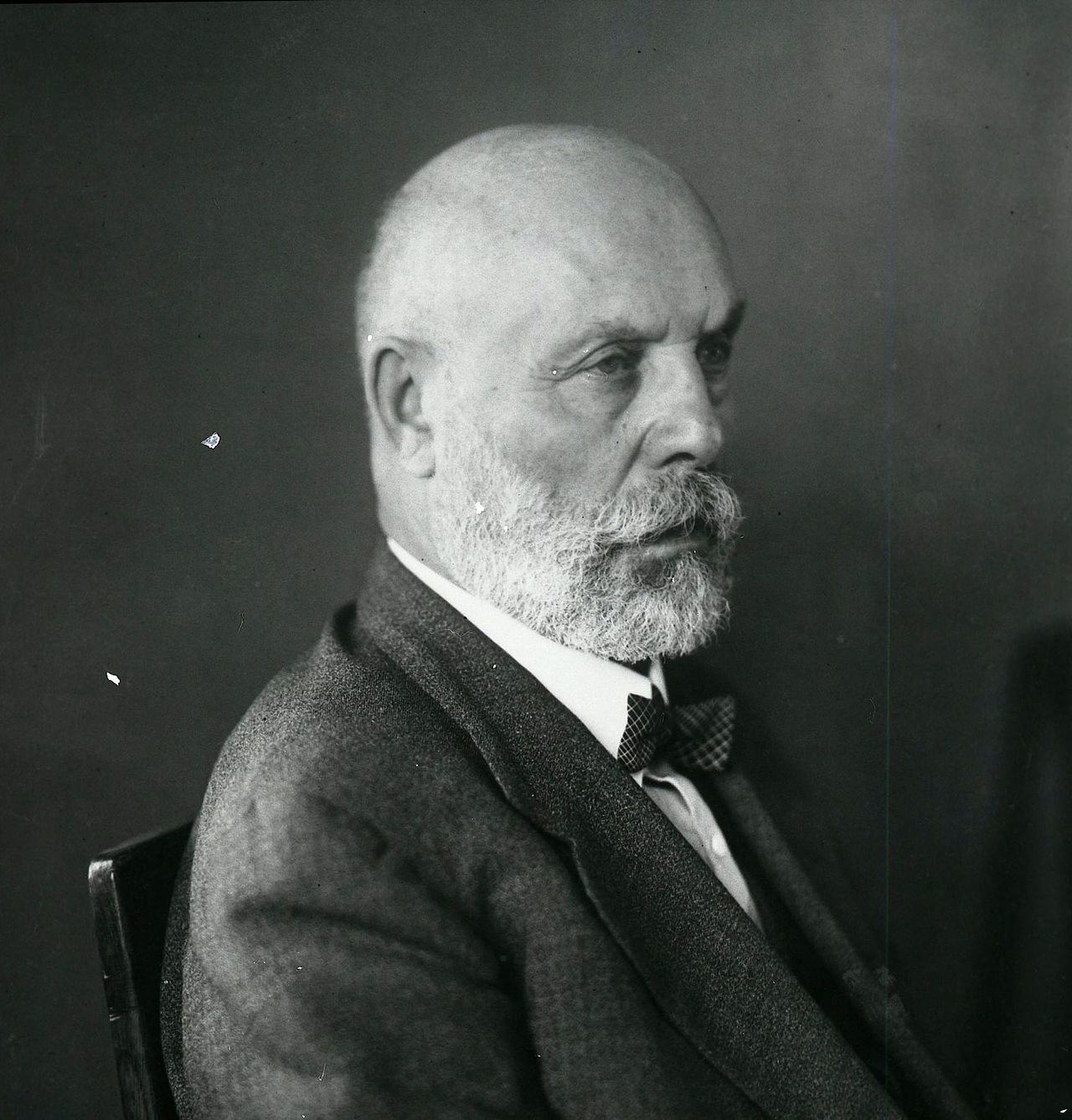
Menachem Ussishkin Harvard Library

Menachem Mendel Ussishkin 1863−1941

Born 1863 in Dubrovna, Russia, he was one of tne first and foremost leaders of the Zionist movement and President of the Jewish National Fund (KKL) from 1921 up to his death in 1941.

After graduating as an engineer in Moscow in 1889, he resided in Yekaterinoslav. A Zionist since his early youth, he was among the founders of BILU and of the Moscow branch of the Hovevei Zion. He was also a member of the Bnei Moshe society founded by Ahad Ha-Am. He first visited Palestine in 1891. Four years later he joined Theodor Herzl and the political Zionist movement, but became a strong opponent of the leader when the Uganda issue was fought out at the 6th Congress. He organized the opposition to Herzl in Russia and later opposed his successor, Wolfsohn as well. An uncompromising fighter for practical steps to implement the Zionist cause, he was one of the Jewish delegates to the Paris peace conference after World War I. In 1920 he was appointed head of the Zionist Commission in Palestine and in that capacity he initiated many land purchases. Two years later, under his dynamic guidance, the Jewish National Fund (KKL) became the main instrument for redeeming and reclaiming the soil of the ancient homeland on behalf of the Jewish people.

As the President of the Jewish National Fund, Ussishkin was involved in the design and production of the Golden Book V.

Posted in U

About Eliezer Strich

Eliezer Strich, 1879−1941, painter, illustrator, teacher.

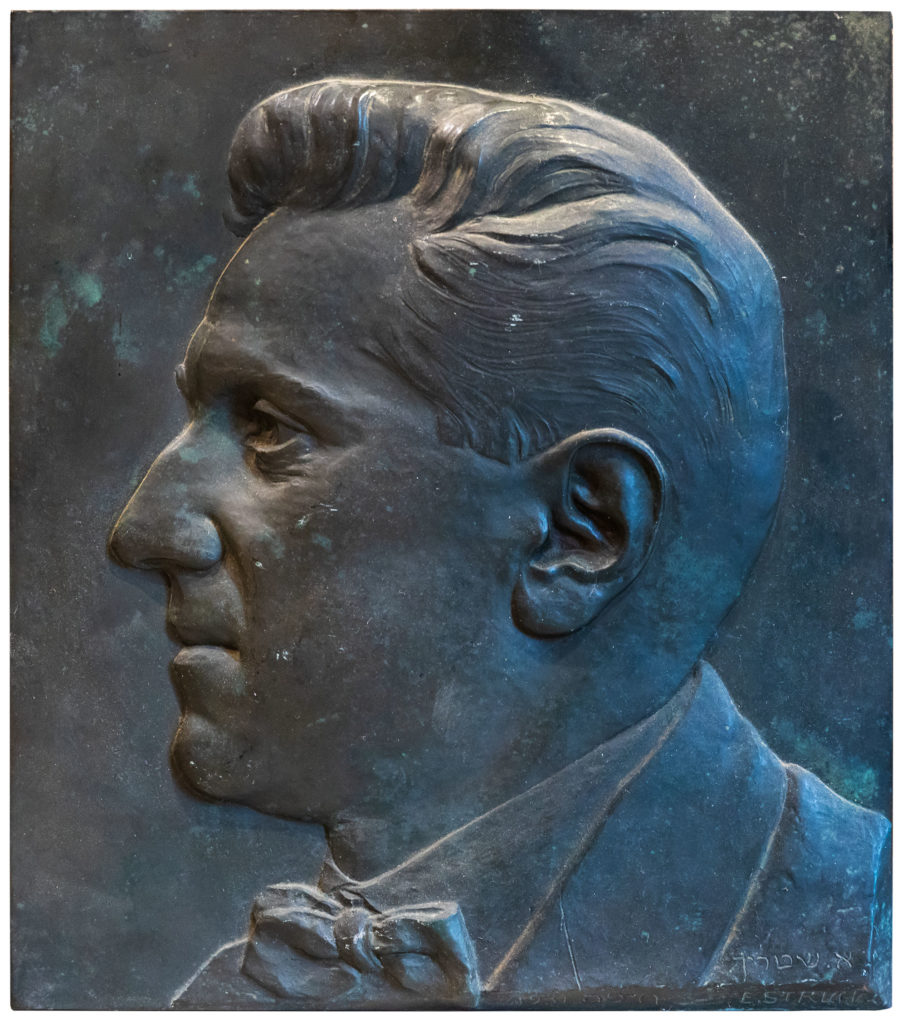
Bronze bas-relief by Eliezer Strich
Bronze bas-relief by Eliezer Strich, possibly a self-portrait. (Thank you to Ivantiques in Jerusalem for permission to photograph this work.)

Born in Latvia, Eliezer Strich studied art in Petrograd, St. Petersburg and Paris. In 1914, at the age of 35, he was invited to head the department of metalwork at the Bezalel Arts Academy in Jerusalem, where he remained until 1915. In 1918, following his service in the “Hebrew Battalion” against the British Mandate, he returned to teaching at Bezalel until 1921. In 1923, he moved to Haifa and taught painting at The Hebrew Reali School and the Technion.

Posted in S

Master Etcher, Early Zionist

Hermann Struck (Chaim Aaron ben David), 1876−1944, artist, teacher, activist.

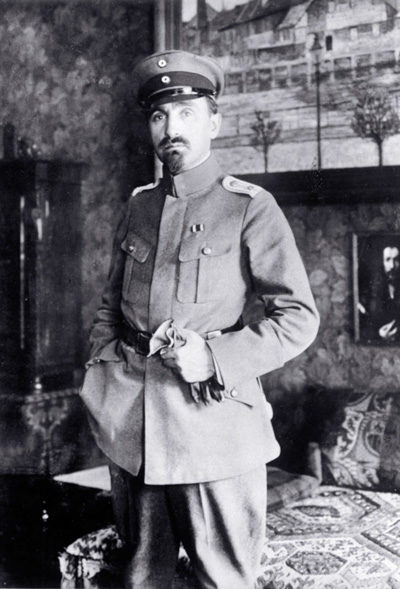
Hermann Struck in 1916
Hermann Struck in 1916. Photo from Center for Jewish History Photostream

Hermann Struck cut a “splendid figure with [his] handsome, aristocratic head with its keen eyes, aquiline nose and Van Dyke beard.”1Newman, Elias, Artist in the Yishuv…Herman [sic] Struck. The Jewish Press [New York], September 7, 1945, p. 62. His easy, unencumbered manner and abundant personal gifts that “encompassed the whole range of his manly virtues, from his international artistic prestige to his ability to hold his liquor”2Zweig, Arnold, Herman Struck – Ein Meister der Grafik; Zum 80. Geburtstag des Künstlers, Bildende Kunst, Verband Bildender Künstler der Deutschen Demokratischen Republik , 1956, p. 148-150. made him a charismatic emissary in Europe and the United States for the Mizrahi movement. He was no less appreciated by—and generous to—colleagues, students and friends. (Struck tutored older, more famous colleagues, like painters Lovis Corinth, Lesser Ury and Max Liebermann, as well as younger ones, like Marc Chagall and Jacob Steinhardt.) Critic Max Osborn, called Struck “the best, most selfless companion.”3Osborn, Max, Hermann Struck: Ein grosser Maler und ein frommer Mann, Aufbau [Omaha, Nebraska], January 21, 1944, p.9. And all of this is merely in addition to his copious etchings, drawings and paintings, most famously, a portrait of Theodor Herzl that gave Struck an honored place in countless Jewish homes and, as much as anything else, earned him the designation “the artistic soul of Israel.”4Rittenberg, Louis, The Brush of a Master. The American Hebrew: A Magazine for American Jews [New York], Marc 9, 1928, p. 609

Born in Berlin to well-to-do orthodox parents, Hermann Struck remained devoutly observant his entire life, often to the wonderment of his more secular associates. After studying at the Berlin Academy of Art with Hans Meyer, who introduced Struck to etching, and Max Koner, a well-known portraitist, he met and befriended Jozef Israëls, who became his mentor. Israëls’ etchings are among those featured in Struck’s landmark Die Kunst des Radierens (The Art of Etching), published to universal acclaim in 1908. Struck exhibited in internationally, including as one of eleven artists at the Fifth Zionist Congress (1901) in Basel. He was a member of the Berlin Secession and, almost uniquely (as a German), the Royal Society of Painters, Etchers and Engravers of Great Britain. He created incisive portraits of Richard Dehmel, Gerhard Hauptmann, Albert Einstein and Sigmund Freud, to name a few of the cultural and intellectual giants he encountered in his Berlin years. After enlisting in the German army in 1915, his assignment brought him into first hand contact with Eastern European Jews, for whom he developed a profound affinity. On issues concerning them, Struck acted as consultant to the German delegation at the Versailles Peace Conference. In 1920, over 50 etchings of the people he had seen and their way of life appeared in Das ostjüdische Antlitz (The Face of Eastern Jewry), with text by Arnold Zweig. Another postwar publication of wartime drawings was Kriegsgefangene (Prisoners of War). In contrast to the tenderness and admiration that suffuses Das ostjüdische Antlitz, these one hundred lithographs, done at the behest of the authorities and with the participation of anthropologist Felix von Luschan, are tainted with then prevalent ethnological biases and racial theories.

In 1922, Struck and his wife Wally established a home in Haifa, where he turned more intensively to painting landscapes and welcomed a steady stream of visitors. He taught at the Bezalel School, although according to Zweig, he was never fully embraced by Palestine’s younger more expressionistic and less realistic art world.5Zweig, Arnold, Herman Struck – Ein Meister der Grafik… 1956, p. 148-150. In November 1931, Struck, a very active member of the Board of the Jewish National Fund, and the two other members of the jury (Shaul Tchernichovsky and S.A. Van Vriesland) awarded first place in the competition to design a cover for the JNF’s fifth Golden Book to Ismar David. David lived in Struck’s villa in Hadar Carmel and worked in his workshop while executing the work.

A trace of Herman Struck’s life in Berlin can be found in its Hansaviertel, a short walk from the Bellevue S-Bahn stop:

Plaque in Berlin
Plaque, mentioning Herman Struck, Berlin. Photographed in 2024.

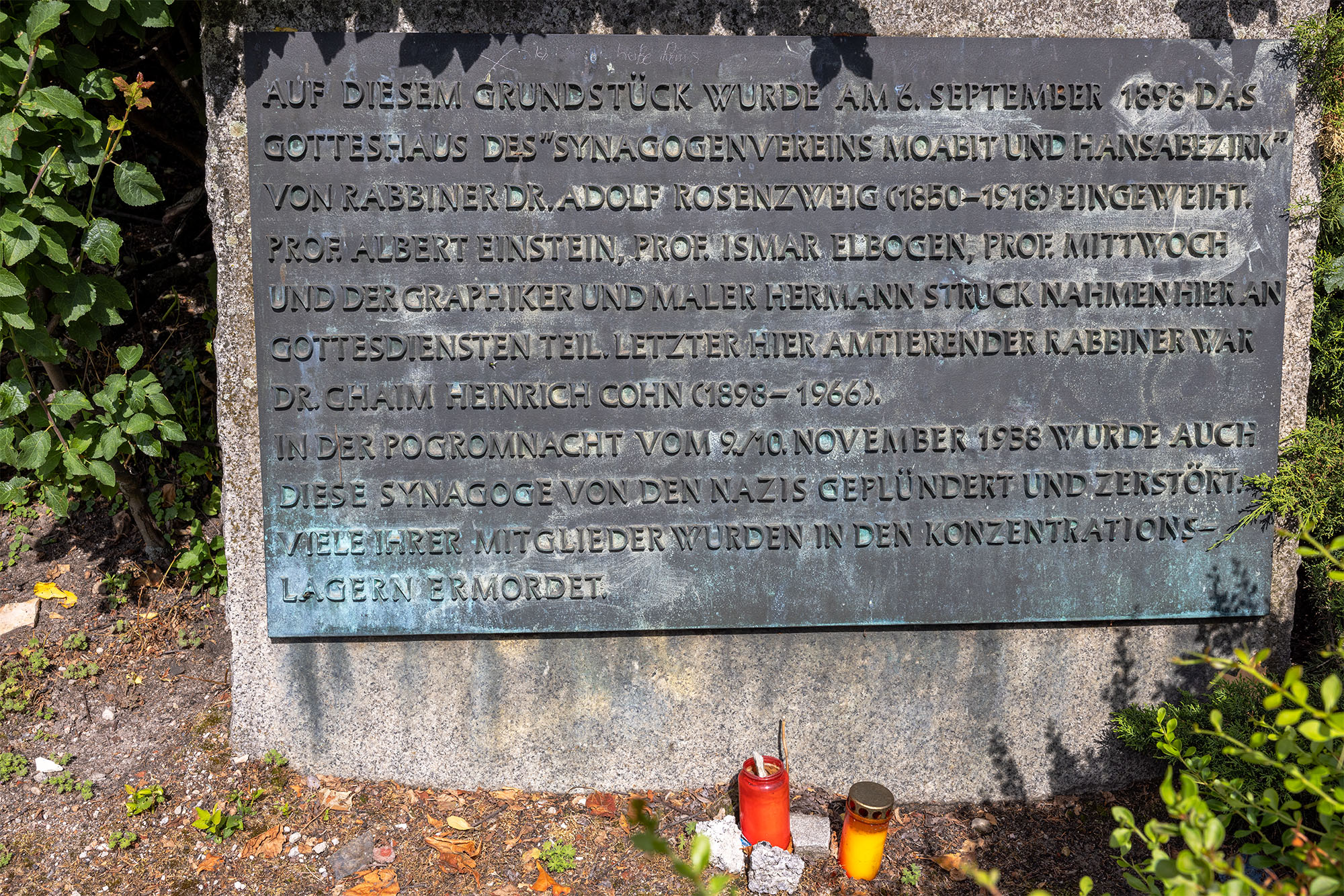
On September 6, 1896, on this piece of land, the house of worship of the “Synagogue Society of Moabit and the District of Hansa,” was dedicated by Rabbi Dr. Adolf Rosenzweig (1850-1918). Prof. Albert Einstein, Prof. Ismar Elbogen, Prof. Mittwoch and the graphic artist Hermann Struck took part in religious services here. The last rabbi to serve here was Dr. Chaim Heinrich Cohn (1898-1966).

On the night of the pogrom between November 9 and 10, 1938, this synagogue was also plundered and destroyed. Many of its members were murdered in concentration camps.

Posted in S

A Biographical Sketch

Rosa Freund David, 1875–1956, mother.

Rosa David
Rosa David.
By her own account, Rosa Freund David had an ideal childhood in a warm and loving family circle. Born in Breslau, she didn’t leave the city until 1940, when she was forced to flee her homeland. Rosa lived through WWI, Germany’s hyperinflation, the death of her husband, the suicide of her oldest son, and the privation and degradation of the war years as a refugee in Shanghai, to finish her life modestly and quietly in Israel.

Rosa Freund was born on the evening of January 16, 1875, the seventh child in a grand total of twelve, to Isidor Freund and Caecilie Nothmann Freund. Her parents were prosperous and deeply religious. Two of Rosa’s brothers attended the Jewish Theological Seminary in Breslau and were ordained as rabbis. Samuel Freund (1868-1939) became a senior rabbi in Hannover as well as the landrabbiner, chief rabbbi of the entire German state of Lower Saxony. Ismar Freund (1876-1956), who graduated from the Silesian Friedrich Wilhelm University as well, was a jurist, historian and leader in the Berlin Jewish Community. Brother Benno, a sock manufacturer, was active in the leadership of Breslau’s Jewish community.

Just shy of 32 when she married Benzion Wolff David, Rosa may have been a teacher, although her marriage certificate states she had no profession. Three children followed in relatively quick succession: Felix (February 15, 1909), Ismar (August 27, 1910) and Selma (September 12, 1912). The family was religiously orthodox, culturally German and solidly middle class. A servant girl also lived with the family and when the children were small, they had an adored nanny.

Benzion Wolff David was an independent general insurance agent. During his military service from 1915 to 1918, Rosa carried on with the business. She and the children all pitched in the years of his declining health after his return from the war. After Benzion’s death in 1930, the Breslau telephone book listed Rosa as an insurance agent.

Living in Berlin in 1932, son Ismar was eager to try his chances outside of Germany and emigrated to Palestine when the opportunity presented itself. As racial laws slowly strangled the Jewish population, he attempted to aid his family without success. Felix refused to leave his position in Stuttgart. Selma and her family got approval to travel to Shanghai on November 3, 1938. Then, on November 12, 1938, shortly after Reichskristallnacht, Felix and his family were found dead from suicide in their apartment. Rosa, who had sworn she would not leave Germany while she had a child still living there, somehow endured until January 16, 1940, when she received permission to exit the country to join Selma in Shanghai. Rosa’s sister Martha was not so fortunate. She was deported from Breslau on July 7, 1942 to Theresienstadt and on September 23 to Treblinka. Of Rosa’s other 10 siblings, Benno had died in 1914, Hugo, was missing in action and presumed dead in 1917, Johanna had died in 1921, David in 1935, Selma in 1937 and Samuel in 1939. Brother Ismar with his wife and three children had fled to Palestine in November 1938.

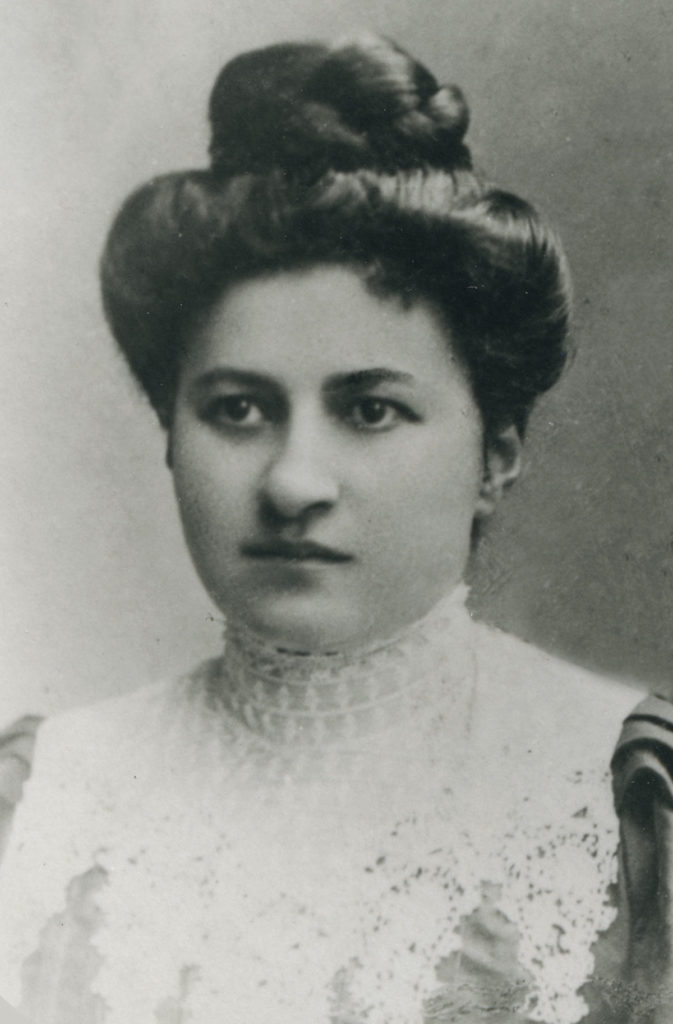
Travel permit photo of Rosa David, 1947.
Travel permit photo of Rosa David, 1947. Courtesy of Hannah Wende

After six years in Japanese-occupied China, the relationship between Rosa and her daughter was severely frayed. Relatives in Australia made it possible for Selma and family to leave China in May of 1945. In the second half of 1947, the Jewish Agency arranged Rosa’s passage to Palestine, via the U.S. She arrived in San Francisco on the S.S. General W. H. Gordon, a converted troop ship at the end of November. After a transcontinental train ride, she had what must have been a bittersweet reunion with her surviving son at Grand Central Station, before continuing on to Haifa. She spent her remaining years in Israel and died on March 29, 1956.

Posted in D