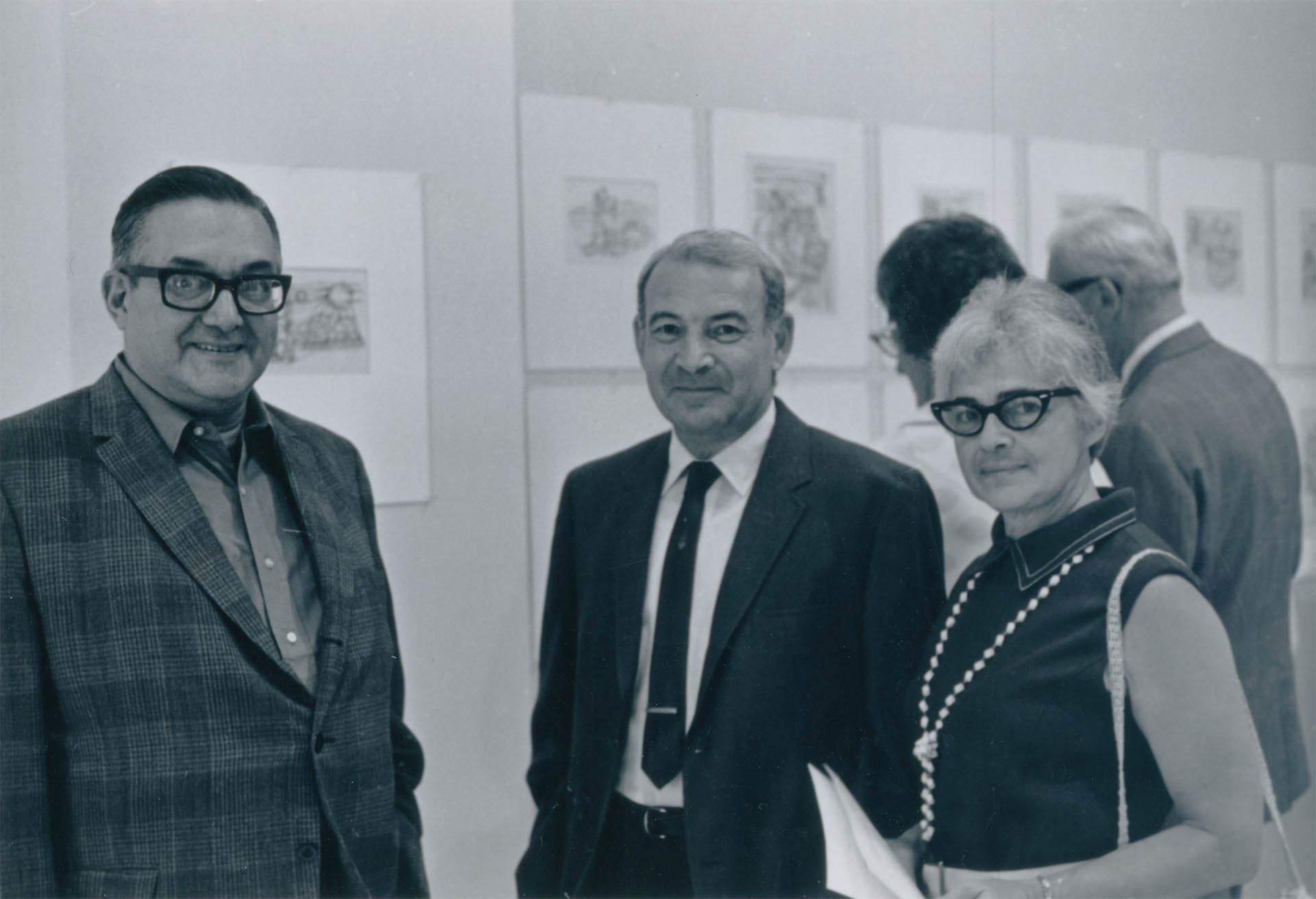
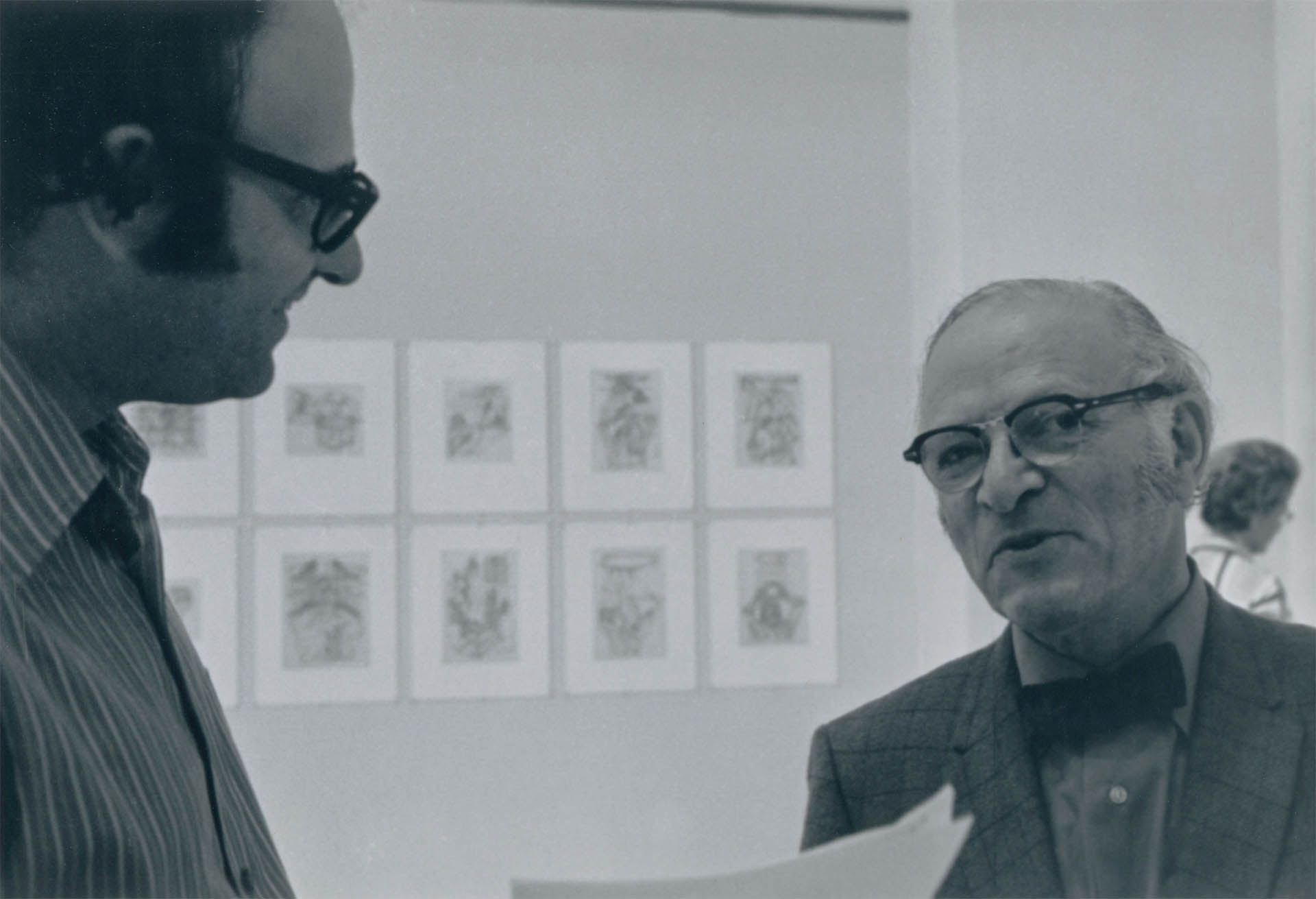
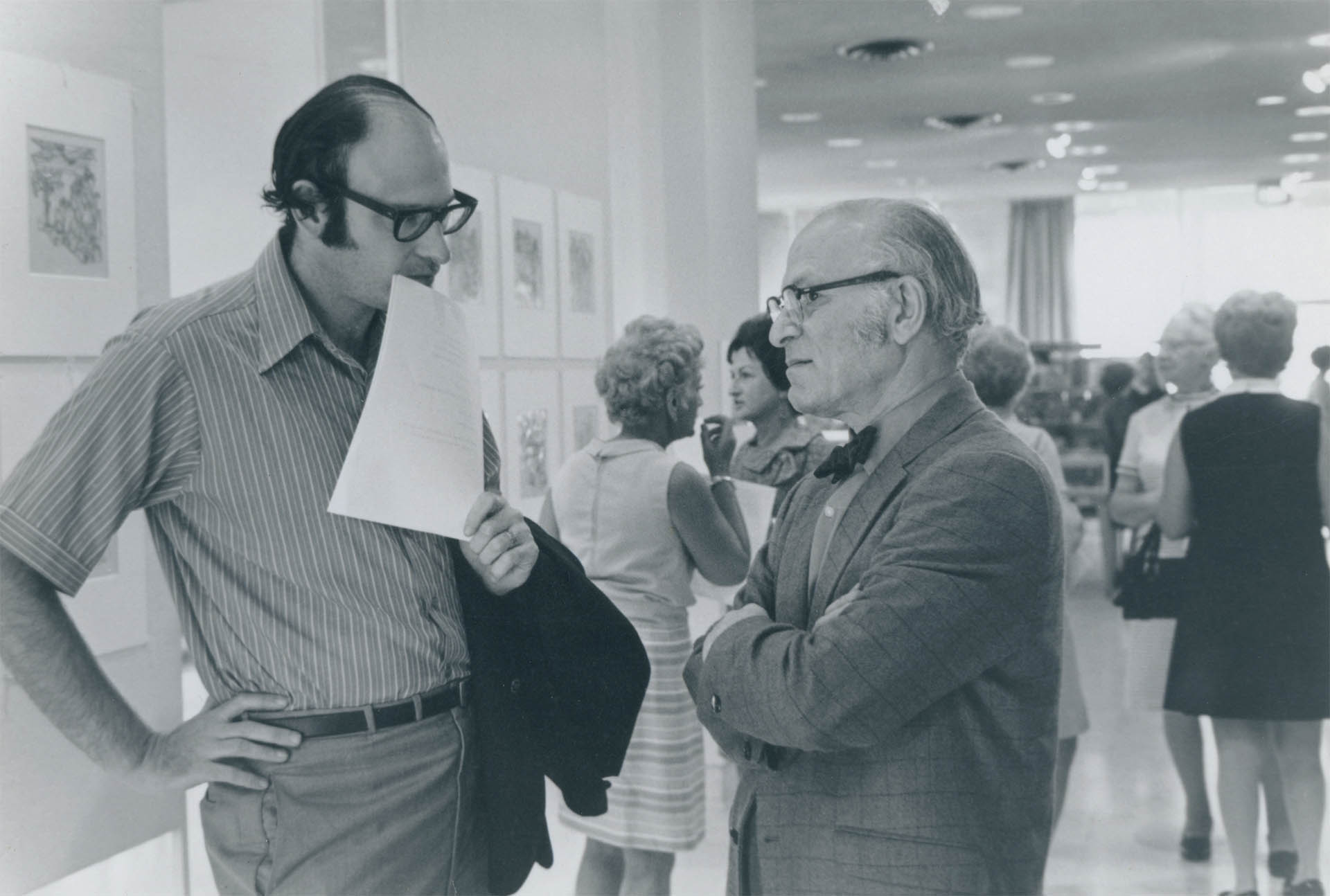
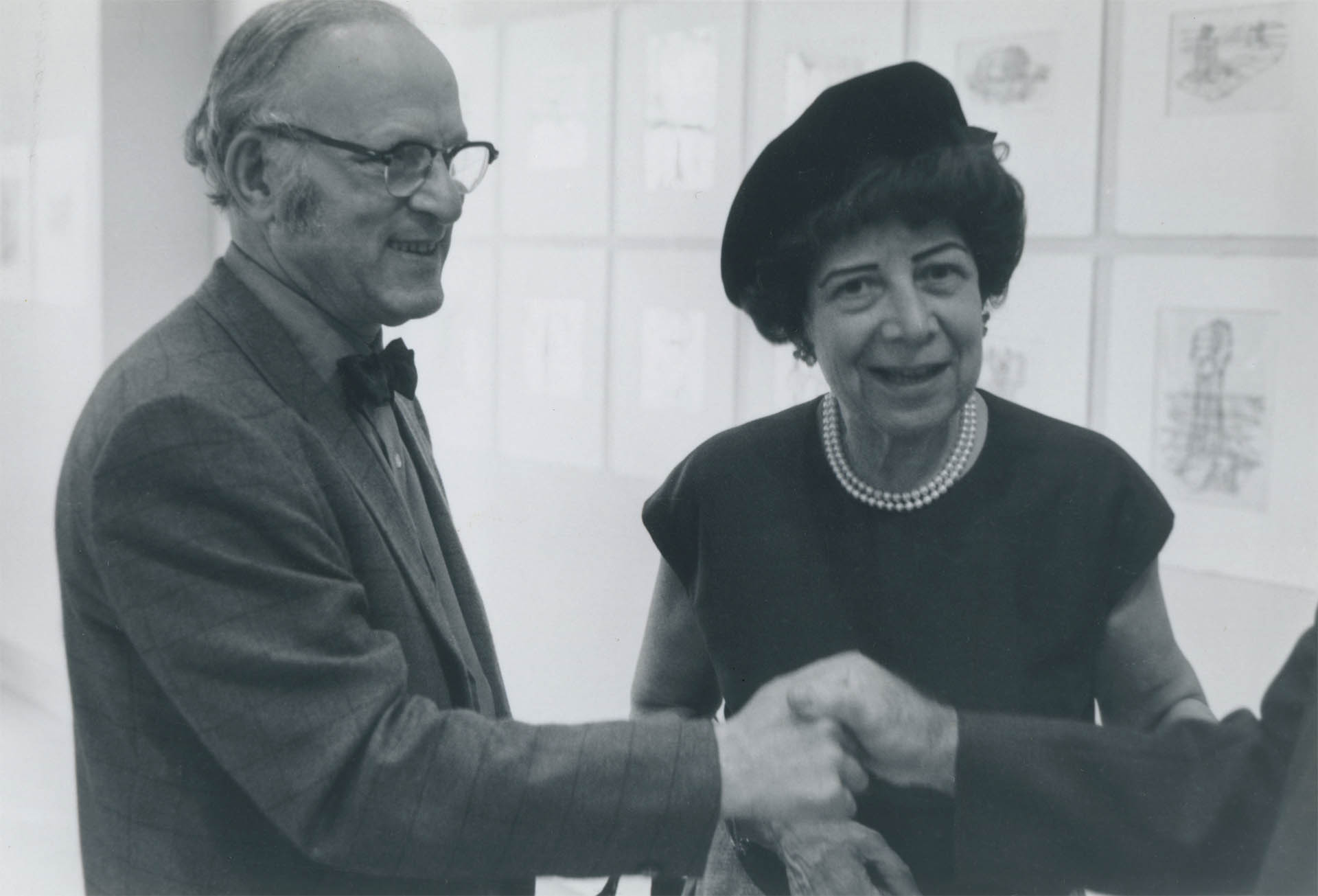
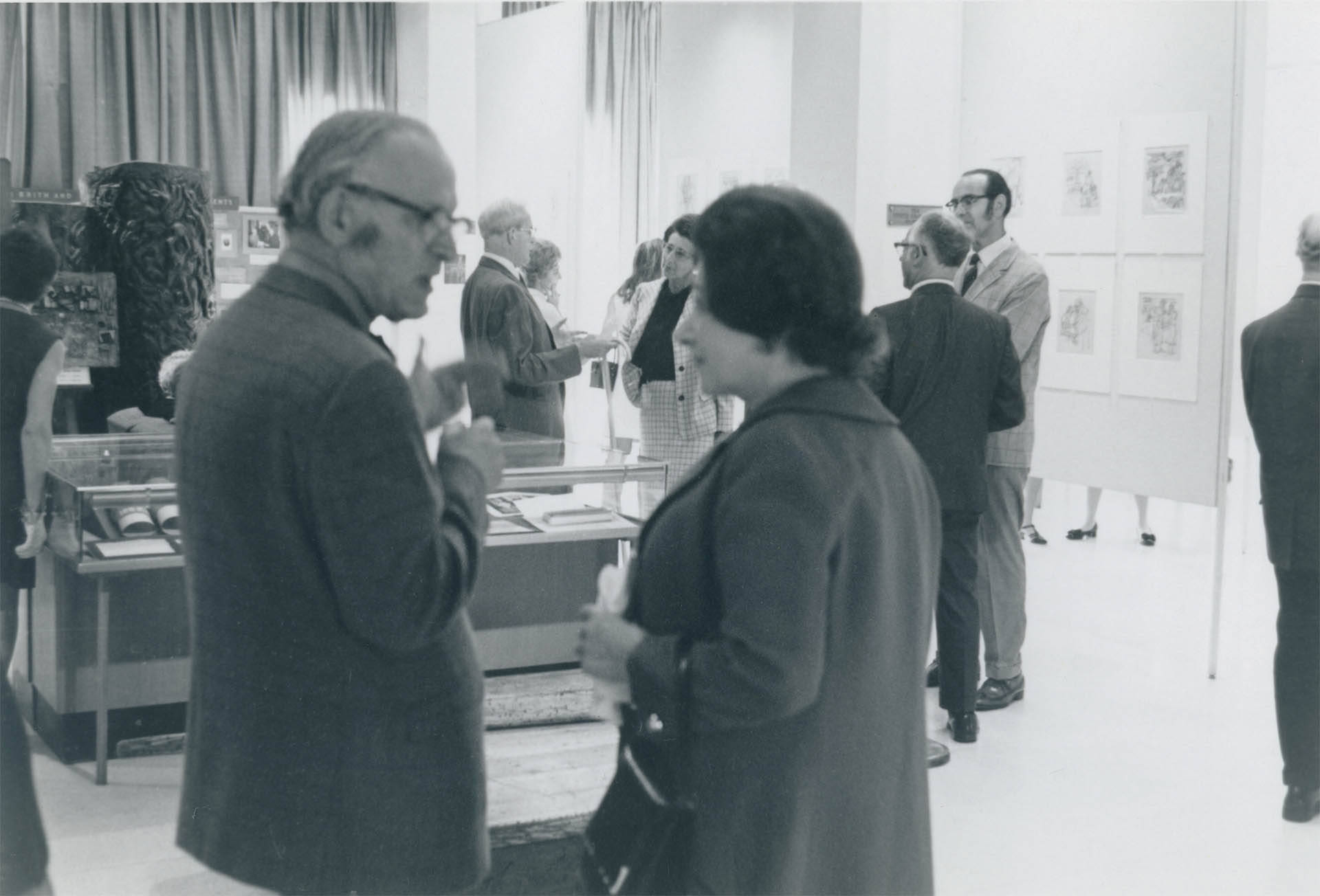
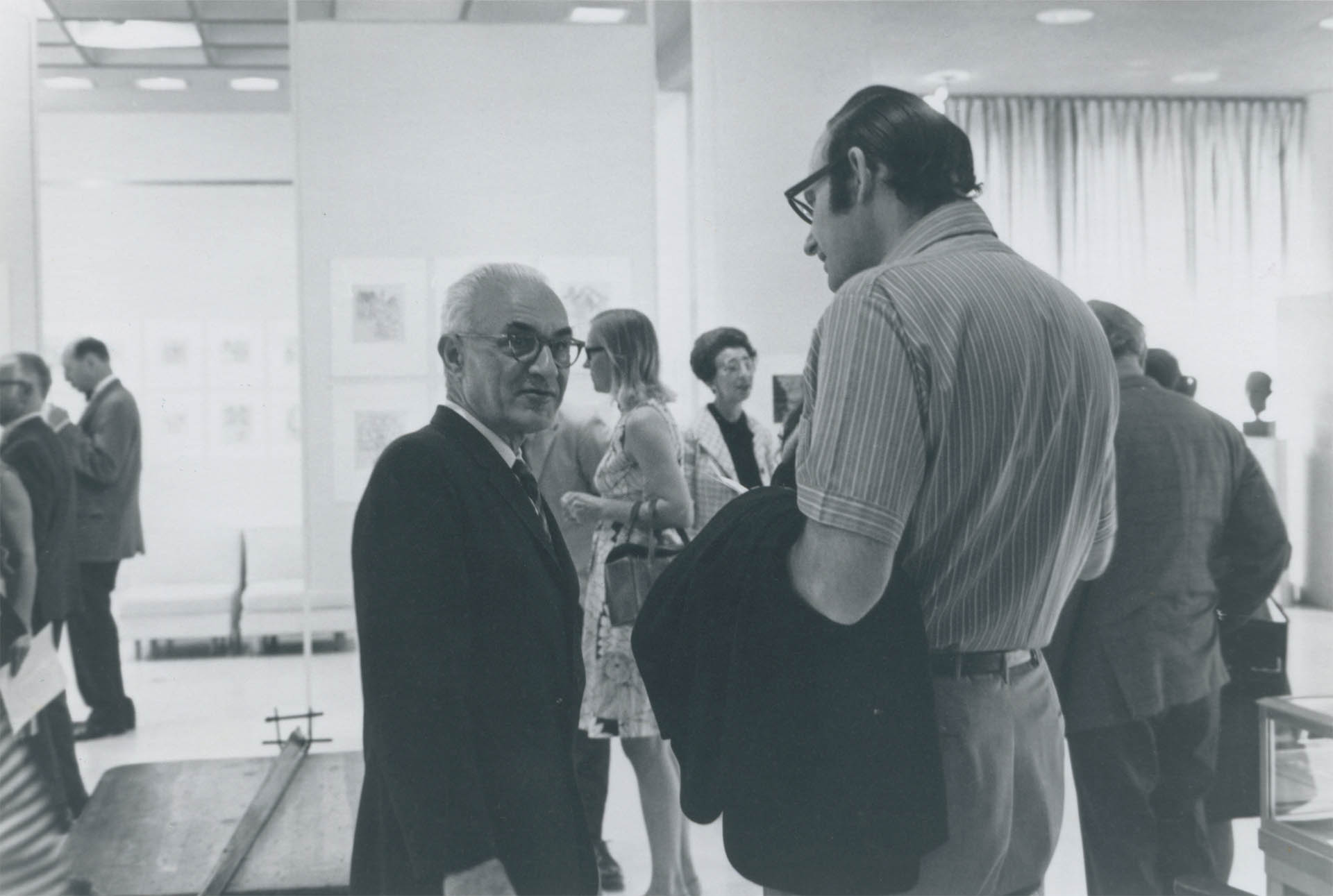
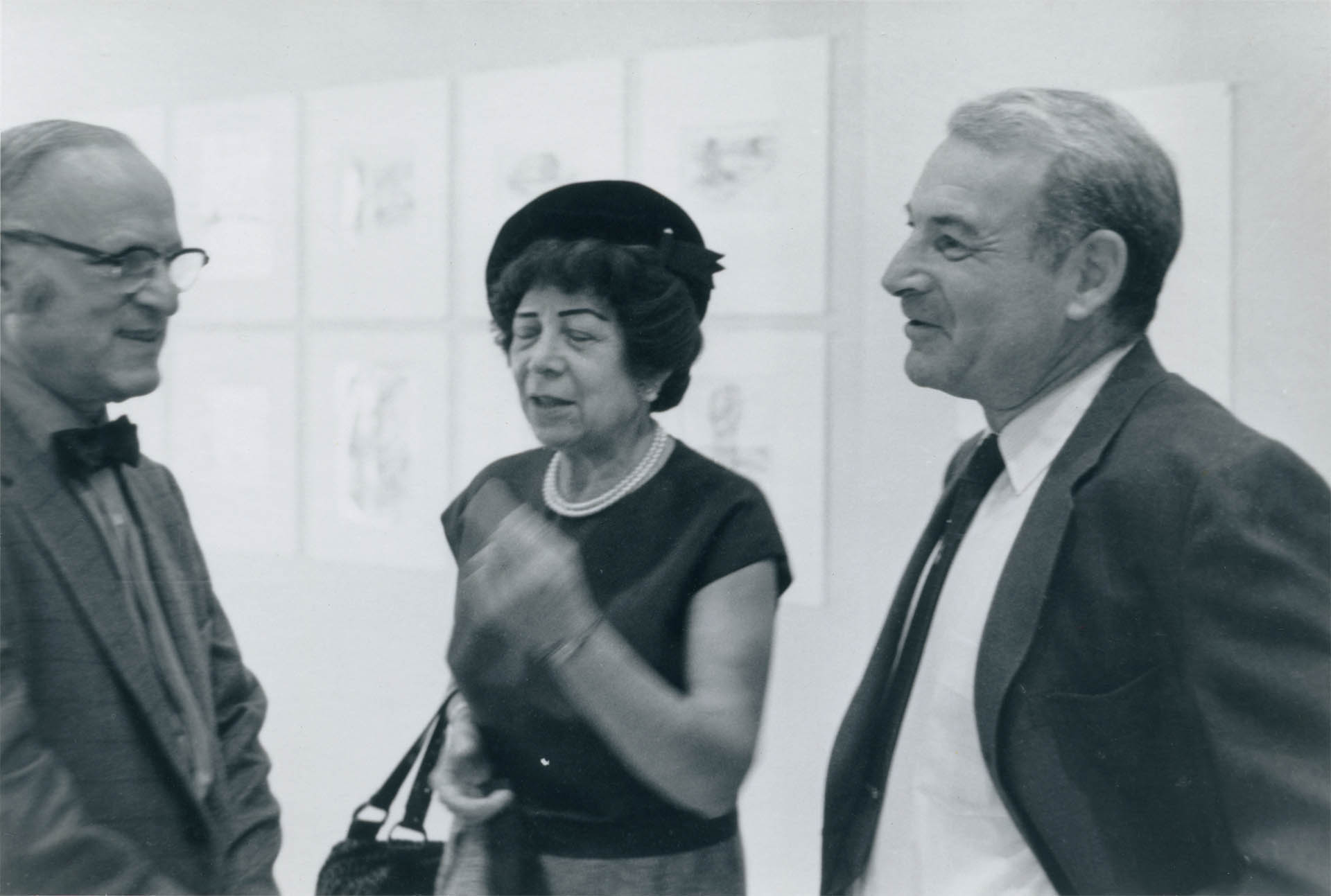
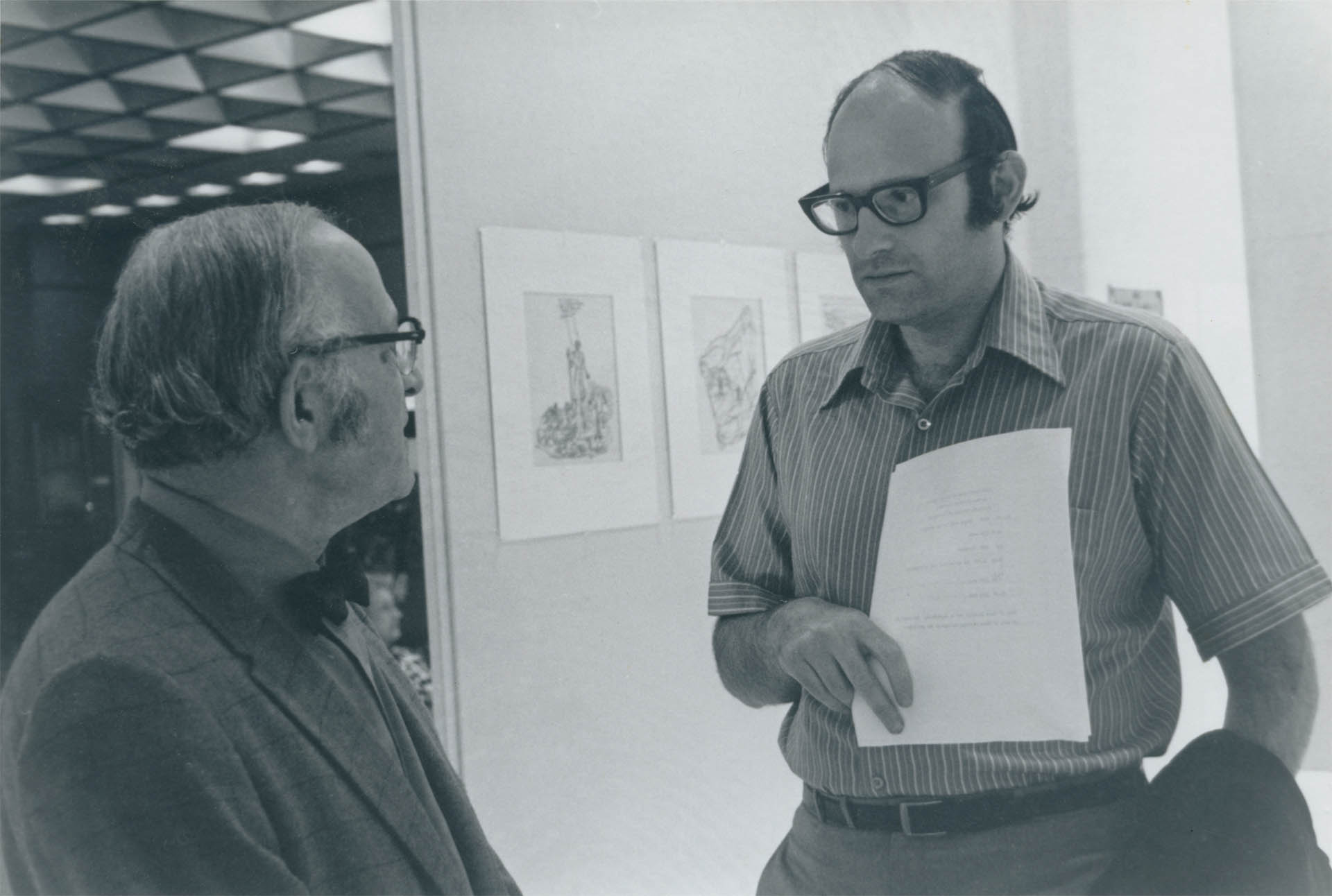
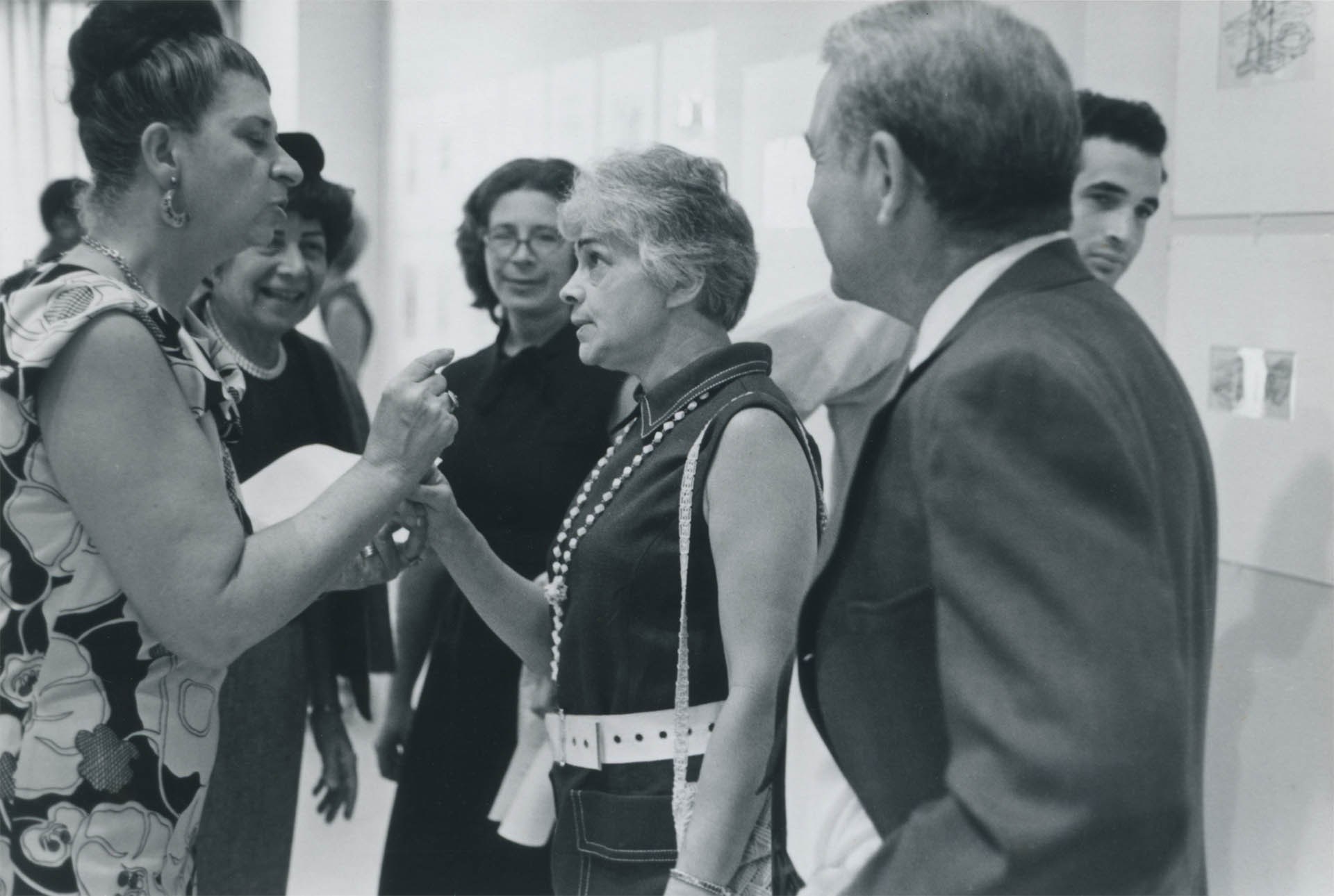
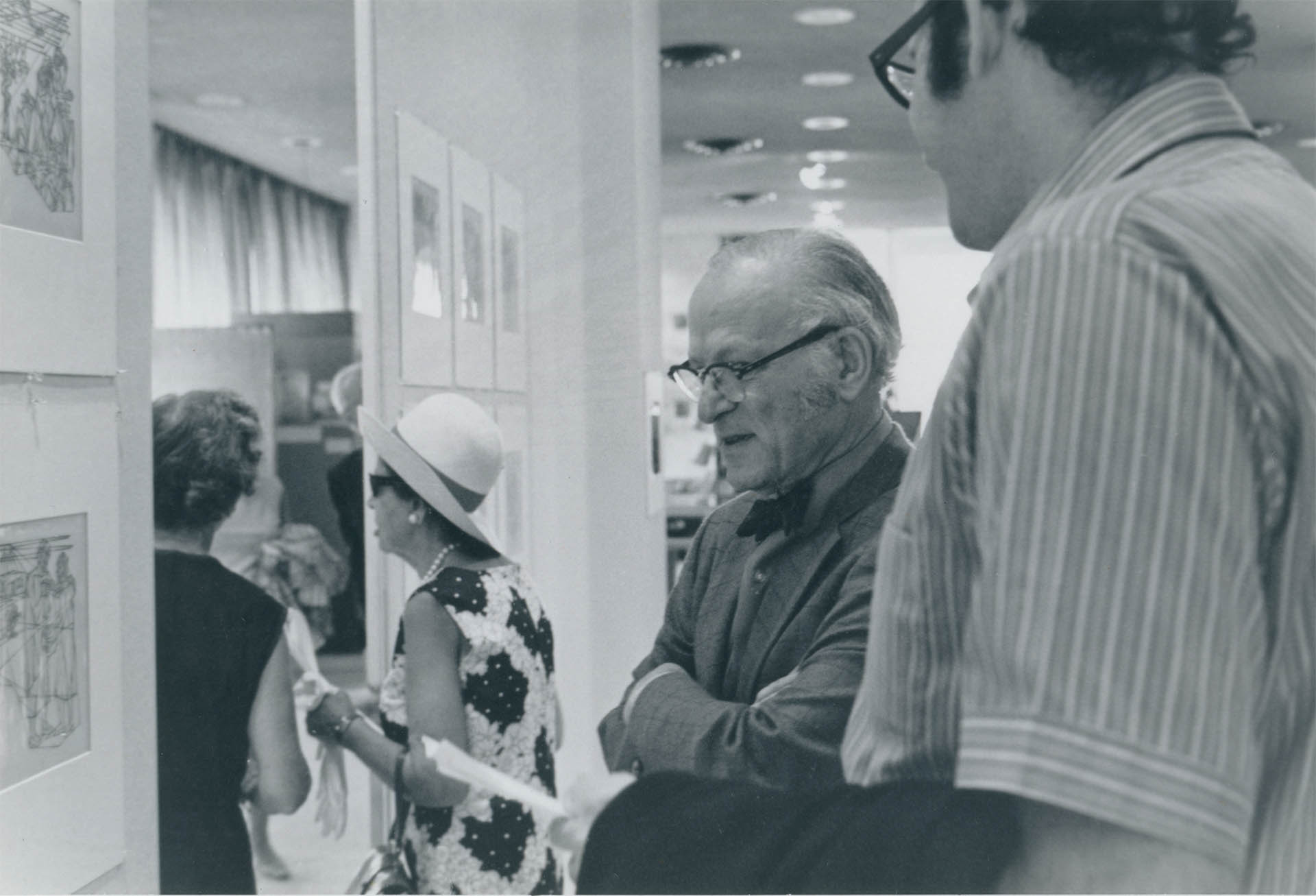
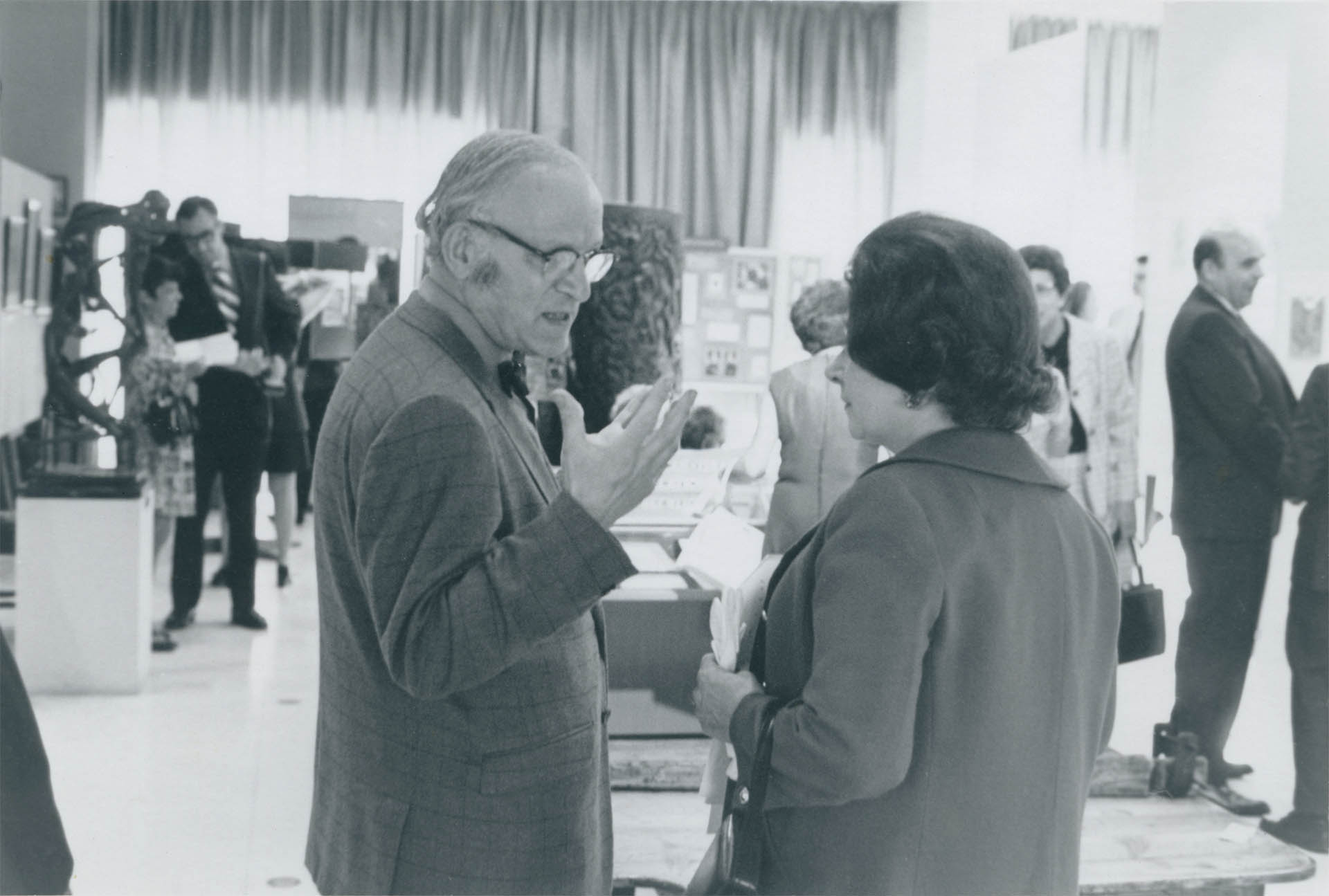
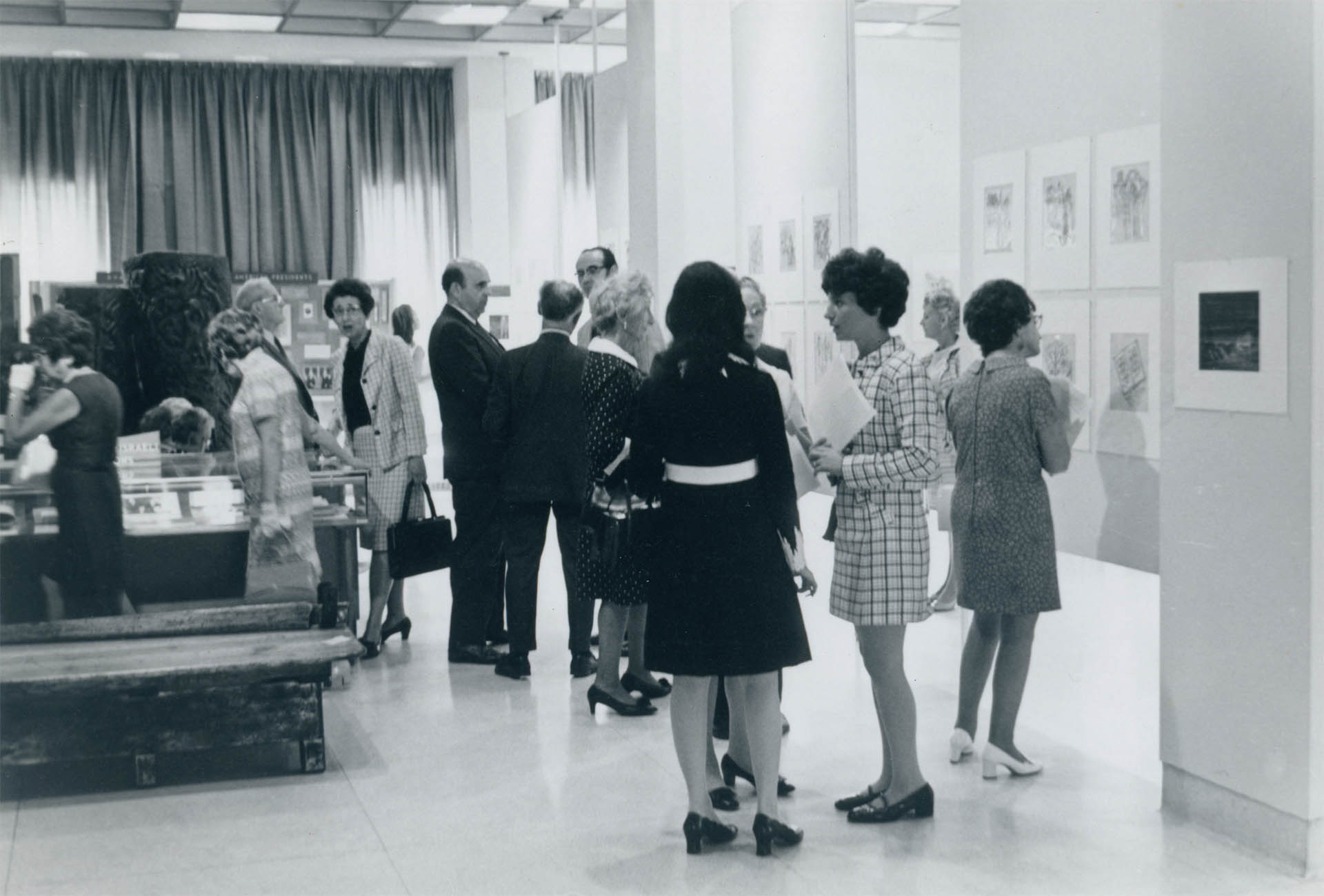
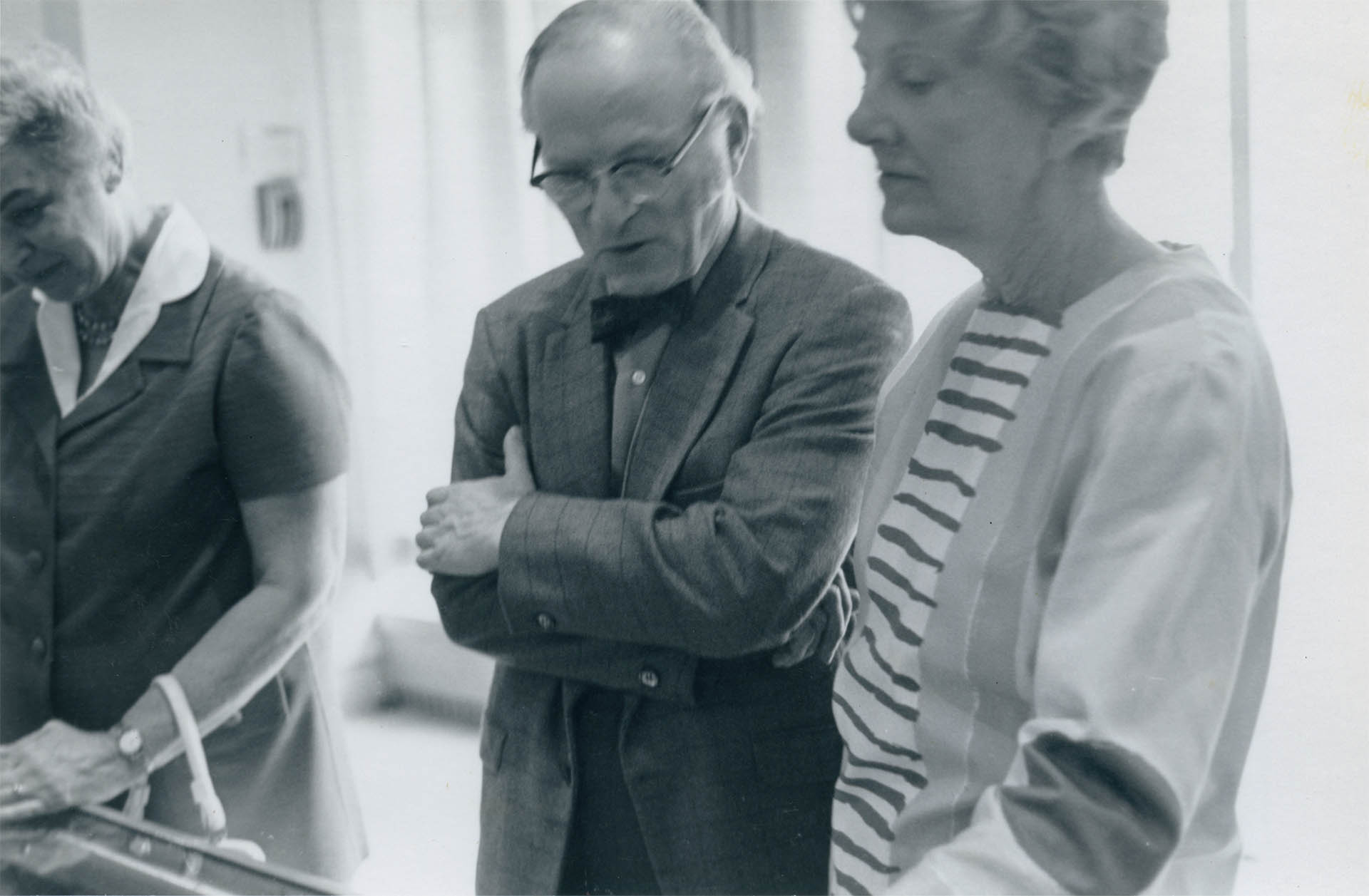
Former exhibition space for B’nai B’rith Klutznick Collection.
Established in 1957, the Phillip and Ethel Klutznick Exhibit Hall was part of the B’nai B’rith Klutznick National Jewish Museum, housed in B’nai B’rith headquarters on Rhode Island Avenue in Washington, DC. until the building was sold in 2002.
The Phillip and Ethel Klutznick Exhibit Hall exhibited Ismar David’s 58 drawings for The Psalms, prior to their publication in book form. The opening of the Psalms exhibition took place on September 13, 1970.
Born in Ukraine, studied in Kiev at the School of Art and Architecture and immigrated in 1922 to Jerusalem. During his career he also worked in the fields of: theater sets, graphic design and sculpture.
Intertype Corporation issued David Hebrew in 1954.
The International Typesetting Machine Company was founded in 1911 by Hermann Ridder and began by using rebuilt Linotype machines. In 1916, it gained a new owner and a new name, the Intertype Corporation and by 1917 it was produced its own streamlined typesetting machines, similar to Linotype.
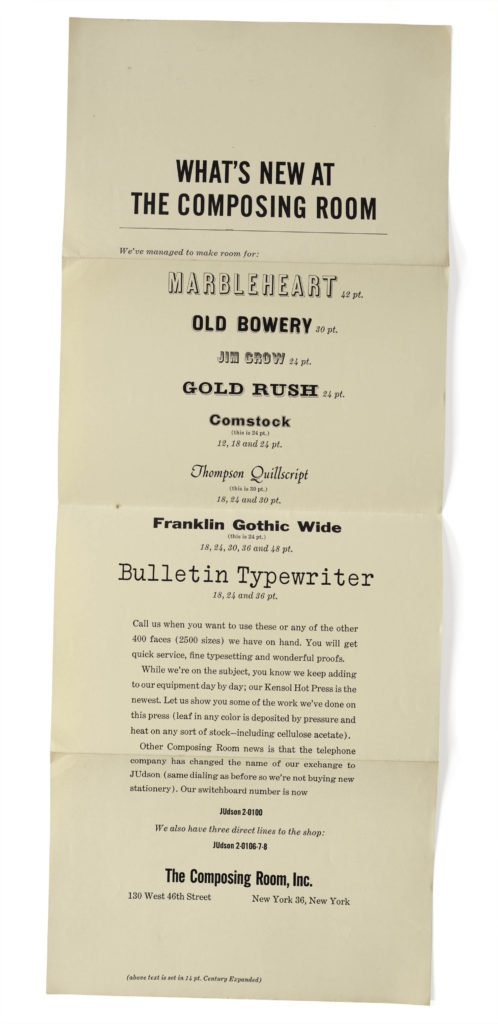
The Composing Room, type-setting firm founded by Sol Cantor and Robert L. Leslie in 1934.
The Composing Room became the sponsor for a variety of intellectual and educational endeavors starting with PM and A-D magazines, graphic arts courses, the A-D Gallery, Gallery 303 and eventually the lecture series Heritage of the Graphic Arts in the 1960s. Hortense Mendel David was publicity director and co-editor of publications.
Robert L. Leslie served as an intermediary between Ismar David (in Jerusalem) and Intertype (in Brooklyn) during the production of David Hebrew David metal type.
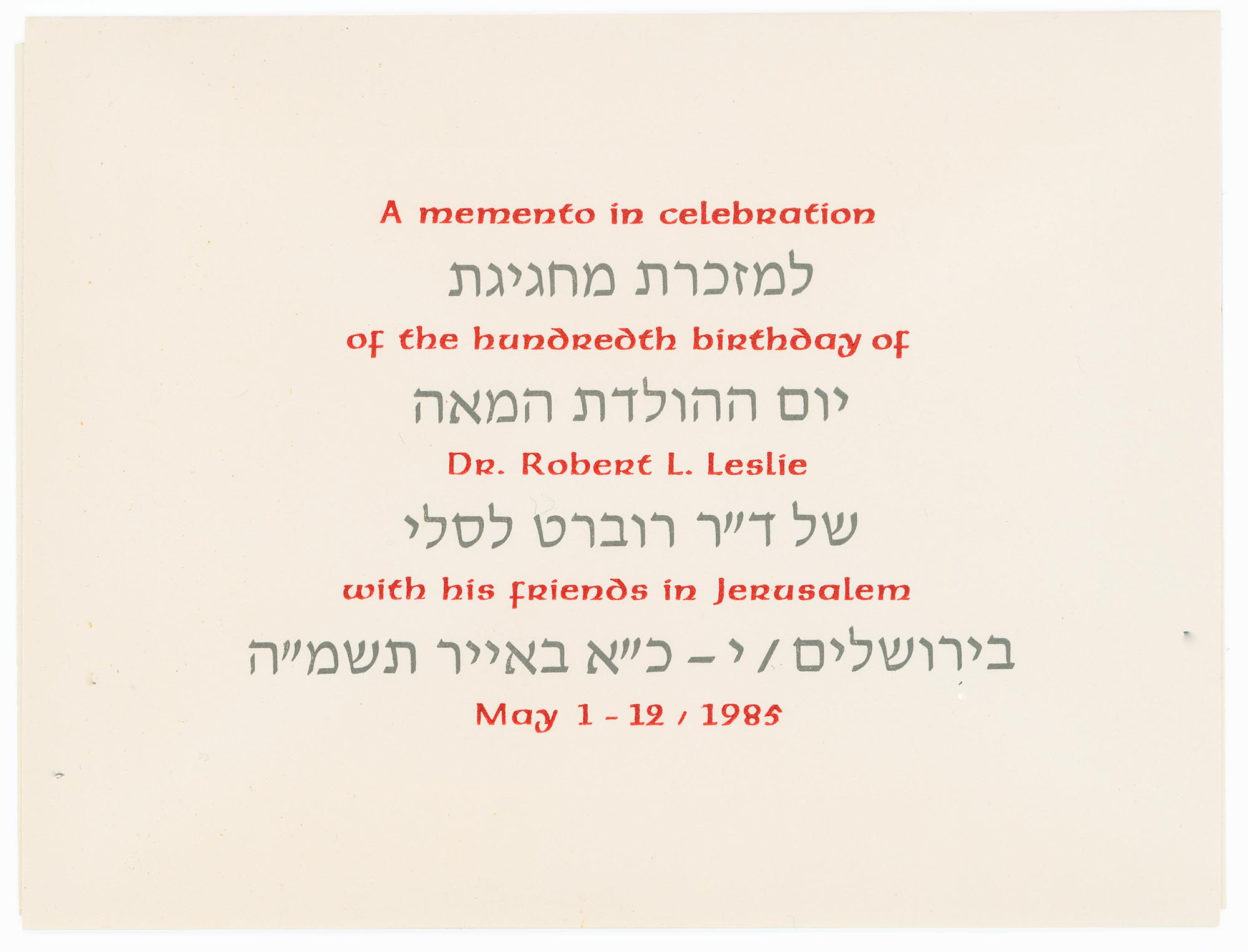
Robert Lincoln Leslie, 1885–1987, founder (with Sol Cantor) of The Composing Room, instrumental in getting David Hebrew to Intertype.
Trained as a medical doctor, Robert Leslie changed course in 1920, co-founding The Composing Room in 1927. From 1938, he employed Hortense Mendel David there as publicity director. Leslie facilitated communication and transactions between Ismar David and Intertype about David Hebrew.
In 1960, Ismar and Hortense David created a keepsake for Leslie’s seventy-fifth birthday.
As the package affirms:
The ideal food for babies and children,
digestible and nourishing for the sick and convalescent,
delicious and healthy for everyone!
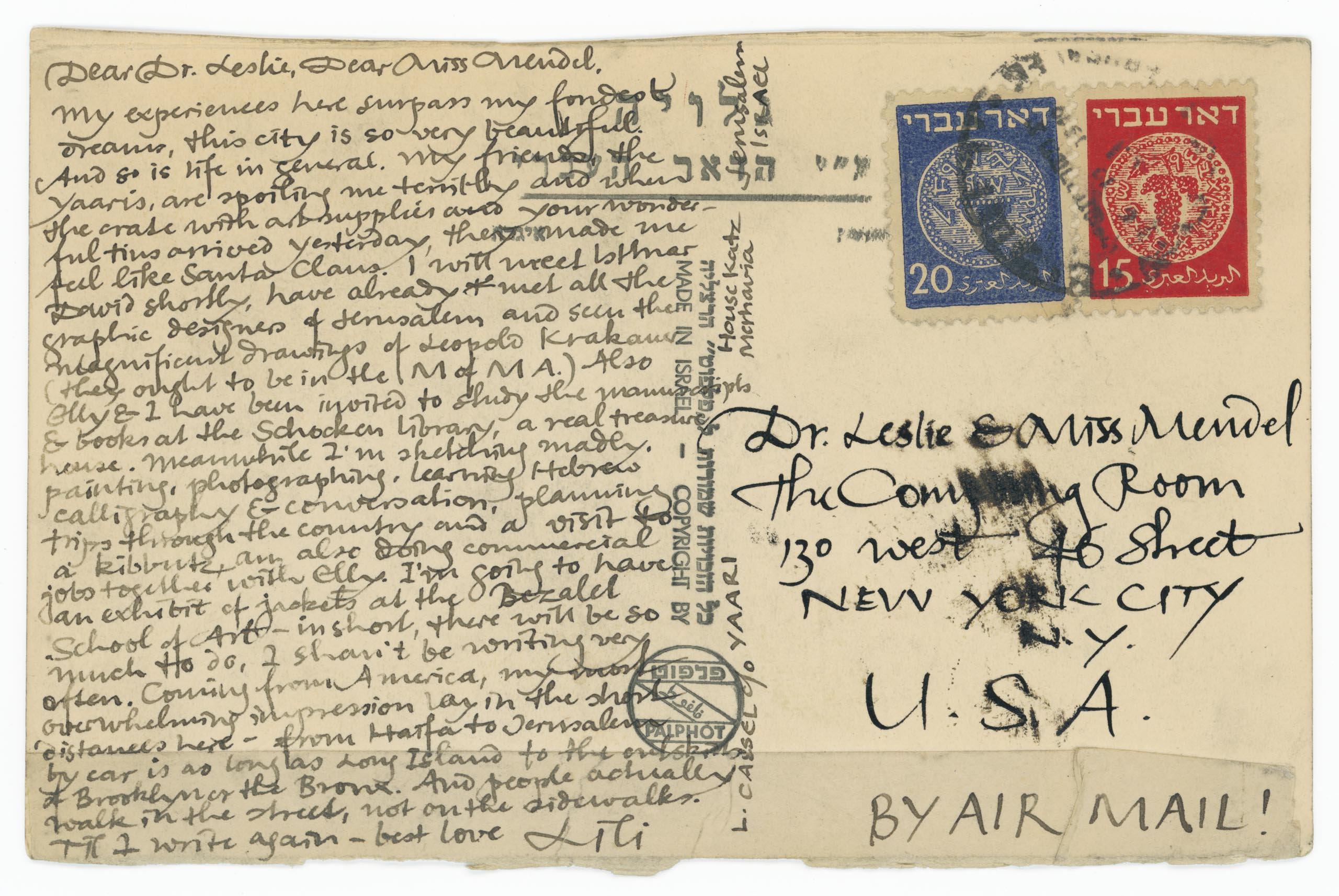
Wronker, Lili Cassel, 1924–2019, calligrapher and illustrator.
Born in Berlin, schooled partly in England, Lili Cassel emigrated as a teenager to the United States with her sister and parents. She was a freelance calligrapher and illustrator. Her husband, Erich Wronker worked as a printer at the United Nations. They had two printing presses in their home and collaborated on various printing projects. Printers Clarke & Way gave the Wronkers the metal sorts of David Hebrew that had been cast for Ismar David’s contribution to Liber Librorum, 1955.
My experiences here surpass my fondest dreams, this city is so very beautiful. And so is life in general. My friends, the Yaaris, are spoiling me terribly and when the crate with art supplies and your wonderful tins arrived yesterday, they made me feel like Santa Claus. I will meet Istmar [sic] David shortly, have already met all the graphic designers of Jerusalem and seen the magnificent drawings of Leopold Krakauer (they ought to be in the M of MA.) Also Elly & I have been invited to study the manuscripts & books at the Schocken Library, a real treasure house. Meanwhile I’m sketching madly, painting, photographing, learning Hebrew calligraphy & conversation, planning trips through the country and a visit to a kibbutz, am also doing commercial jobs together with Elly. I’m going to have an exhibit of jackets at the Bezalel School of Art–in short, there will be so much to do, I shan’t be writing very often. Coming from America, my most overwhelming impression lay in the short distances here—from Haifa to Jerusalem by car is as long as Long Island to the outskirts of Brooklyn or the Bronx. And people actually walk in the street, not on the sidewalks.
Til I write again—best love Lili
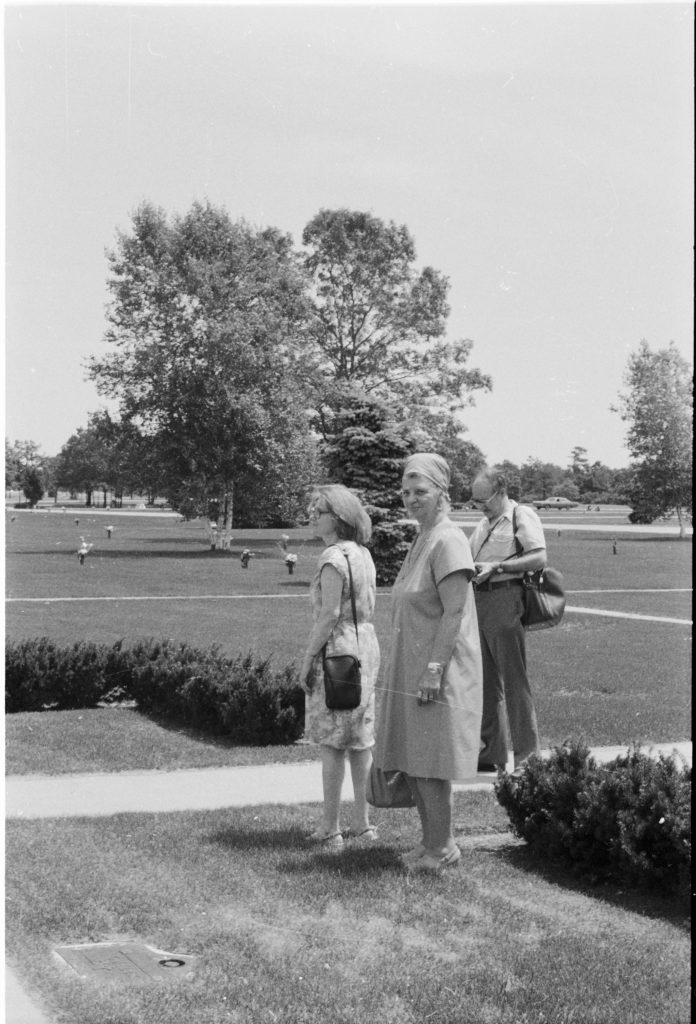
Lili Wronker, Dorothy David and Erich Wronker at Pinelawn Memorial Park. Undated photo.
Kelvin J. Arden, 1912–2012, pioneer in the field of College and University Publications, member AIGA and Typophiles.
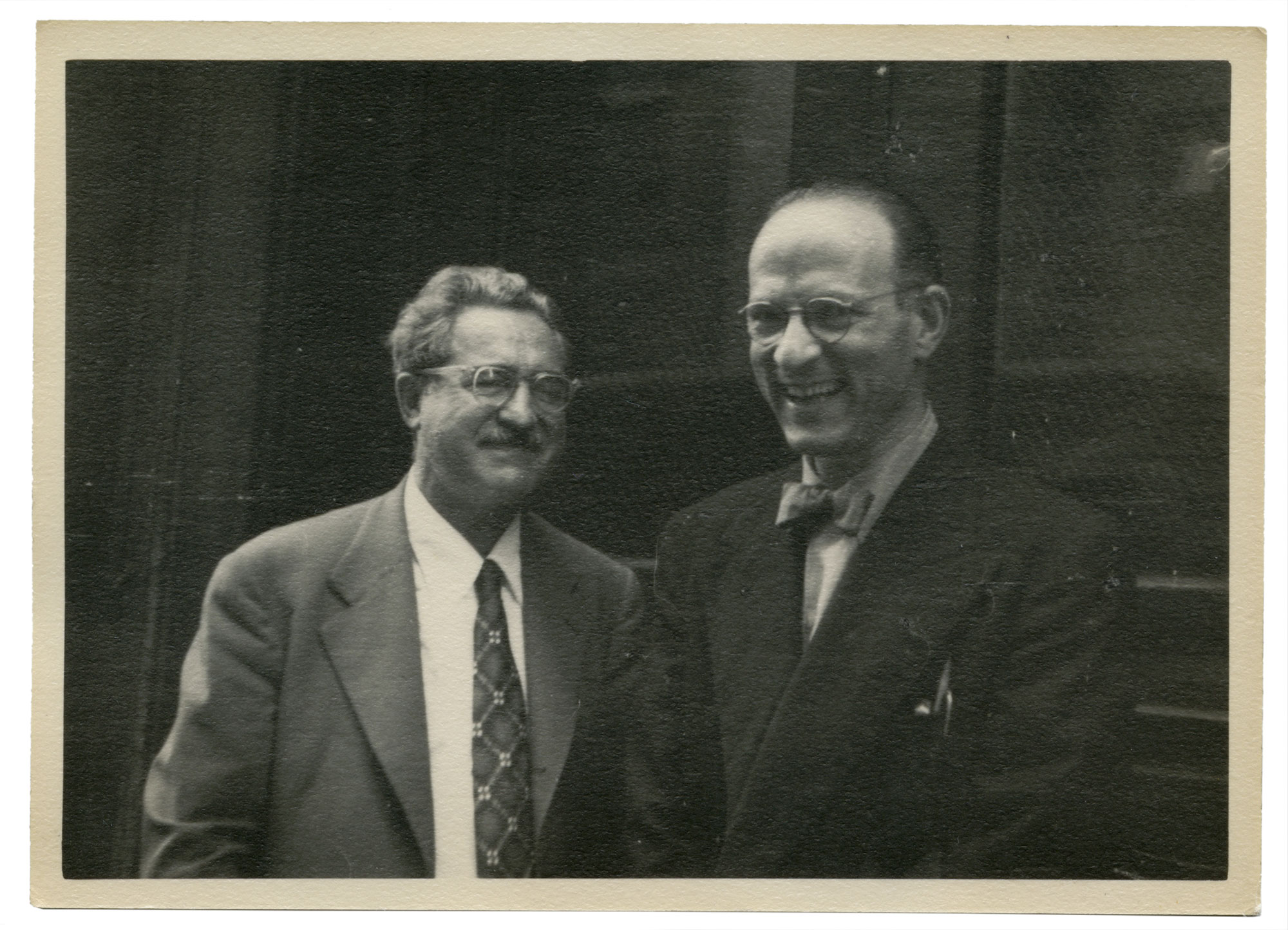
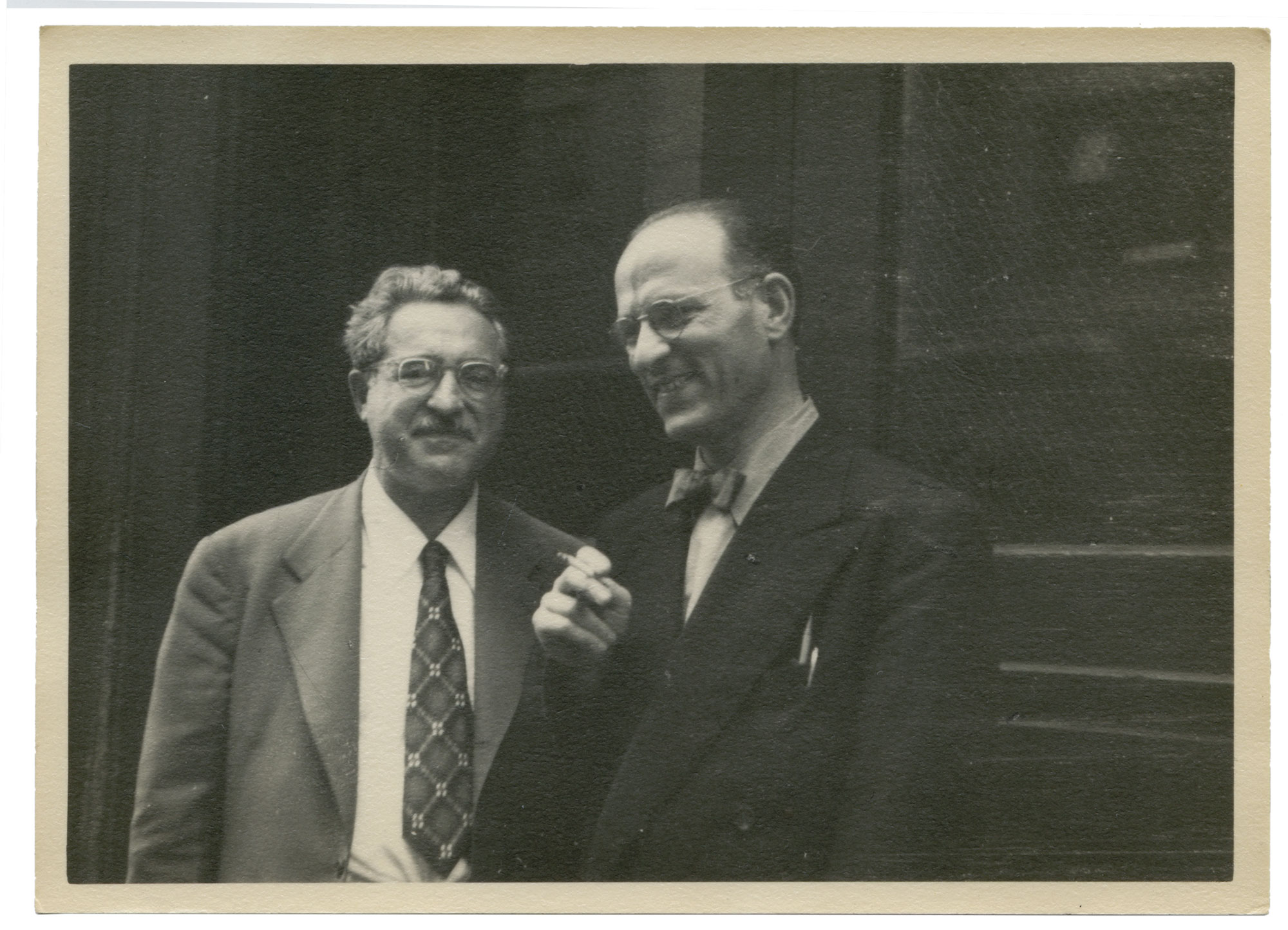
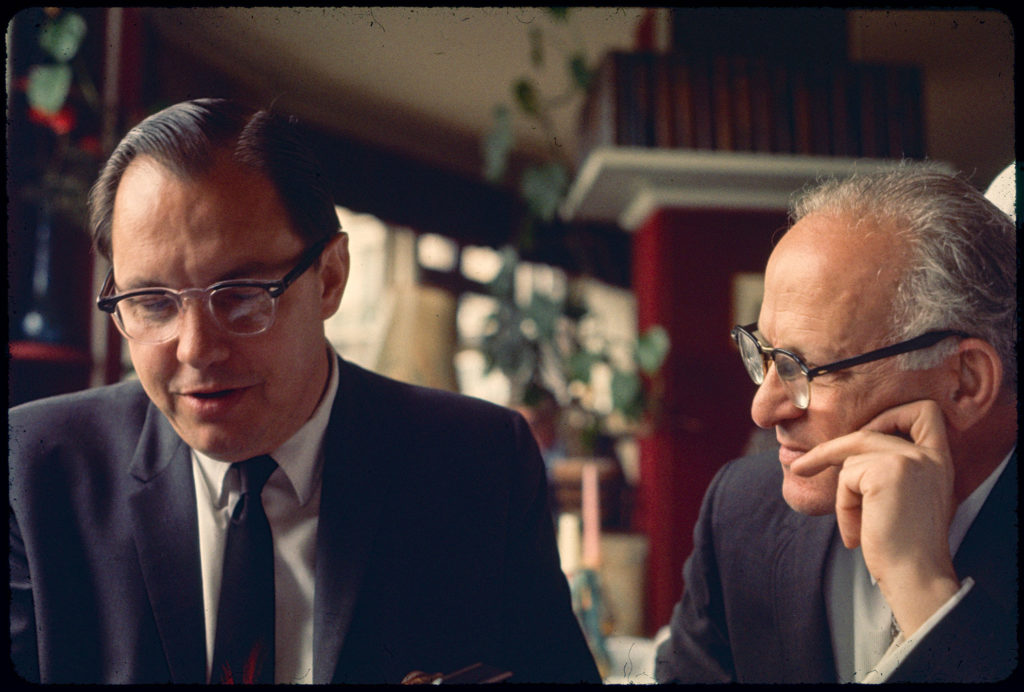
Kelvin Arden and Ismar David.
Kelvin Arden established the publication departments in both New York University and Cornell. He was a member of the Typophiles, the Type Directors Club, the AIGA and the American Printing History Association. A fuller portrait can be found here.
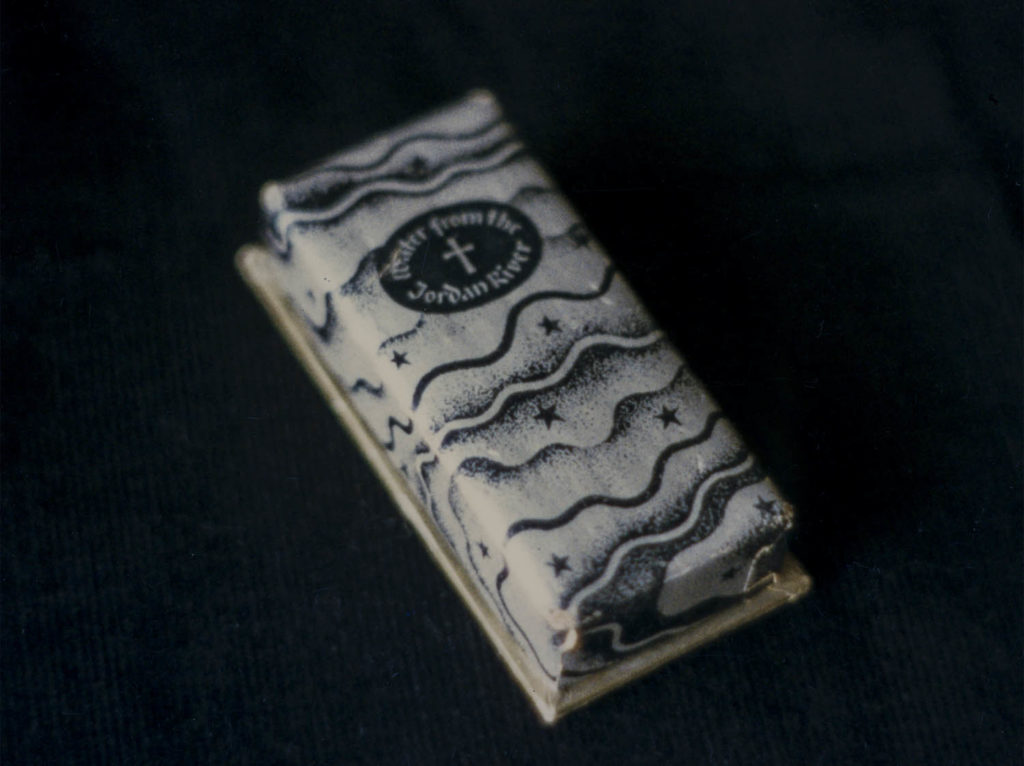
A birthday tribute from Ismar David, detailing a joint project from Eretz Israel.
The packaging for an amulet containing a vial of water from the Jordan River.
In the Promised Land (so named because it is the land of promises, made, kept and broken, lived the young upright man Helios the image-maker with his family. He had settled in the land in which milk and honey flow, but his share in these blessings was meager.
To improve his lot, he took stock of his assets and decided to use his ingenious craft of image-making. Thus he would exchange images (printed ones, of course) for dough, the kind of dough that would buy some amenities and [the] additional milk and honey needed to sustain a family. He was assisted in his endeavor by another image maker of lifetime experience, who was steeped in the traditions of the land of promises and knew when to make and how to break them.
It was then that other promising chances appeared on the horizon. A man, who as organizer of caravans had contact with the outside world, had a great vision. He noticed that it was not only milk and honey that flowed through the land, but also the Jordan River and remembering that the Promised Land was also the Holy Land, he saw the Christian world craving for a symbol of the land’s holiness and himself stilling this craving by distributing minute quantities of the Jordan’s water [among] them. Needless to say that he saw himself already richly rewarded for his humanitarian act. To convert this vision into reality he sought out Helios the image-maker to create an image of holiness containing visibly the drop of holy water. The caravan organizer sounded convincing, but he did not rely on his power of persuasion. He rather suggested that a scroll of certification signed by the High Priest be attached to each packaged drop to put the minds of millions, who would behold the drop of holiness, at ease.
Here was a challenge for the image-maker. The water, he thought, should be contained in a vial. The vial should be set in wood that would protect it, but still allow the precious drop to be visible. A ribbon attached to the wood would make it wearable as an amulet and a scroll would guaranty its authenticity. All this would be in a box available for a few piasters a piece. But remember the millions waiting for the chance to own this unique certified talisman. Perhaps the simplest thing to produce was the box that was to contain the amulet and scroll. The scroll was a different matter. It was easily designed and printed, but after the high priest had signed the first 50 certificates, he had second thoughts and threatened to withhold further signatures. The wooden container, after trial and error, was satisfactory, but the vial of the small size needed became a problem for which the final solution was a section of glass tubing sealed with wax at both ends. Alas, the holy water evaporated before it reached the waiting millions. The end of a vision.
The image maker’s wife was well as the writer of these lines functioned as assistants. Names are changes so that the writer cannot be held responsible for distorting facts. I remember with affection other events and deeds of the same period, especially the image-maker’s generous and invaluable help and support for my project, the design of contemporary Hebrew letters for printing.
With my and Dorothy’s best wishes for many happy returns.
A short memorial address by Ismar David about George Salter, 1897–1967, graphic designer, colleague and friend.
Today we are meeting here to evoke the presence of a great teacher who, by giving of himself so much to his students, has helped to establish the outstanding reputation which Cooper Union enjoyed during the decades of his teaching. George Salter’s concern for each individual student was not only professionally motivated but of [a] deep human nature. His personal, as well as his artistic integrity, touched everyone who was privileged to know him.
He has influenced my life when he recommended me as instructor for calligraphy in the year 1954. I am still grateful for his trust in me while I was a newcomer to this country with limited experience as an instructor. He was one of those artists who seem to remain young while continuously developing. The work of his later years truly impressed me as it seemed to deepen and to reveal his unique and humane personality to a higher degree than his earlier work that I had known.
His reward are those students who have made over the years a name for themselves and through their own work continue a tradition that George had started and thus his spirit remains with us.