AIGA, the oldest and largest professional membership organization for design.
Founded in 1914, the AIGA has more than 70 chapters and more than 18,000 members. The organization works to advance design as a professional craft, strategic advantage, and vital cultural force.
Ismar David was a member of the organization. He was on the jury of an AIGA exhibition, Paperbacks, USA, covers from 1957-59, along with Louis Dorfsman, Albert Dorne, Raymond B. Dowden, Robert Gage and Theodore Willentz. 1“AD News: AIGA’s PforC show deadline Jan. 15,” Art Direction: The Magazine of Creative Advertising, January, 1960, p.62. In 1973, The Psalms, which he designed and illustrated, was chosen for “Fifty Books of the Year” and in 1974 The AIGA Gallery in NYC exhibited his work.
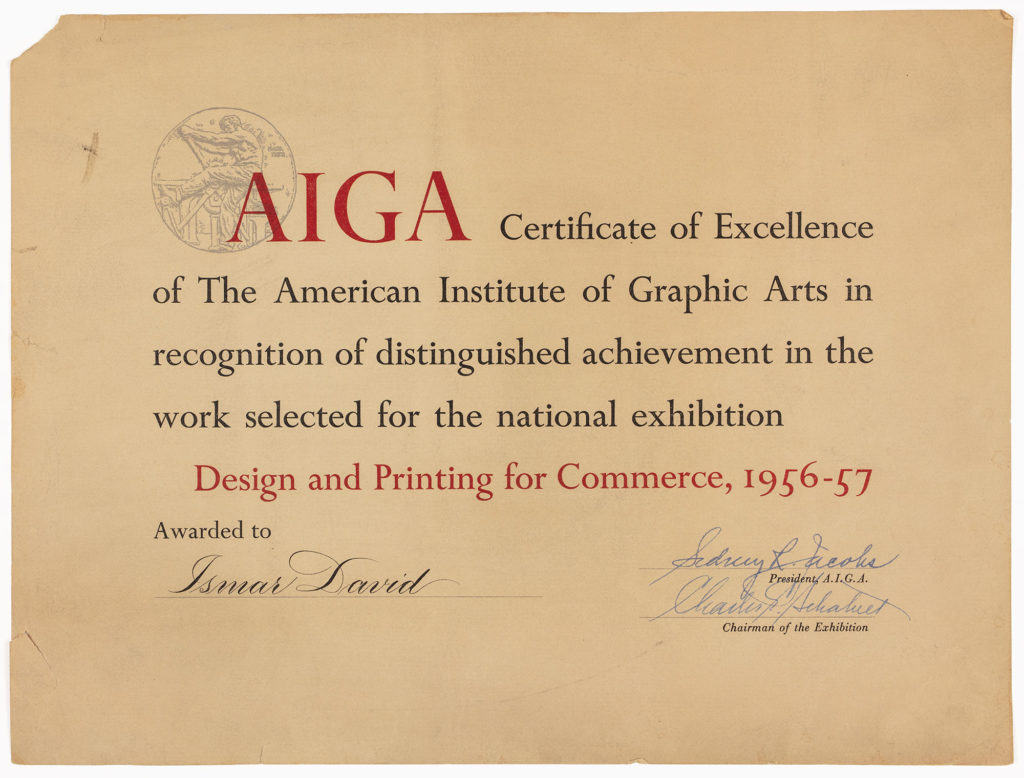
AIGA Certificate of Excellence for Design and Printing for Commerce, 1956–57.
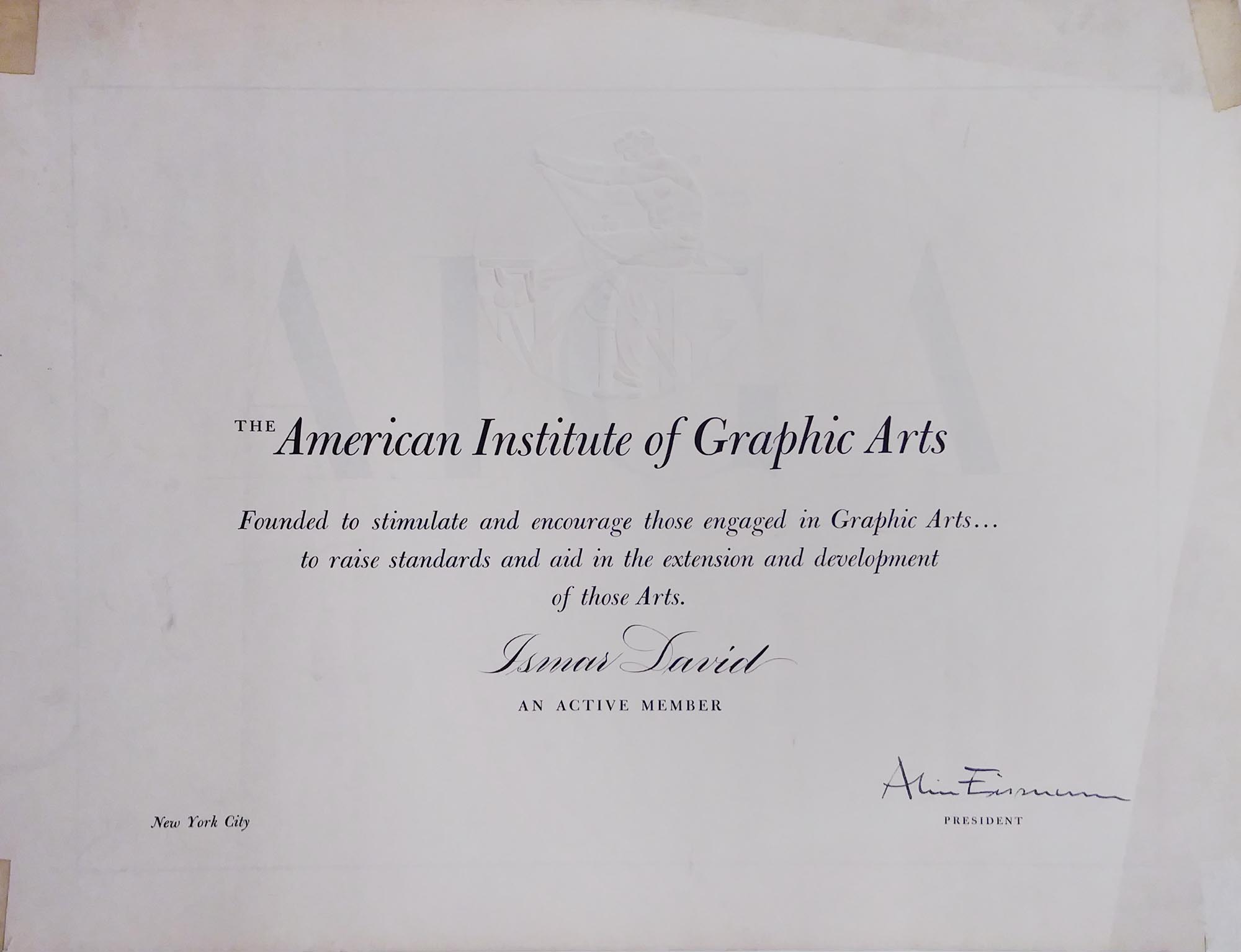
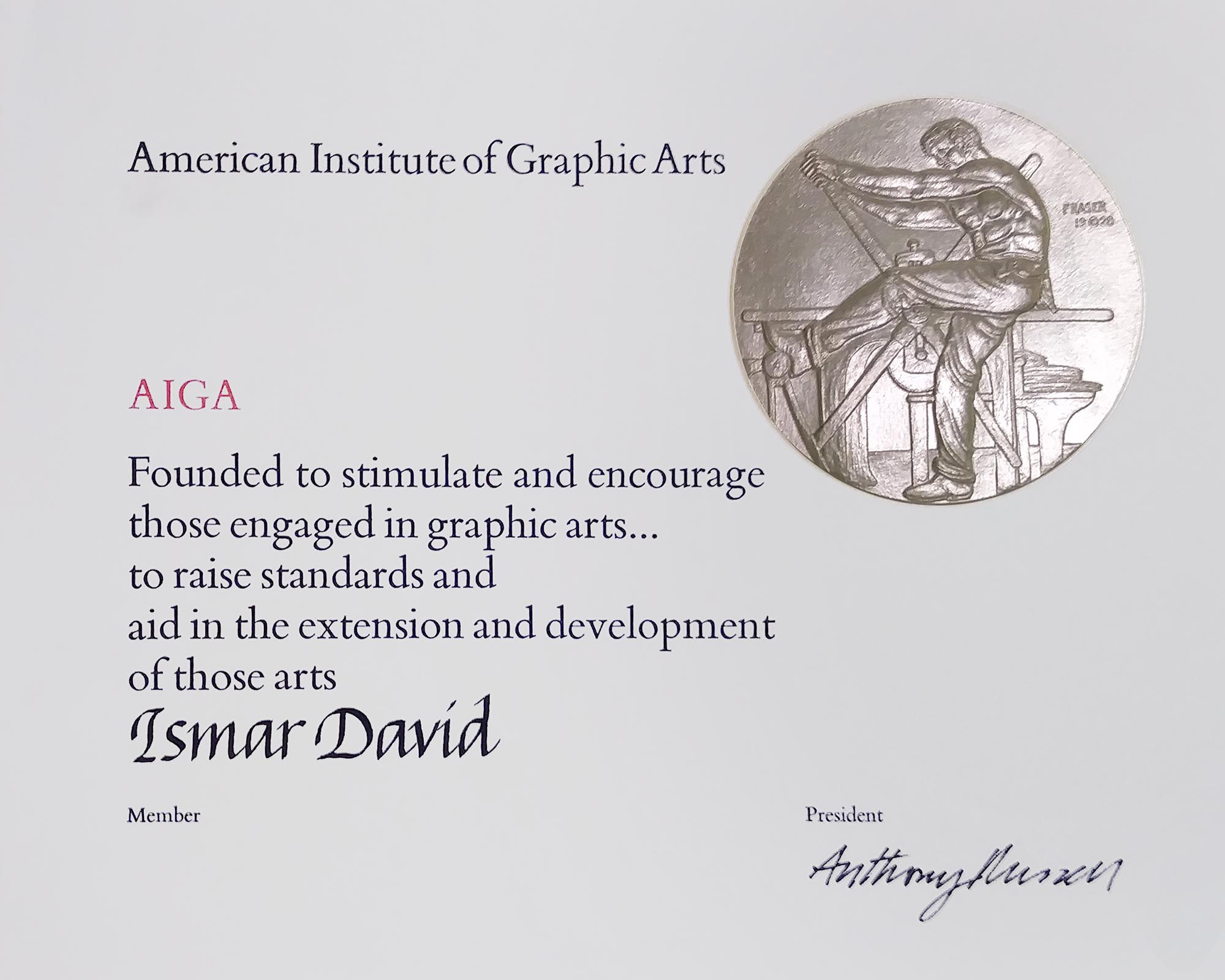
Undated membership certificate for the American Institute of Graphic Arts.
Undated membership certificate for the American Institute of Graphic Arts.
Ernst Reichl, 1900–1980, book designer, typographer.
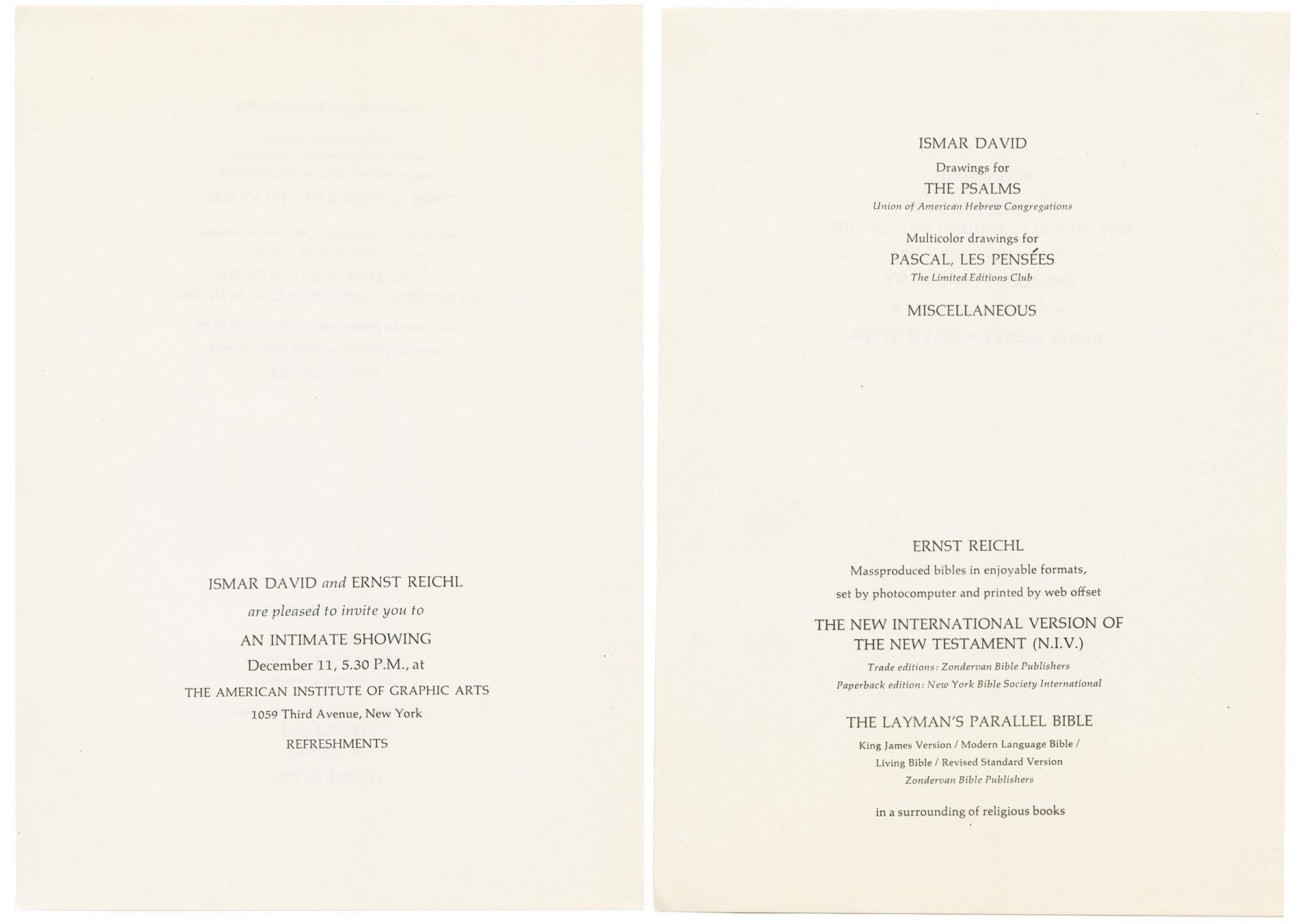
Born in Leipzig, Ernst Reichl was already a book designer when he emigrated to the United States in 1926. He held a Ph.D from the University of Leipzig, designed thousands of books and taught at New York University. He was active in the American Institute of Graphic Arts, the Type Directors Club and the Typophiles. He shared office space with Ismar David for a while and they had a joint exhibition at AIGA in 1974.
Invitation to an exhibition of work by Ismar David and Ernst Reichl at the AIGA.
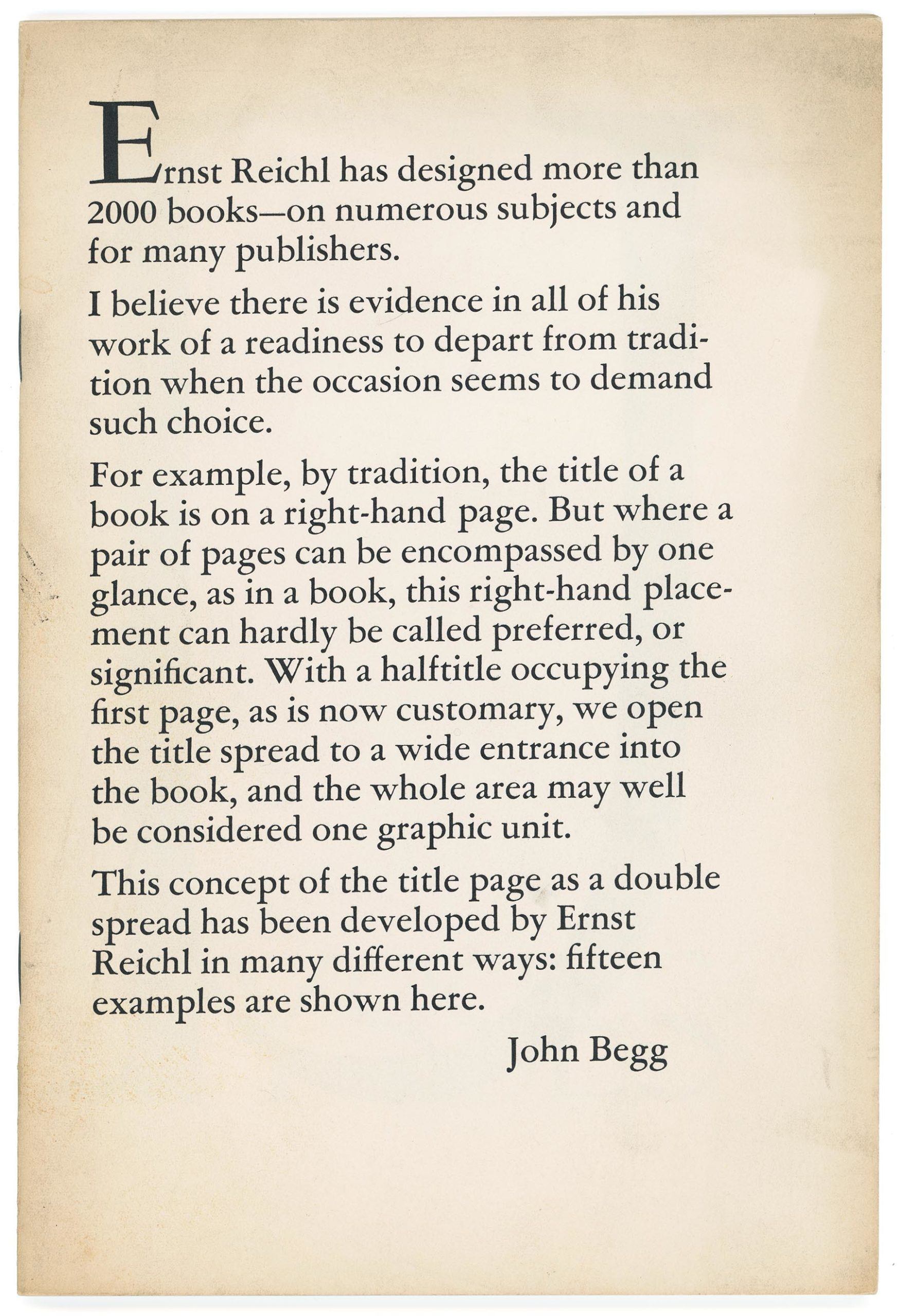
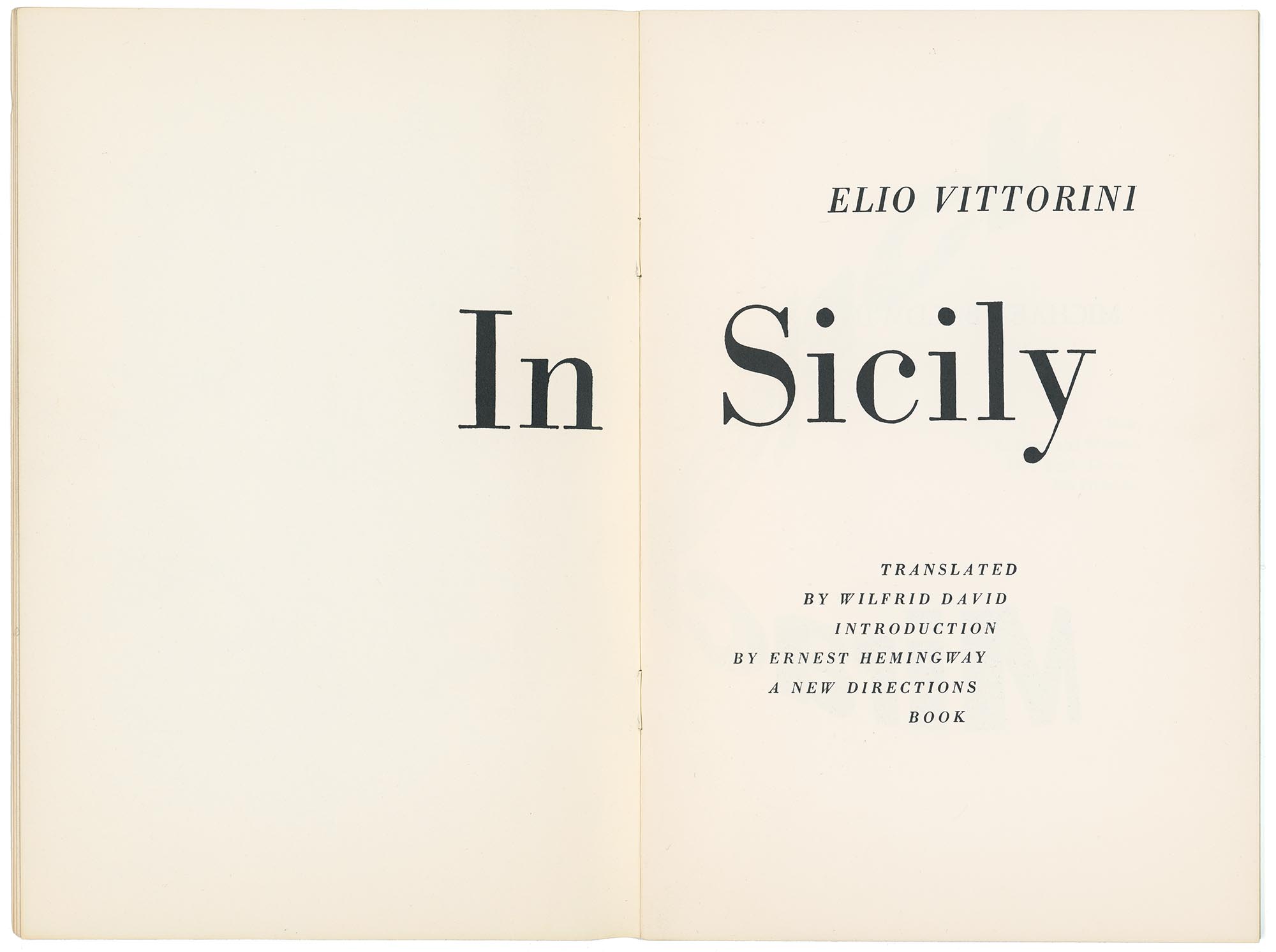
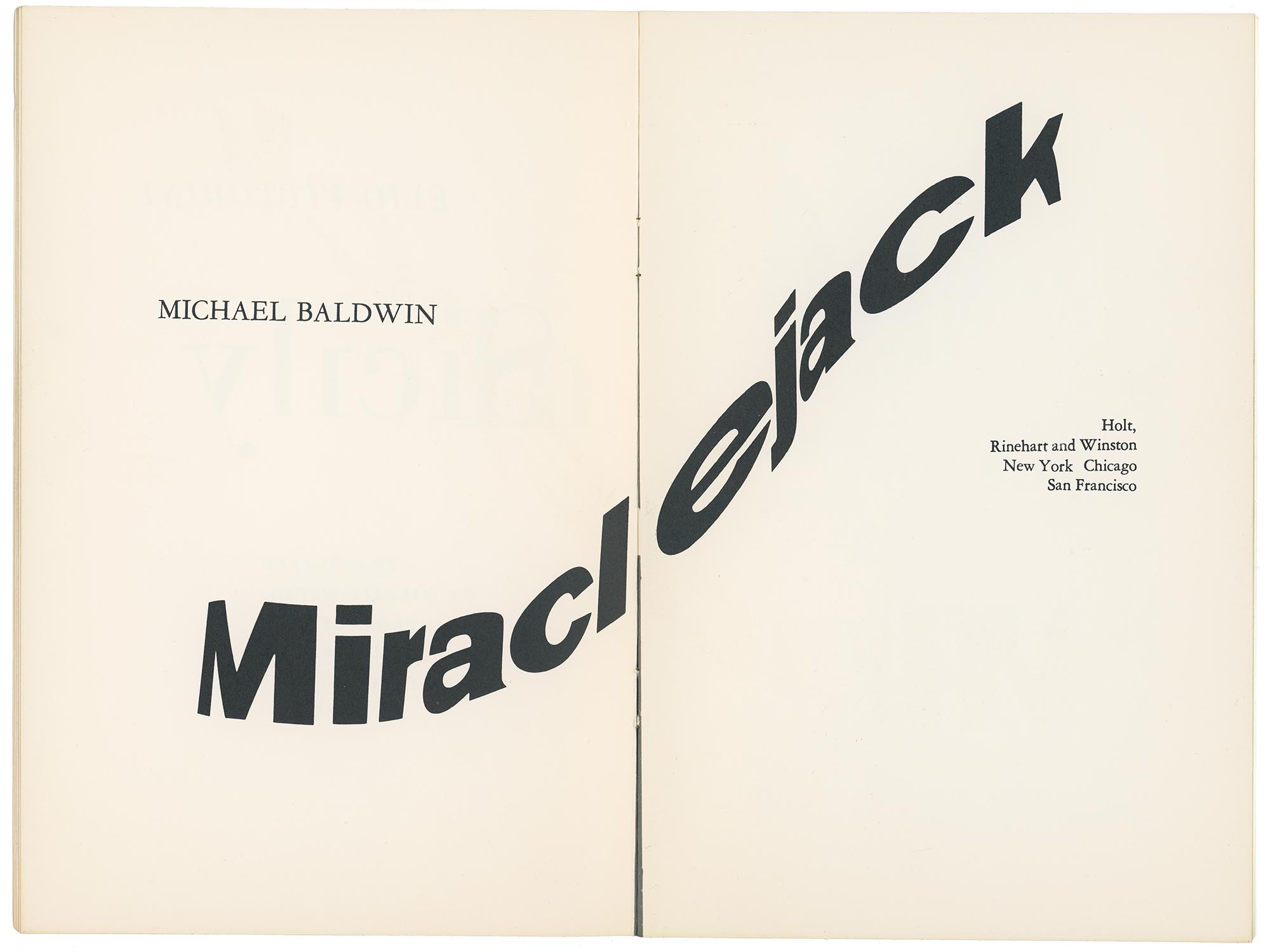
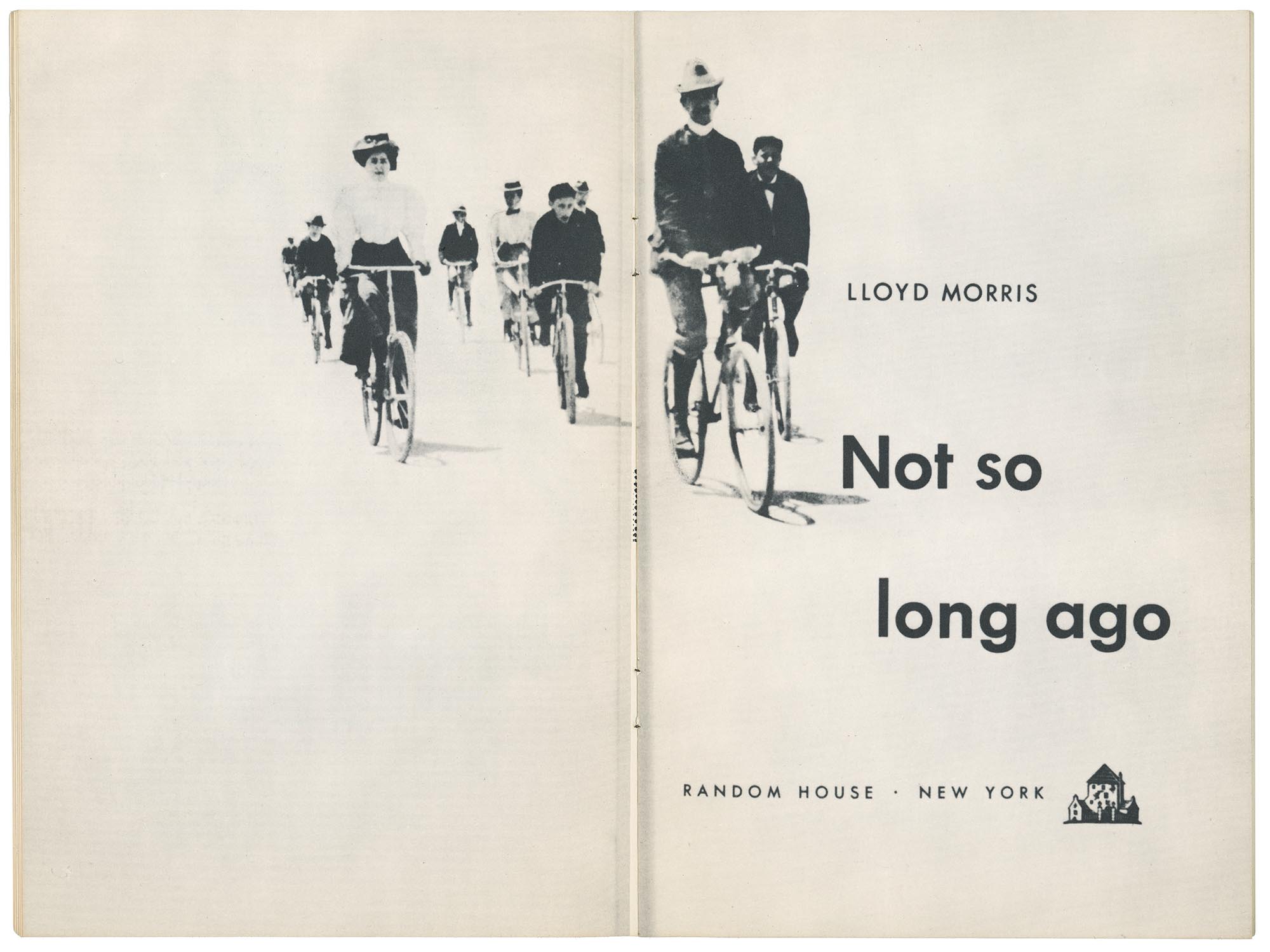
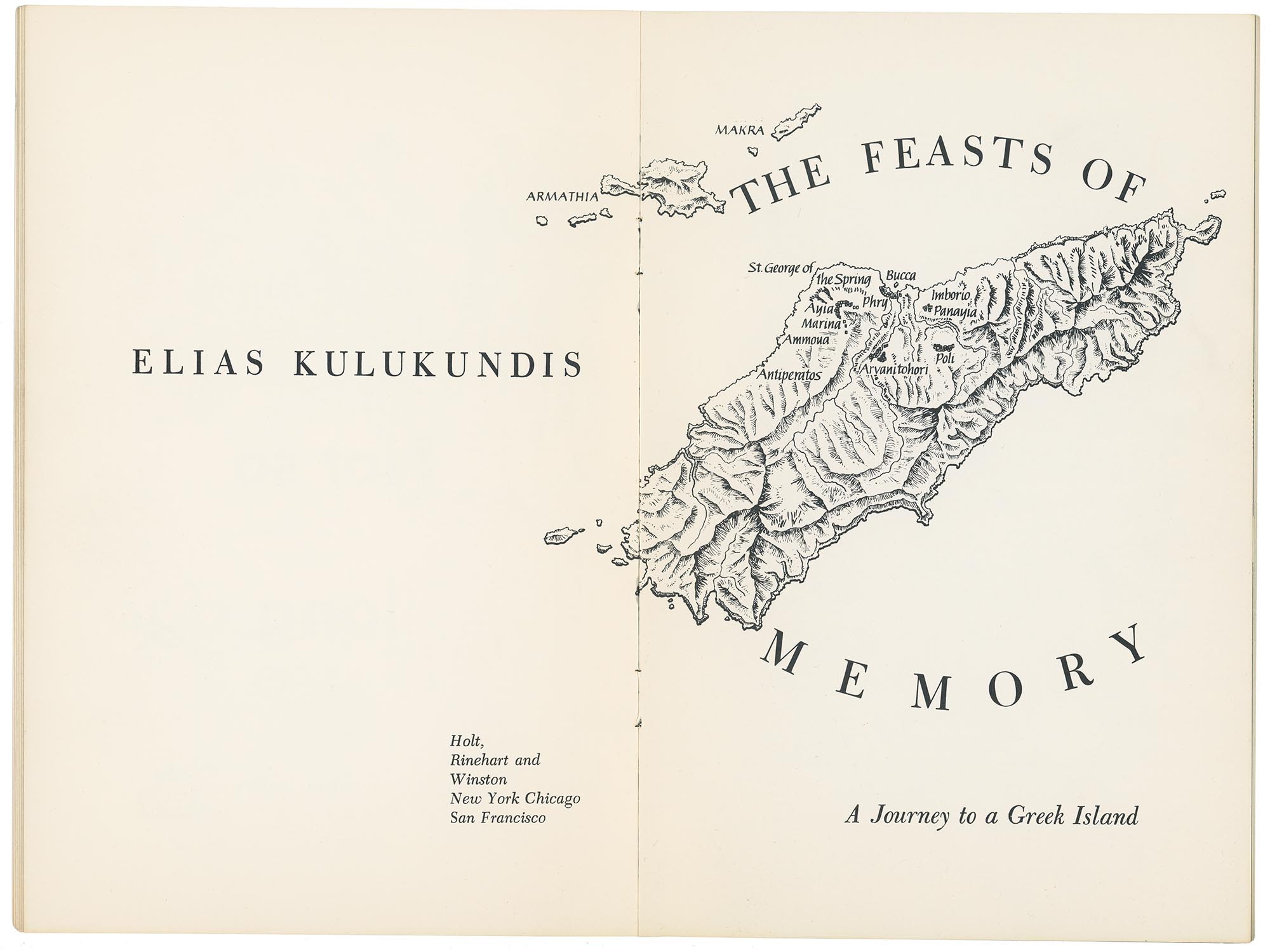
Ernst Reichl has designed more than 2000 books—on numerous subjects and for many publishers. I believe there is evidence in all of his work of a readiness to depart from tradition when the occasion seems to demand such choice.
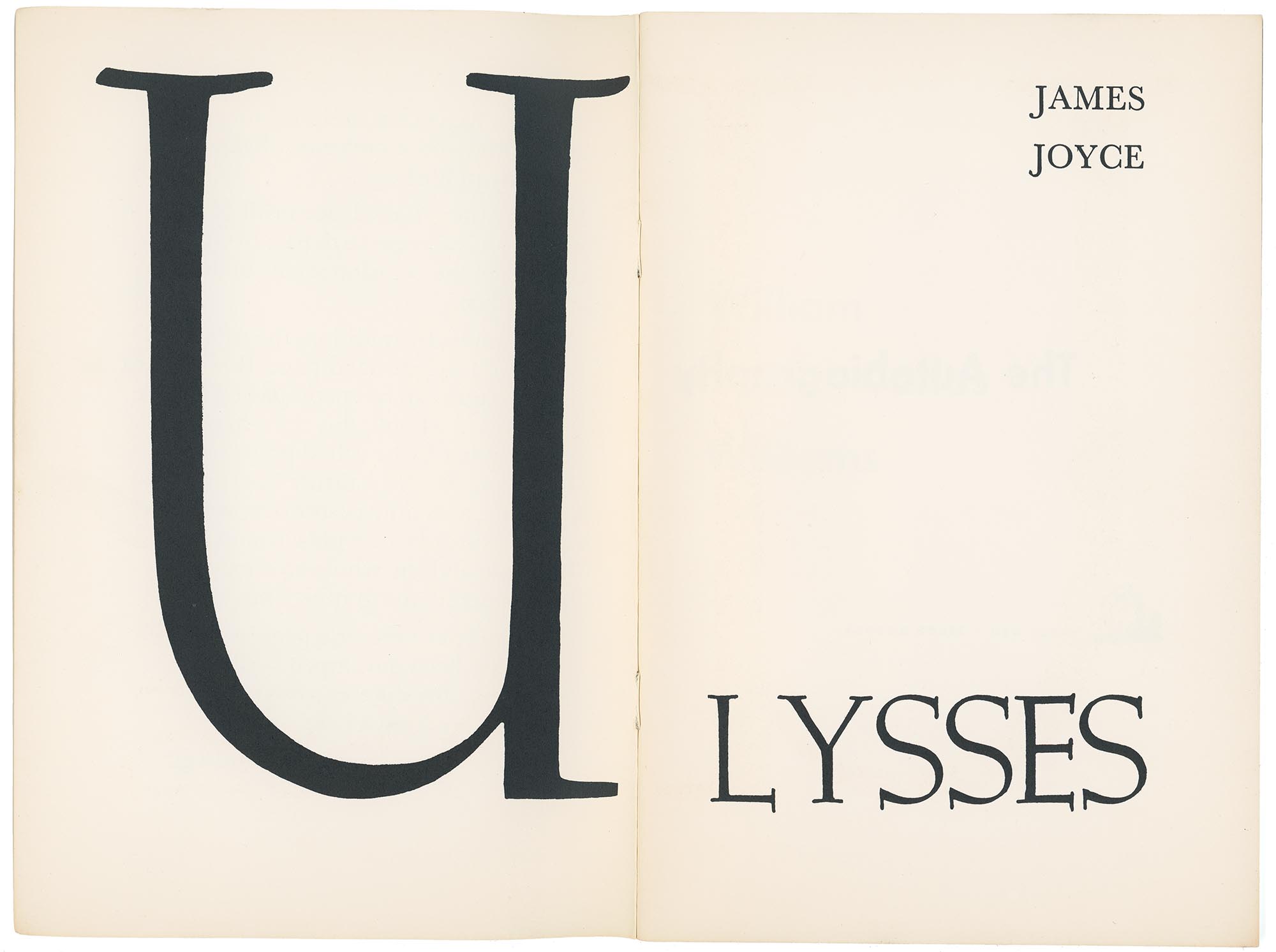
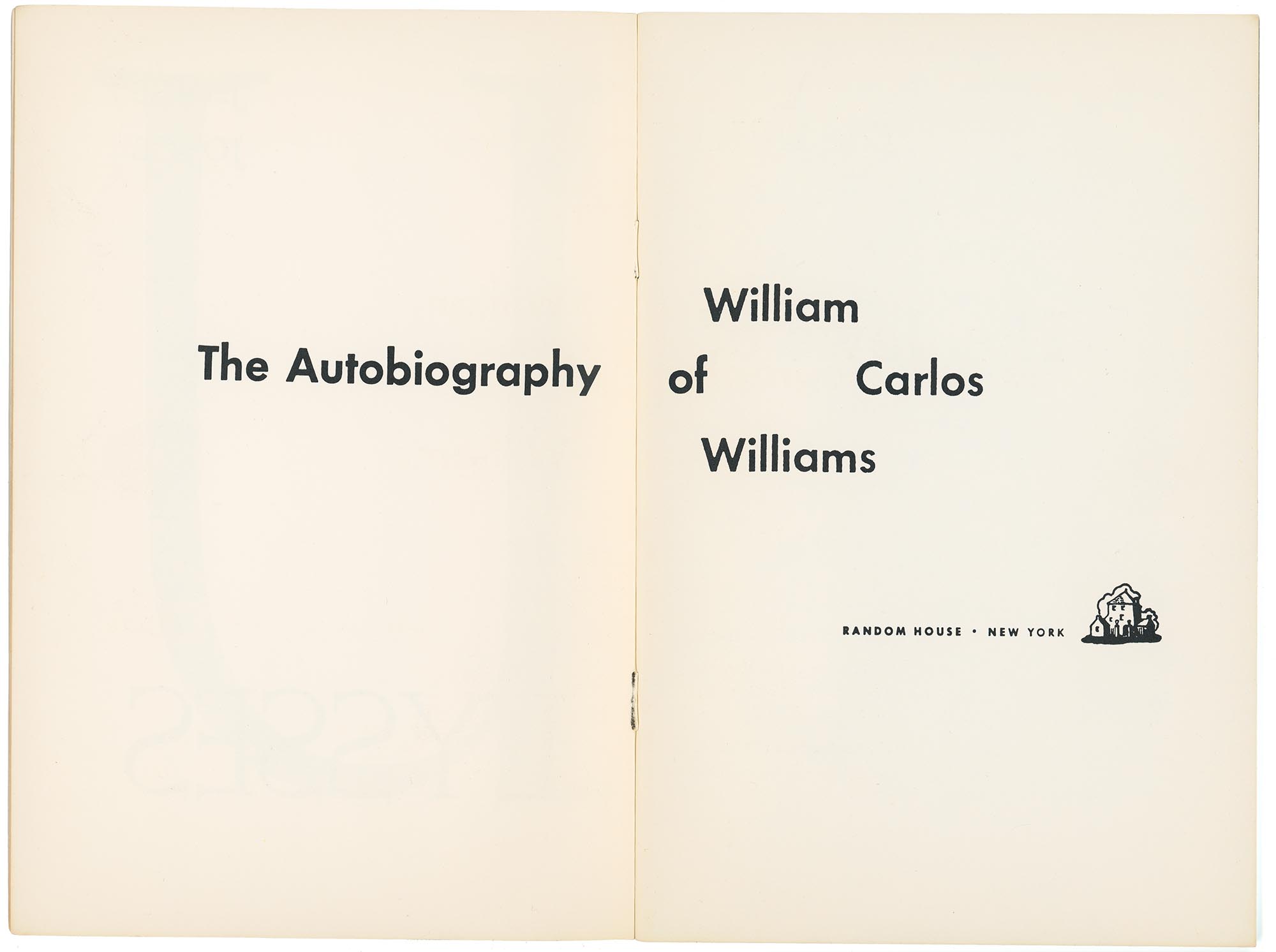
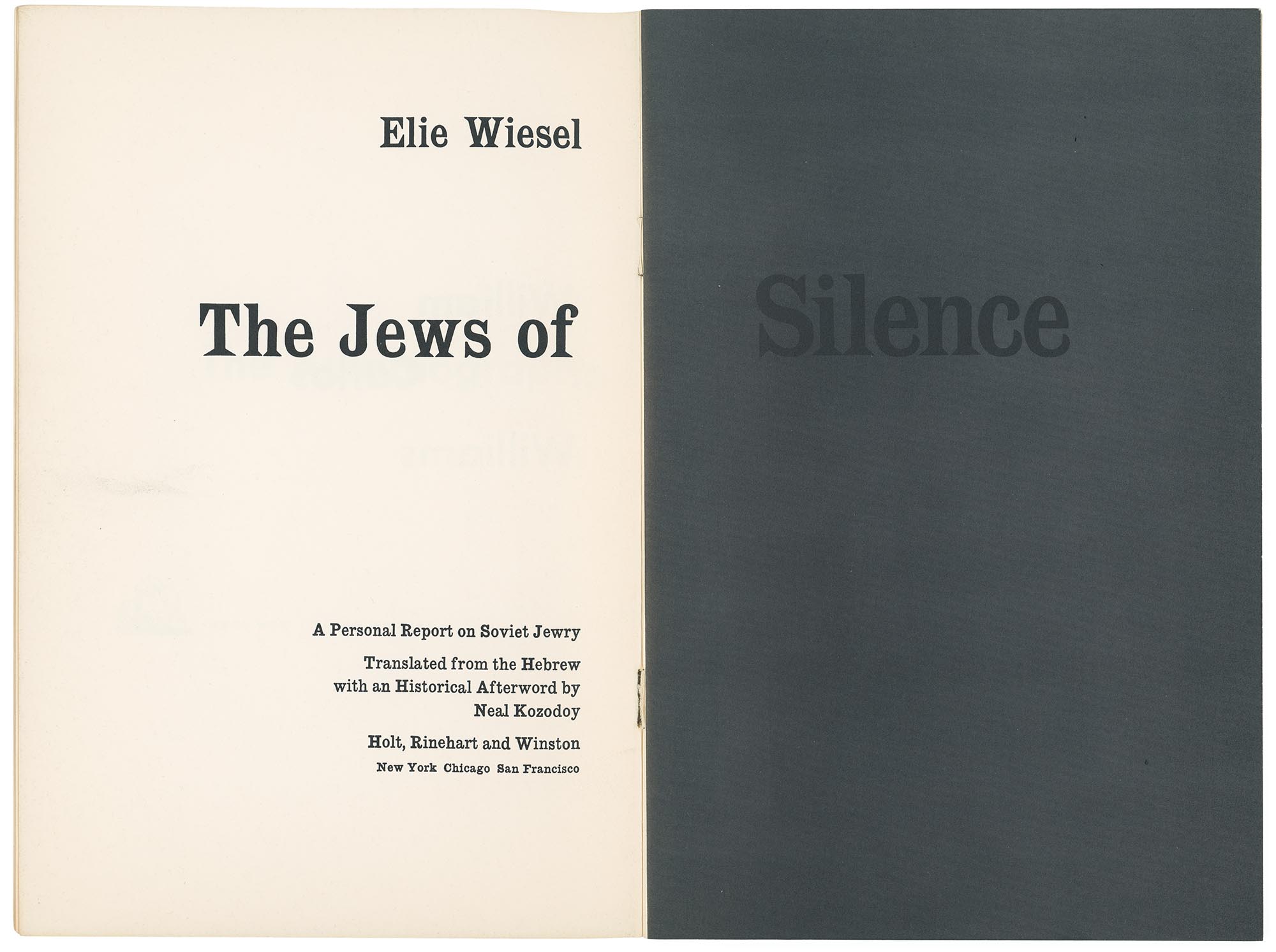
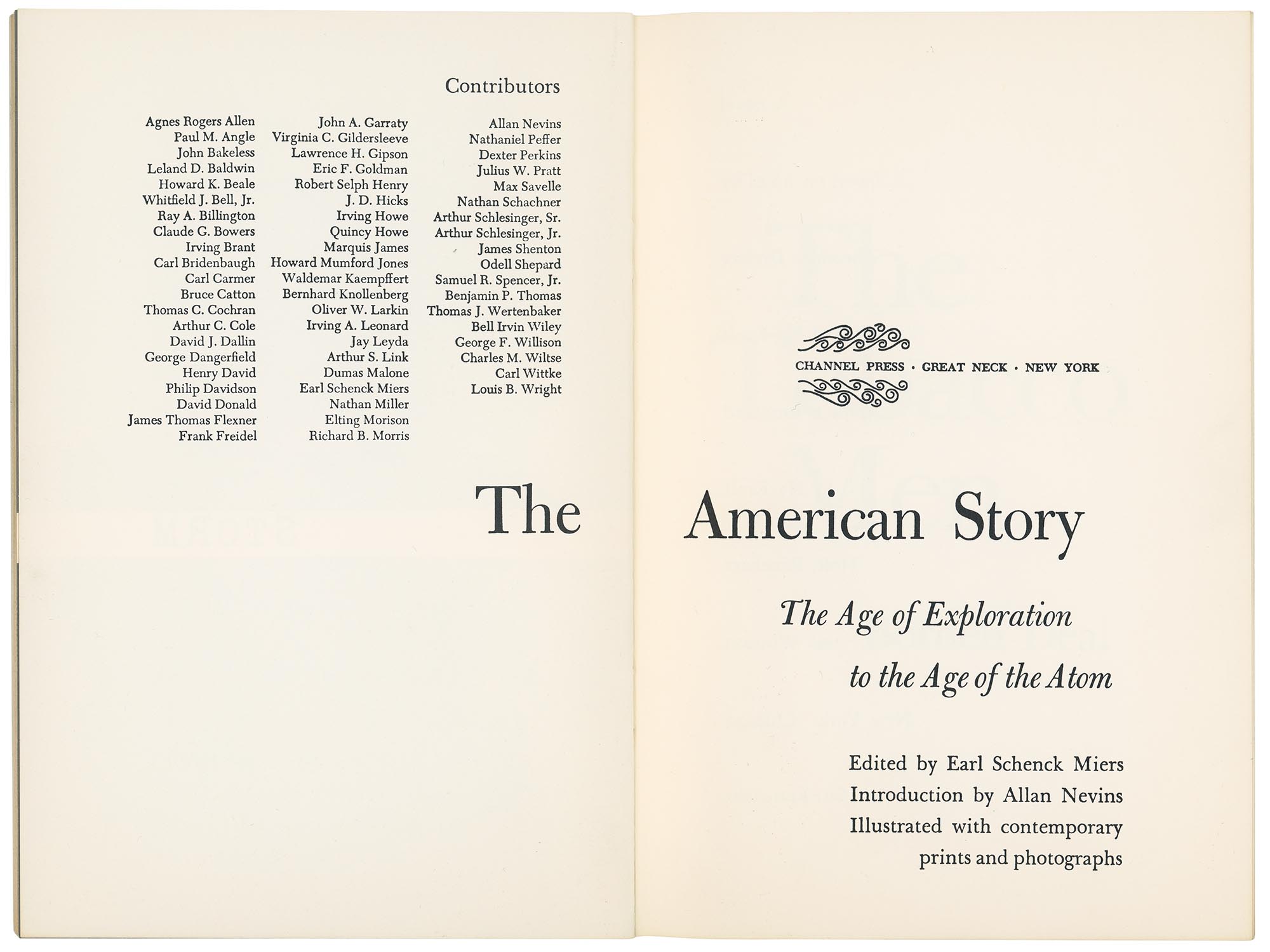
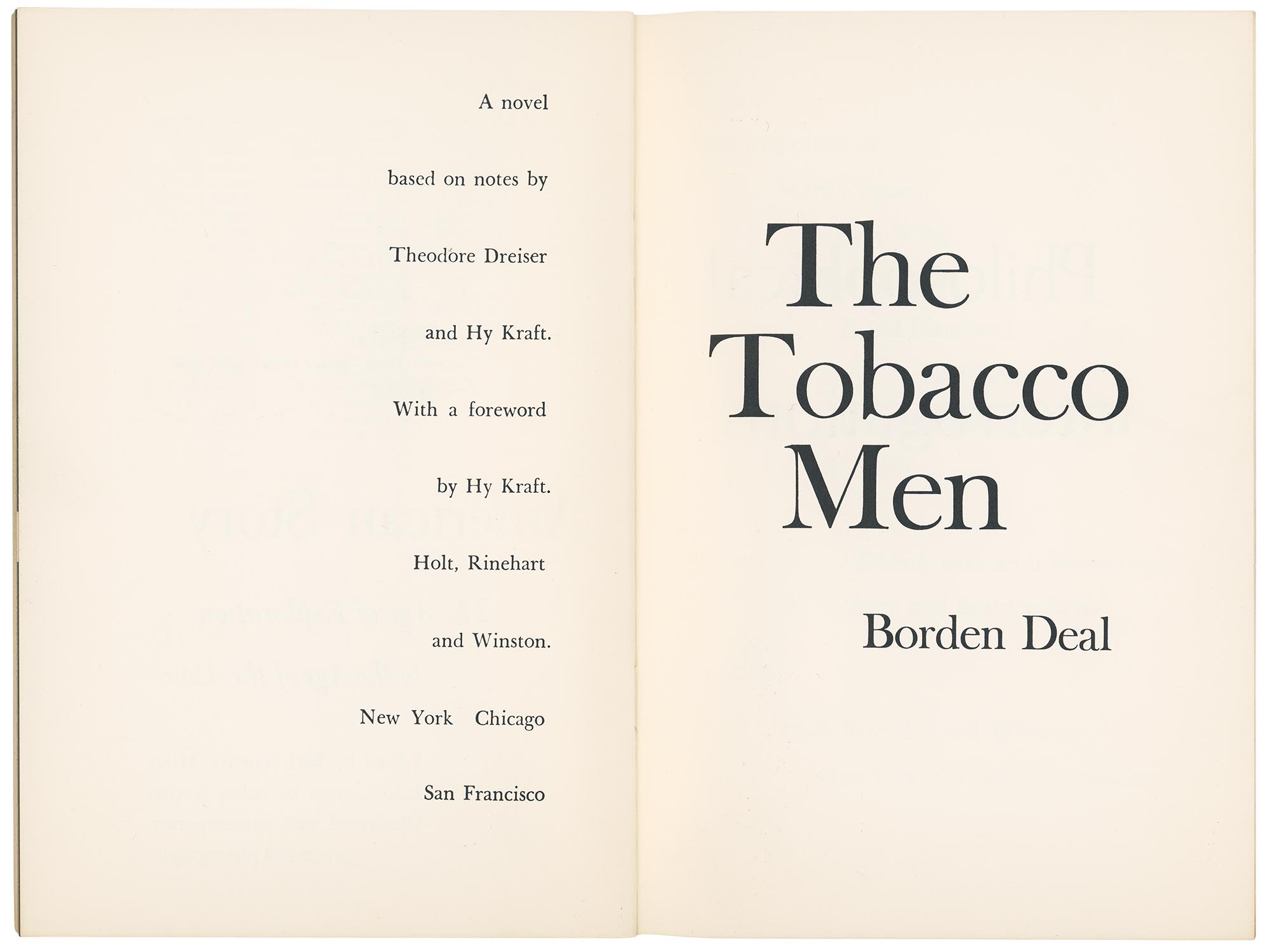
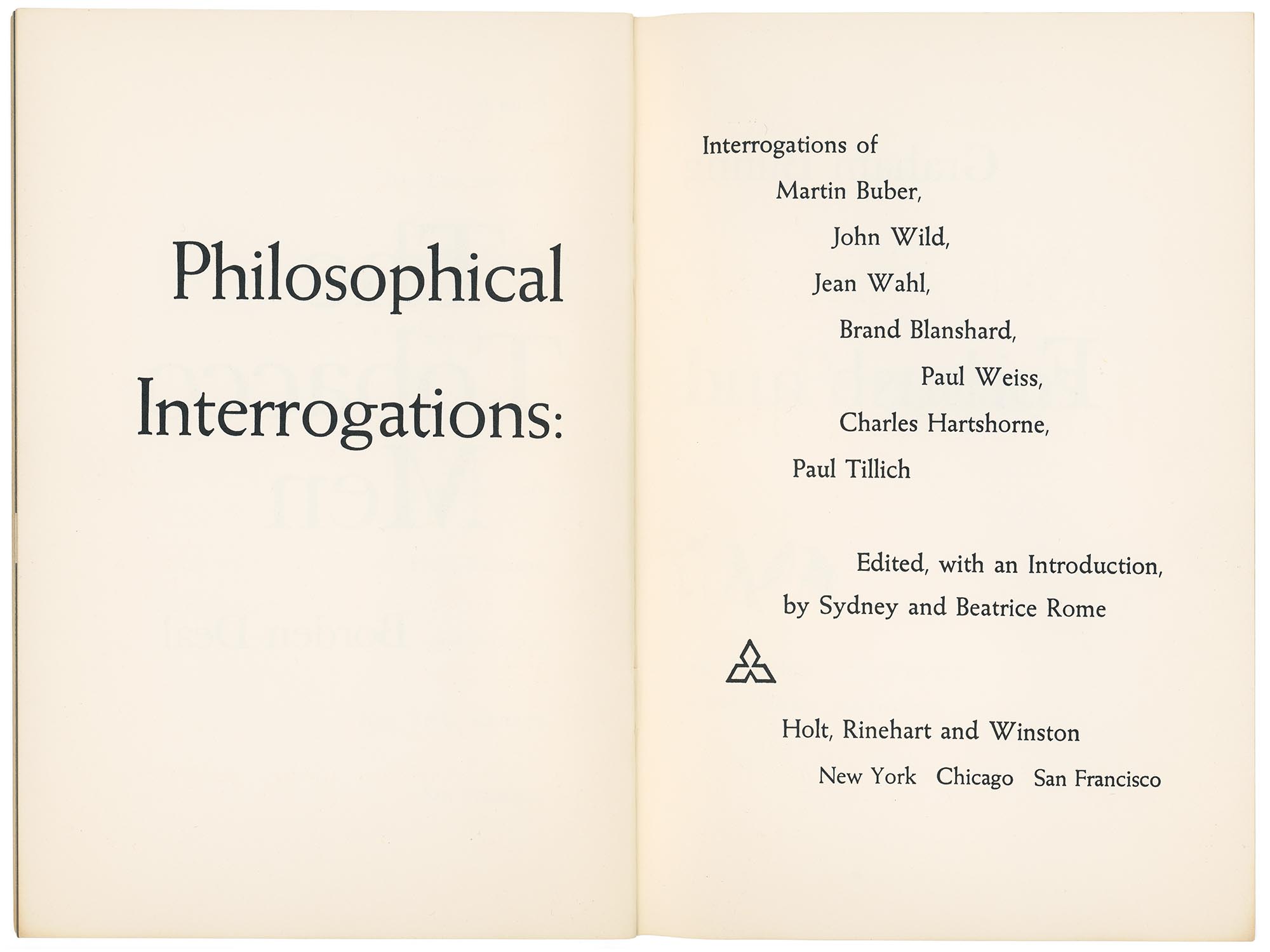
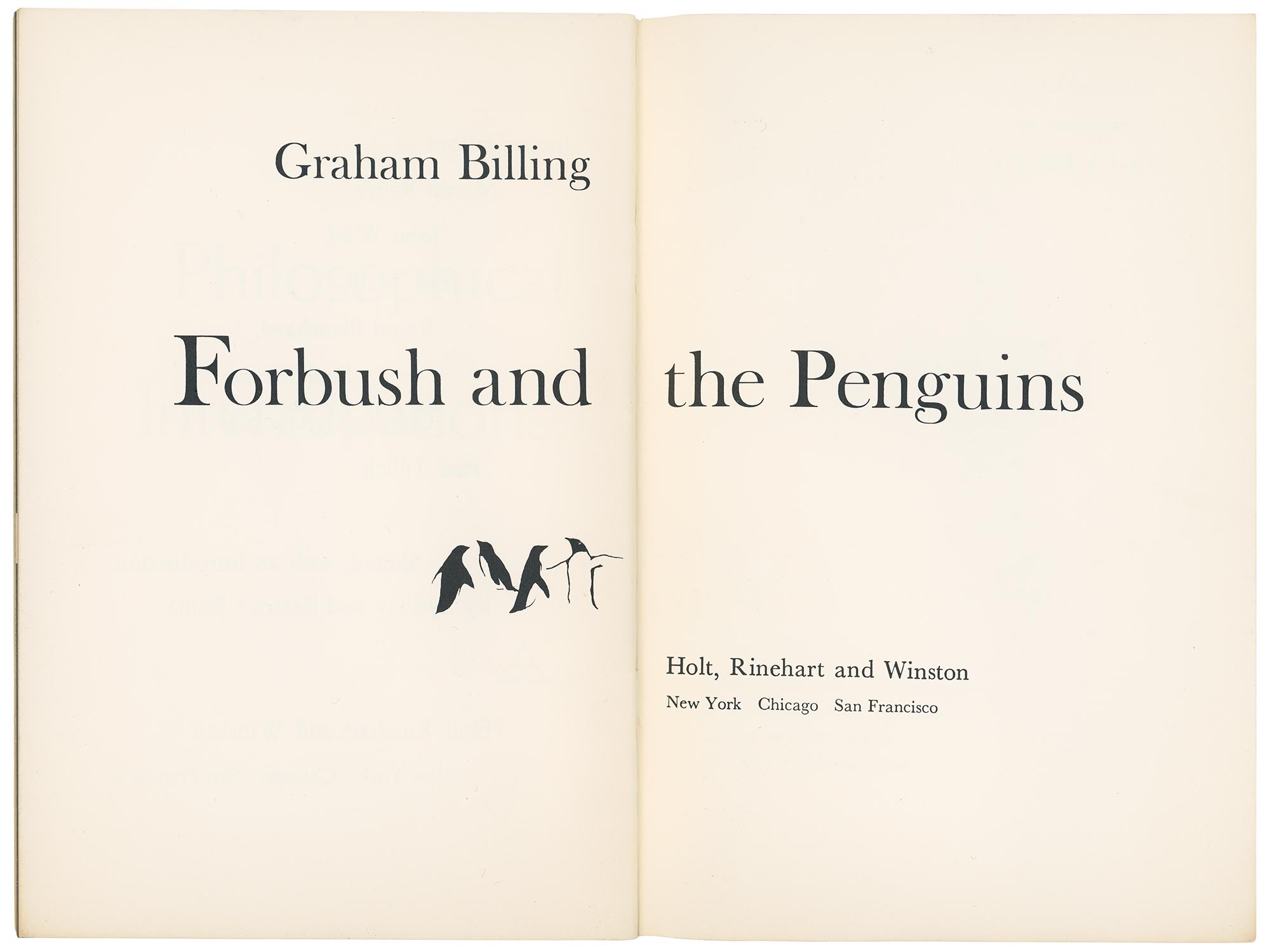
For example, by tradition, the title of a book is on a righ-hand page. But where a pair of pages can be encompassed by one glance, as in a book, this right-hand placement can hardly be called preferred, or significant. With a half title occupying the first page, as is now customary, we open the title spread to a wide entrance into the book, and the whole area may well be considerd one graphic unit.
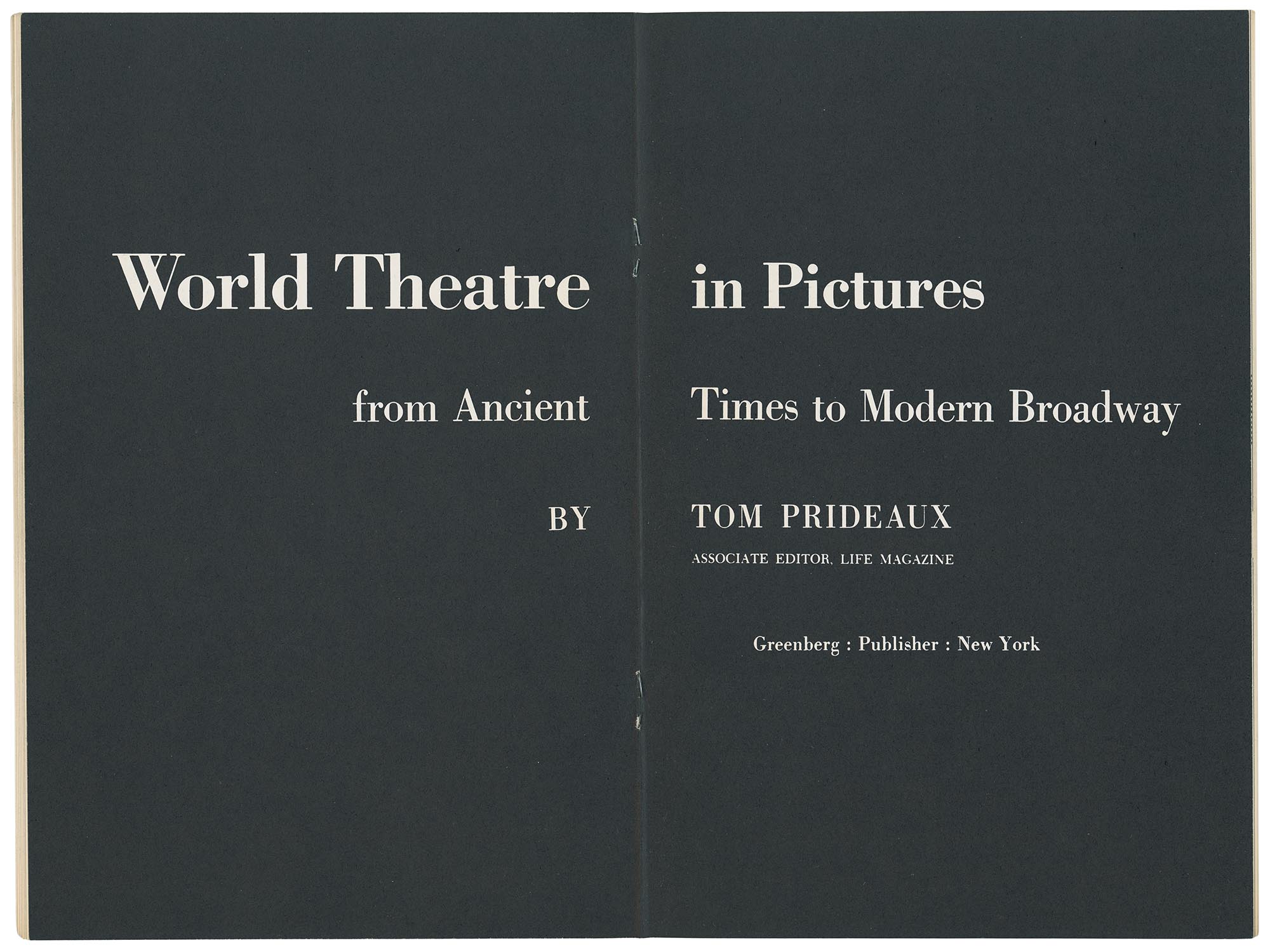
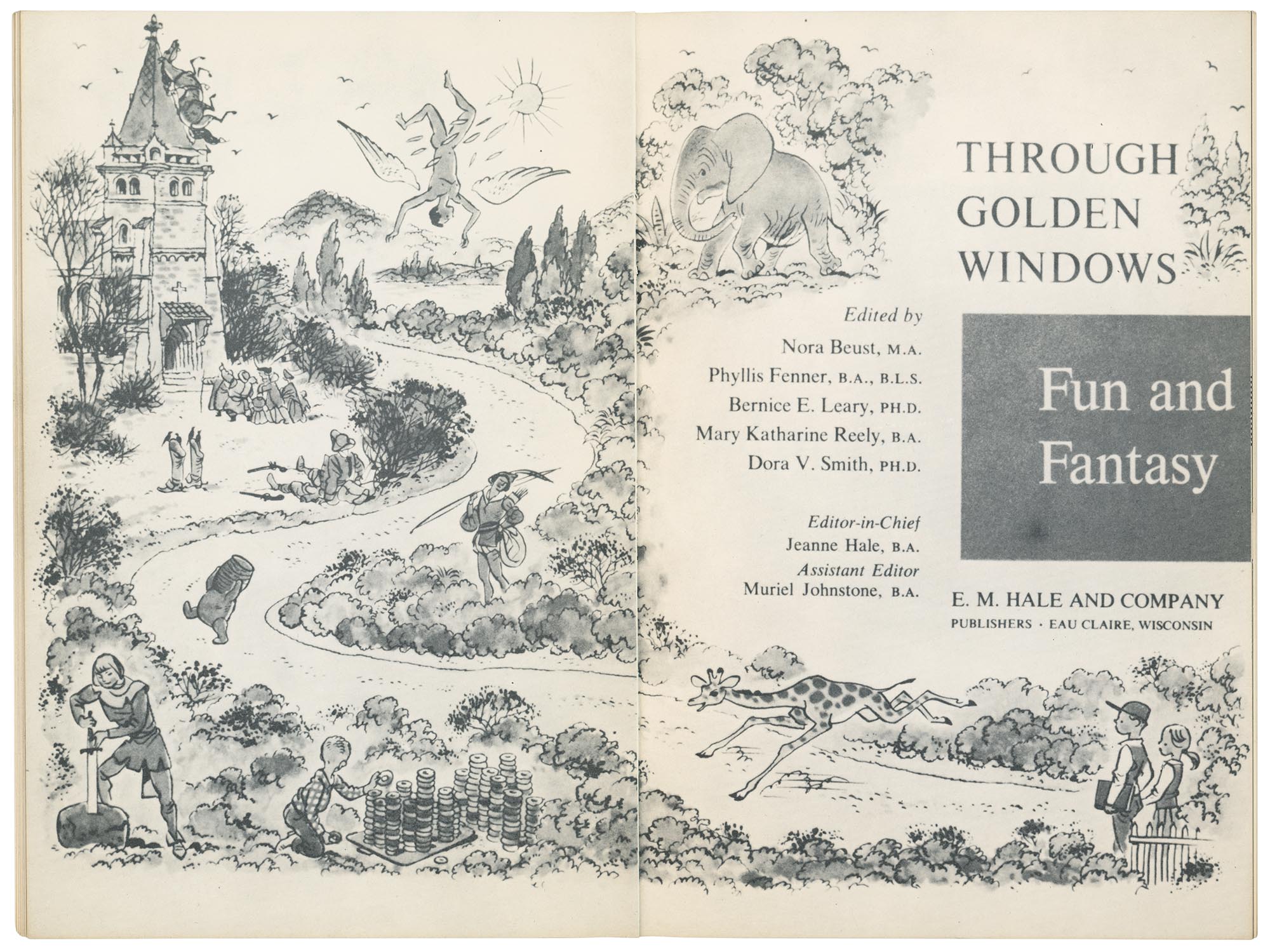
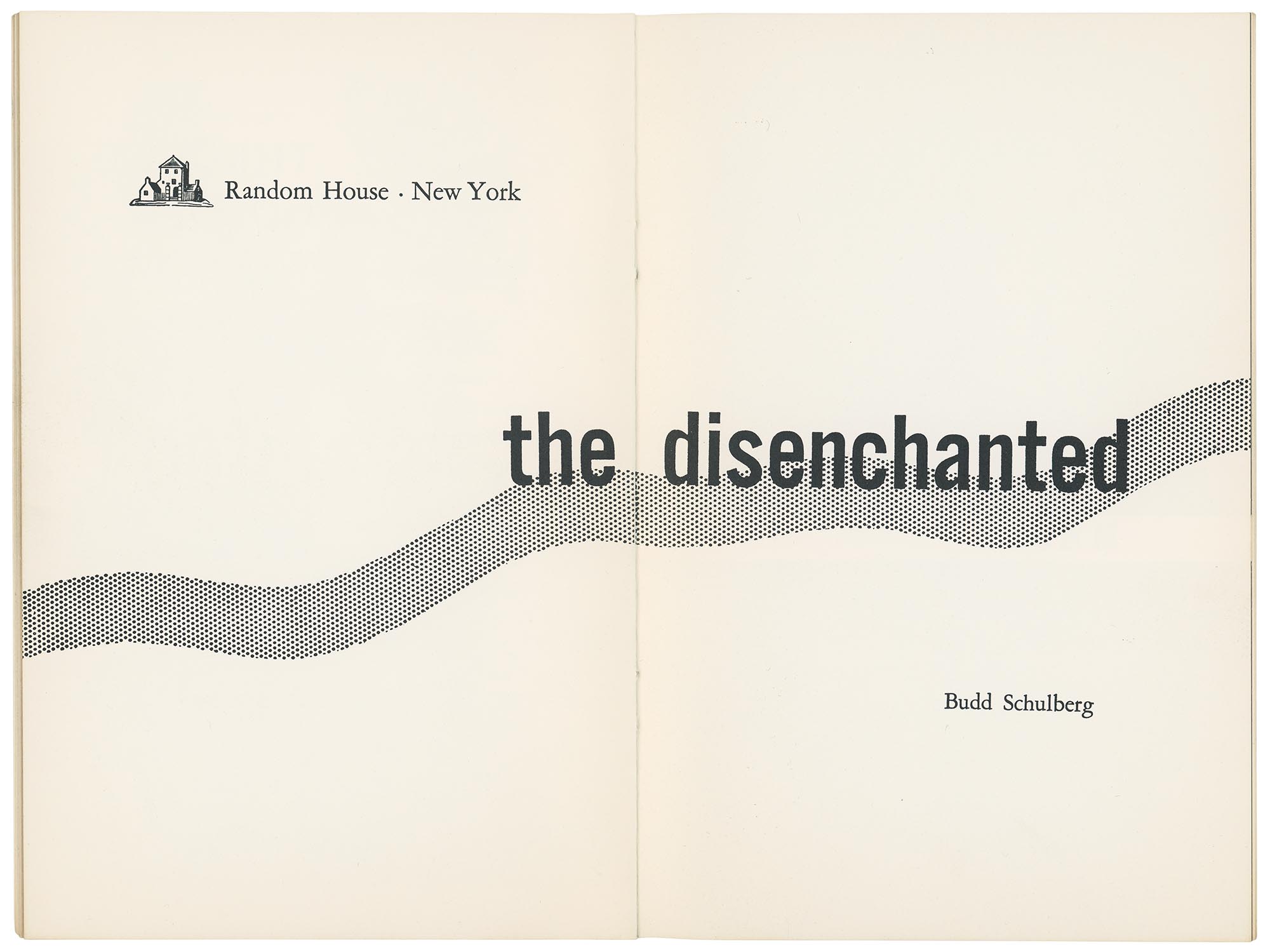
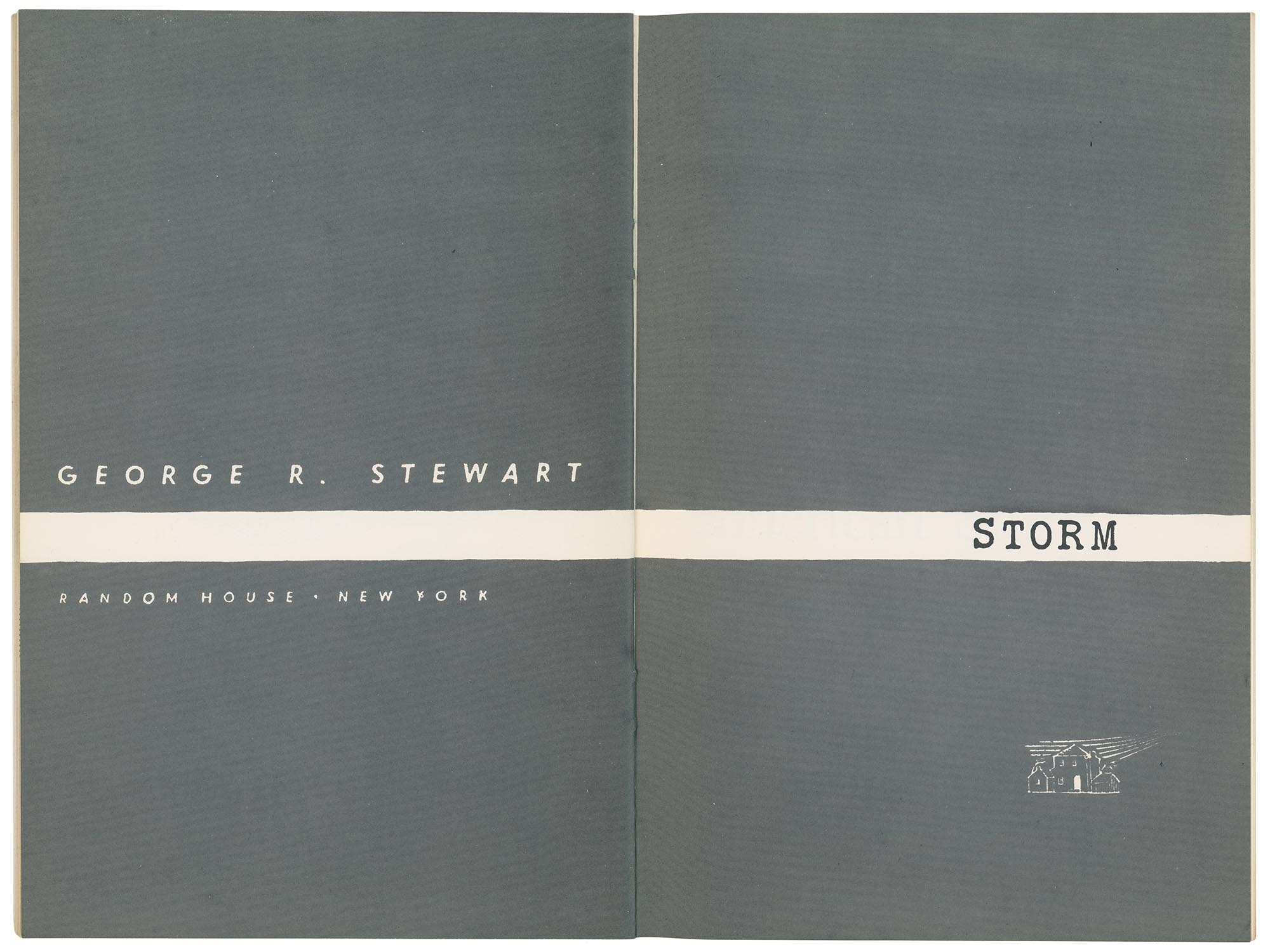
This concept of the title page as a double spread has been developed by Ernst Reichl in many different ways: fifteen examples are shown here.
A keepsake in memory of Paul A. Bennett
Heritage of the Graphic Arts series: Gallery 303
Composition: The Composing Room
Printing: Silver-Laro Press, Inc.
Paper: Capital Paper Company, Inc.
Edward Rondthaler, 1905–2009, typographer, founder of Photo-Lettering, Inc., chairman of the American Literacy Council, proponent of simplified spelling.
Ed Rondthaler’s life-changing moment came at five-years-of-age when his uncle Bob gave him a toy printing press with rubber letters. His parents presented him with a 3 x 5 Kelsey Press (and an assortment of old metal type) for Christmas when he was ten. There was, as they say, no turning back.
After college, Rondthaler moved to New York and began a series of jobs in printing firms, gaining experience in a fantastic array of printing techniques. In 1932 he found his dream machine at the Rutherford Machine Company: a not-quite-successful step and repeat device originally intended to facilitate the printing of elaborate backgrounds for banknotes. Through ingenuity and perseverance, Rondthaler and his colleague Harold Horman developed and perfected a machine that used photographic technology to compose type. After a few years of failing to sell machines to other typesetters, they launched their own typographic service company. Photo-Lettering entered the lexicon. Creating typefaces on film reduced production costs of manufacturing and increased flexibility for clients, who only needed to telephone in specifications in order for expert compositors to set their headlines. It’s impossible to imagine the advertising of this period without Photo-Lettering. Rondthaler went on, with Aaron Burns and Herb Lubalin, to found the International Typeface Corporation in 1970, another dominant force in the industry and one of the world’s first type foundries with no prior connection to metal type casting.
In 1981, Rondthaler published his book, Life with Letters–As They Turned Photogenic (Hastings House, New York). In it, he mentions working with many calligraphers, including Ismar David, Jeanyee Wong, Bob Boyajian and Paul Standard. Photo-Lettering published these David typefaces: Informal, Classic, Inscripta and Siddur.
Volume 2 of Photo-Lettering’s mammoth multi-volume specimen book from 1965, showing some of Ismar David’s designs and the terrifying ways they could be distorted for print.
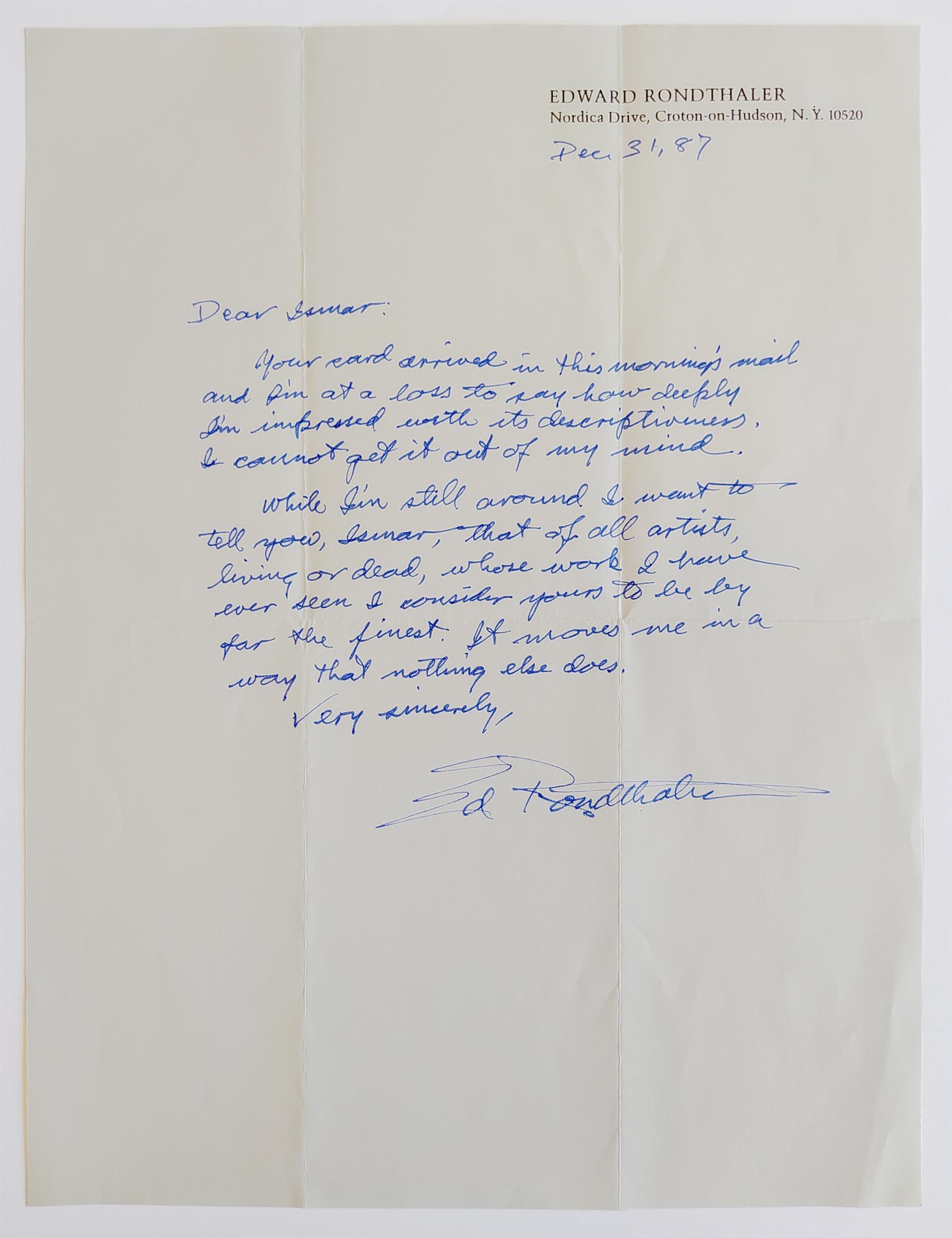
Just before New Year in 1988, Rondthaler sent a note to David. (Note: The 83-year-old Rondthaler still had almost another 21 years ahead of him.)
Dear Ismar:
Your card arrived in this morning’s mail and I’m at a loss to say how deeply I’m impressed with its descriptiveness. I cannot get it out of my mind.
While I’m still around I want to tell you, Ismar, that of all artists living or dead, whose work I have ever seen I consider yours to be by far the finest. It moves me in a way that nothing else does.
Harold Yardlan, 1922–2004, owner of Geyer Studio, a calligraphy studio in New York.
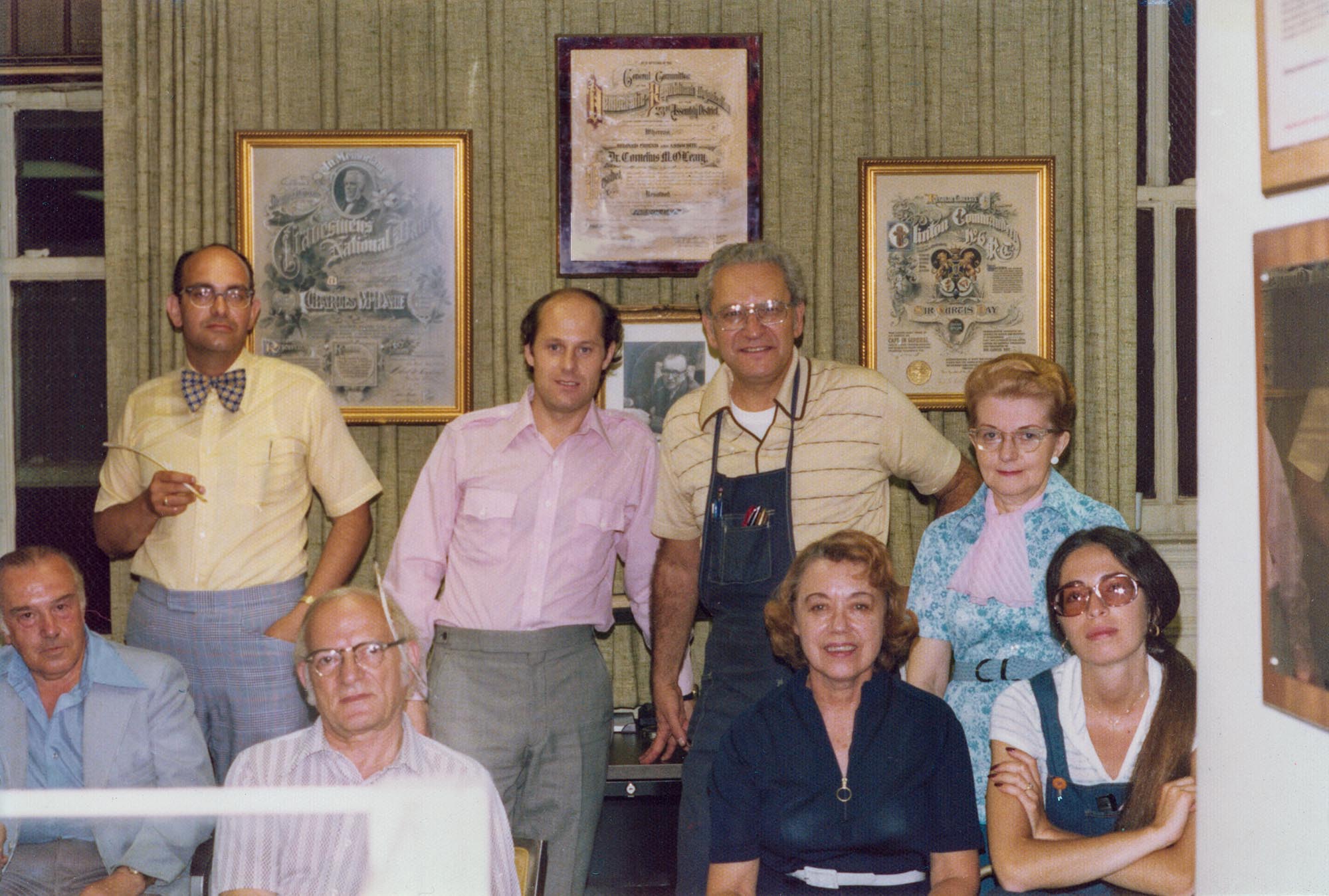
Donald Jackson visiting the Geyer Studio. Jackson and Harold Yardlan, standing in center. Ismar David, Marion Andrews and Estrella Laws, sitting in front.
Harold Yardlan began working for old Mr. Geyer as a young man. As owner of Geyer Studio for more than 50 years, he preserved some of the old engrossing traditions while modernizing towards a modern calligraphic aesthetic. He published Our Calligraphic Heritage in 1979 and, in 1983, produced a 30-minute documentary film on Ismar David’s work. As of today, only a photocopy of the script has survived. This version of the script reveals handwritten edits made by Ismar David. A large portion of the documentary focuses on his work at Pinelawn Memorial Park.
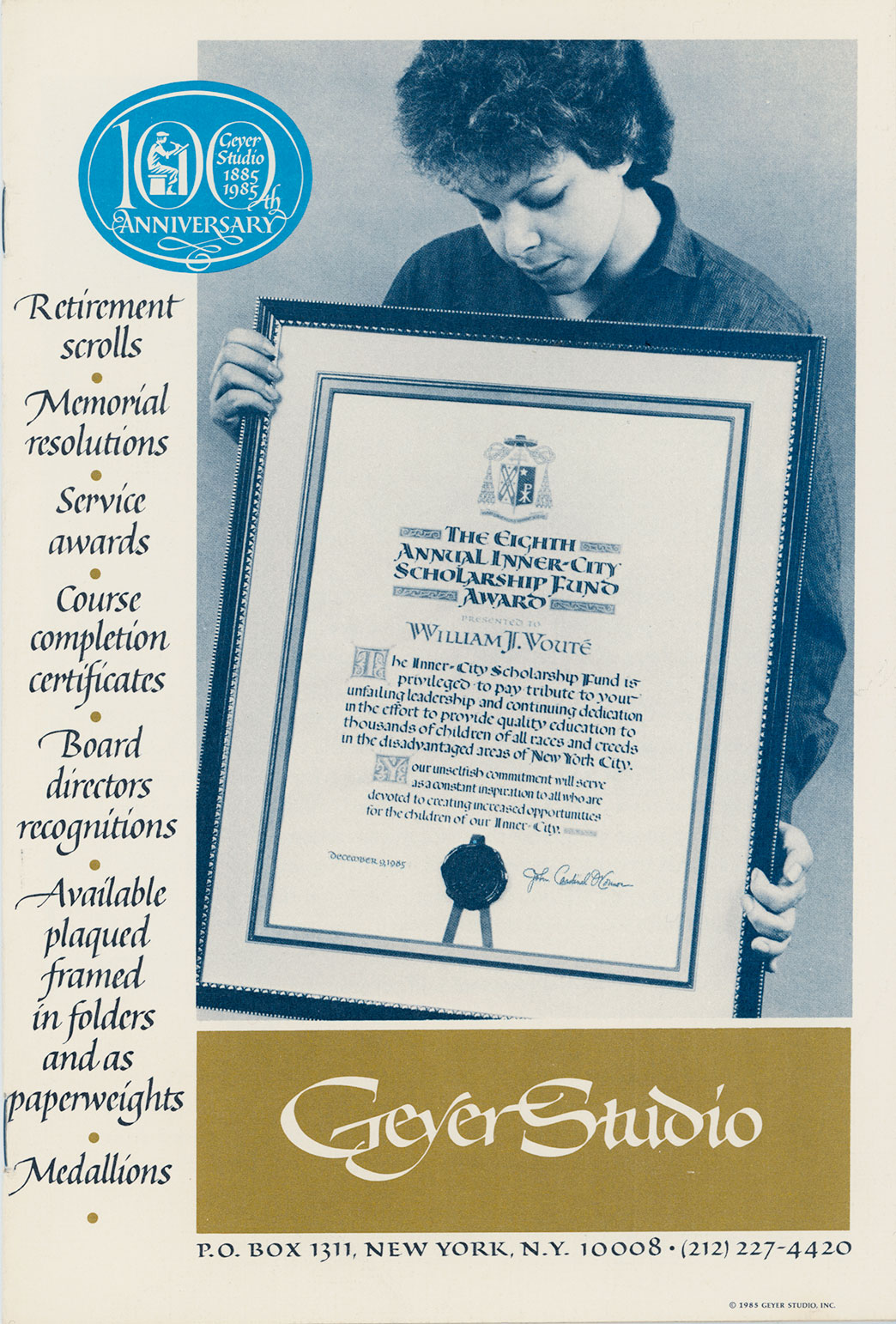
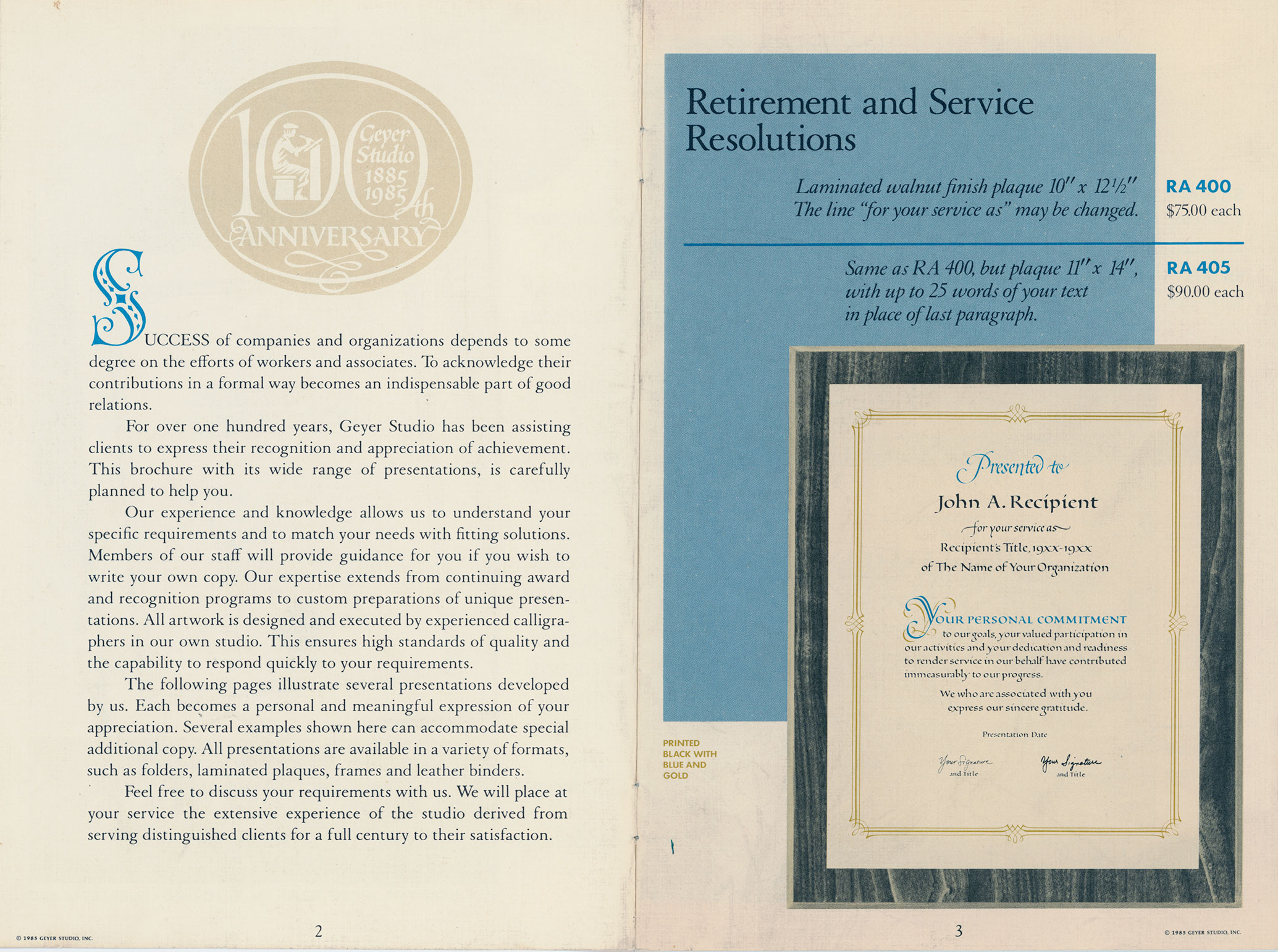
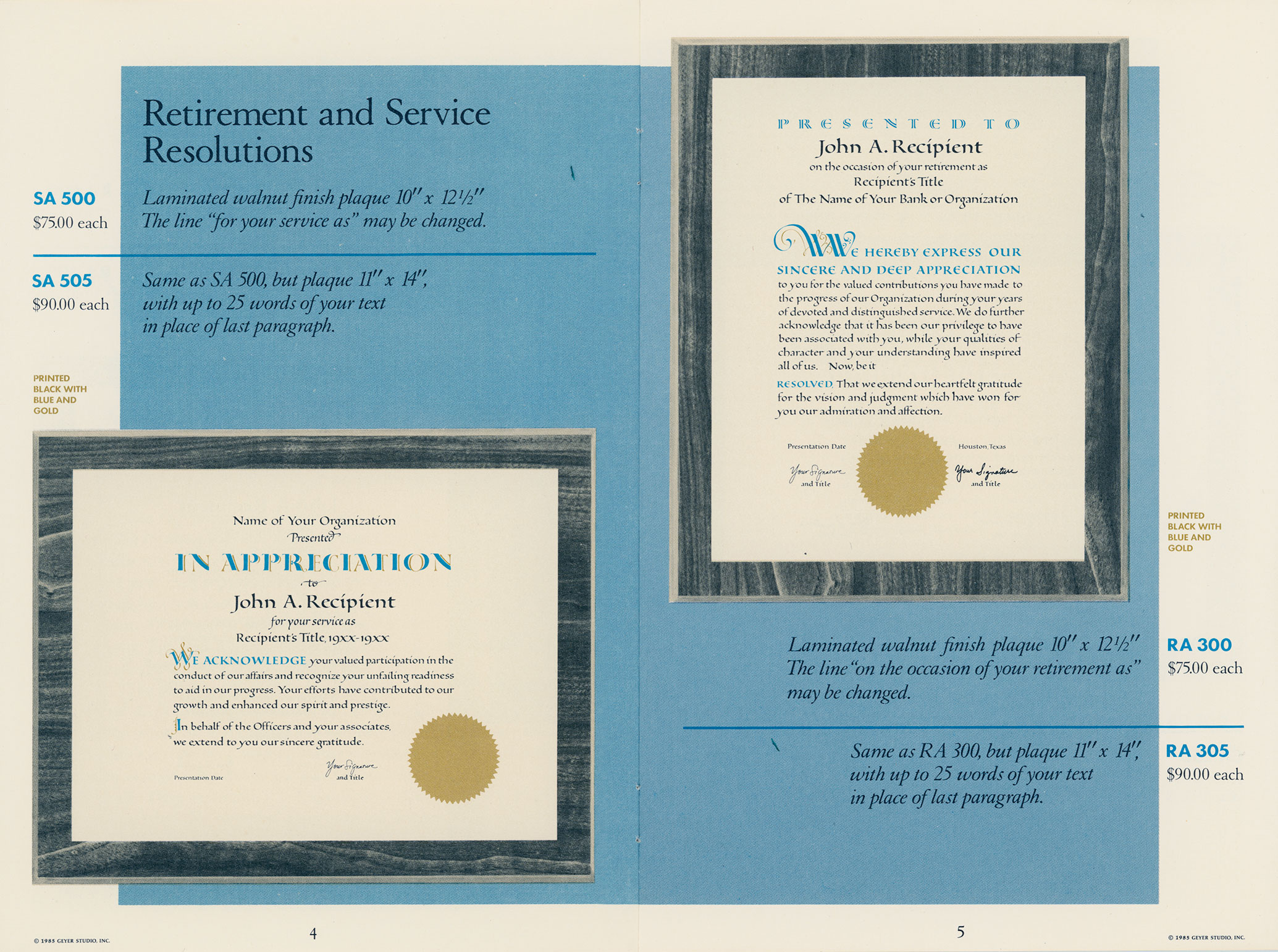
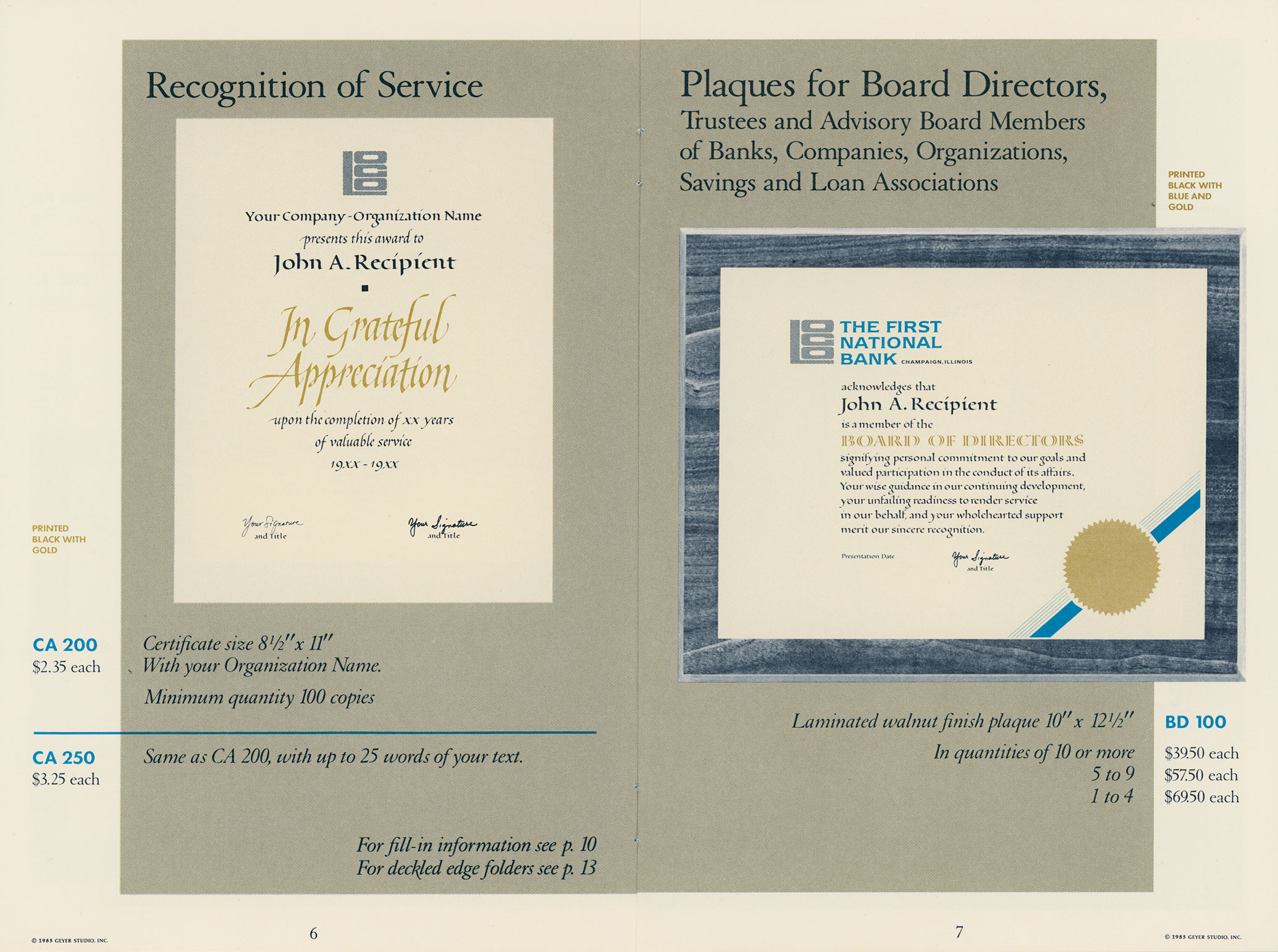
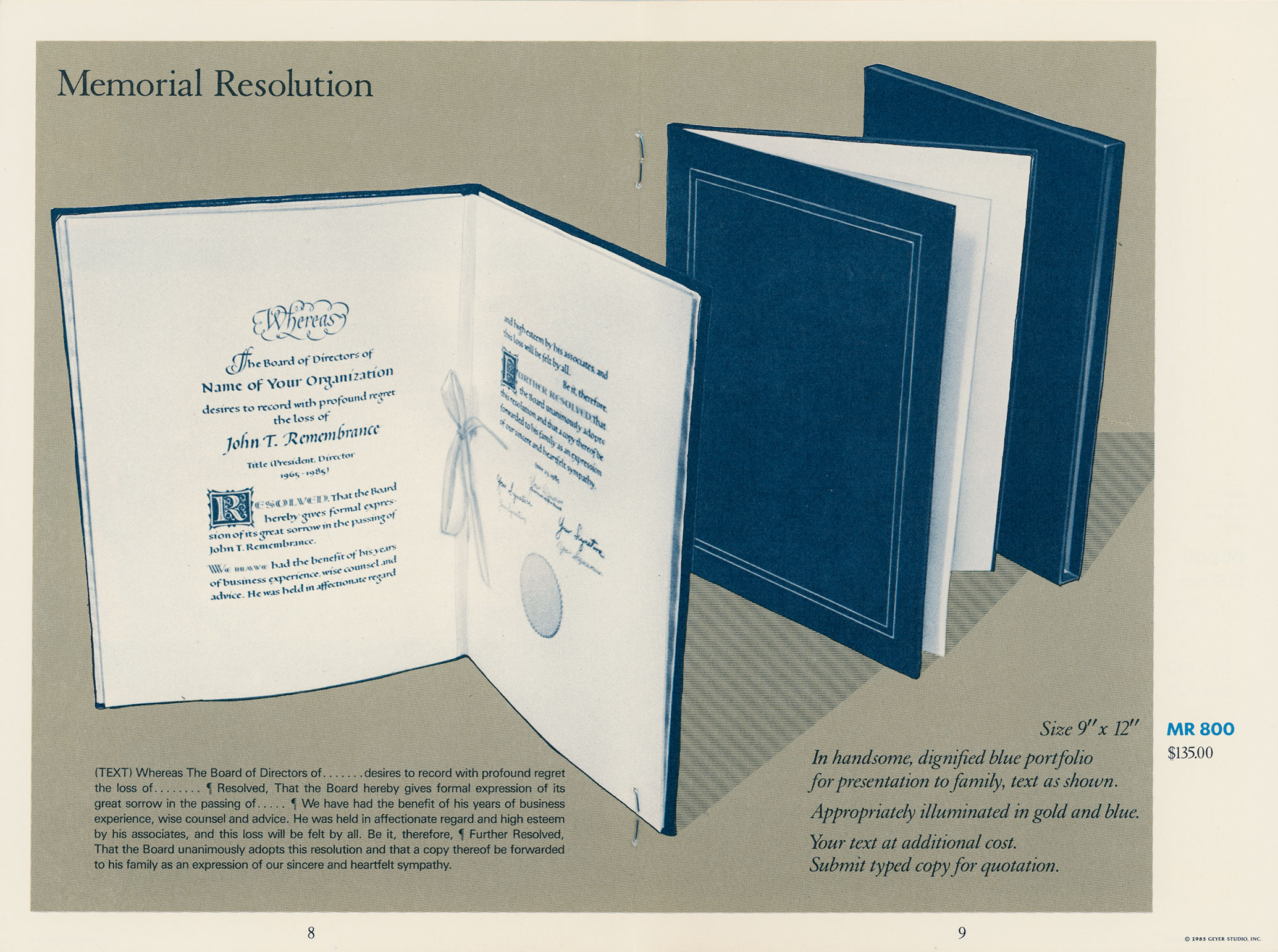
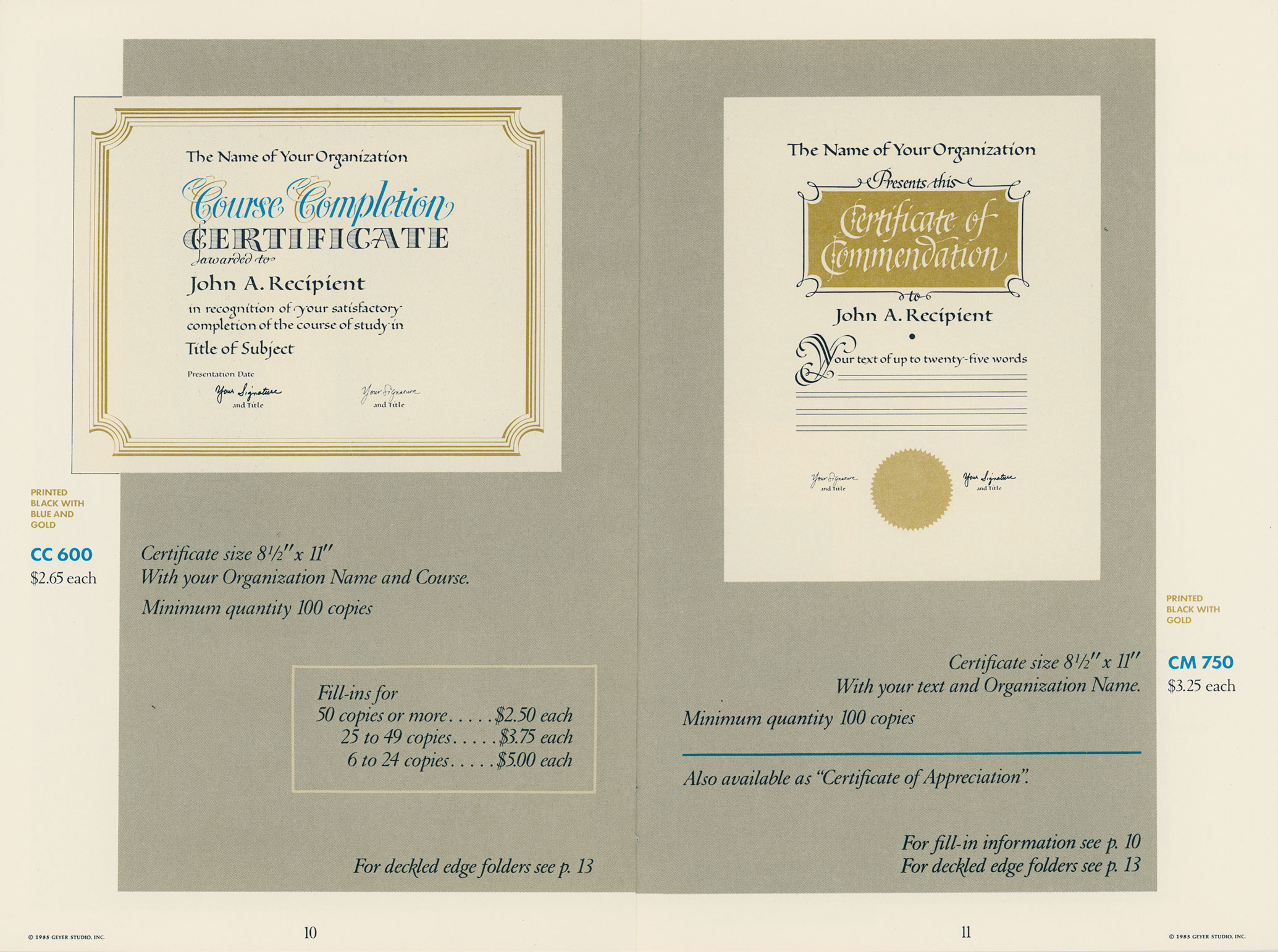
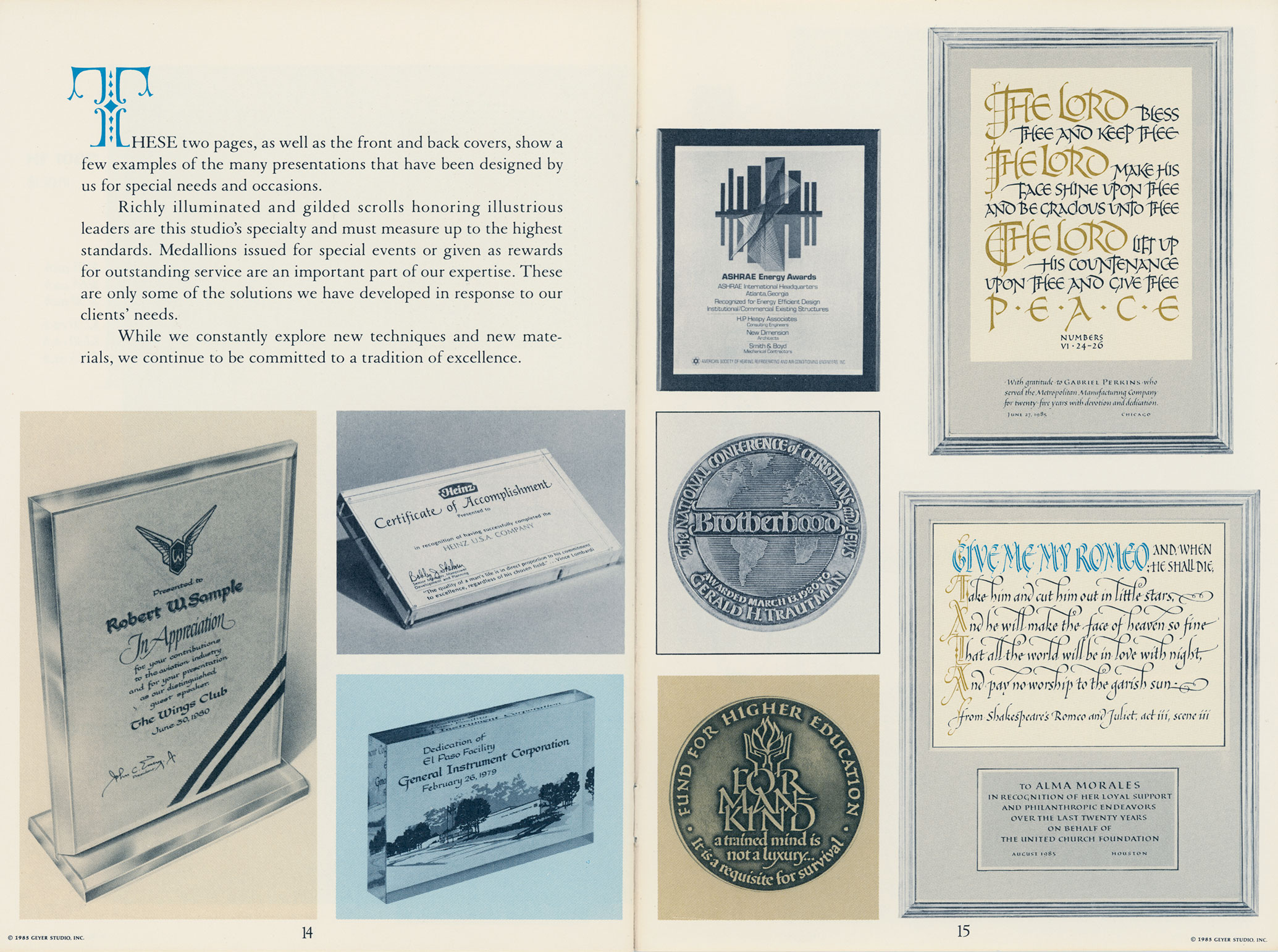
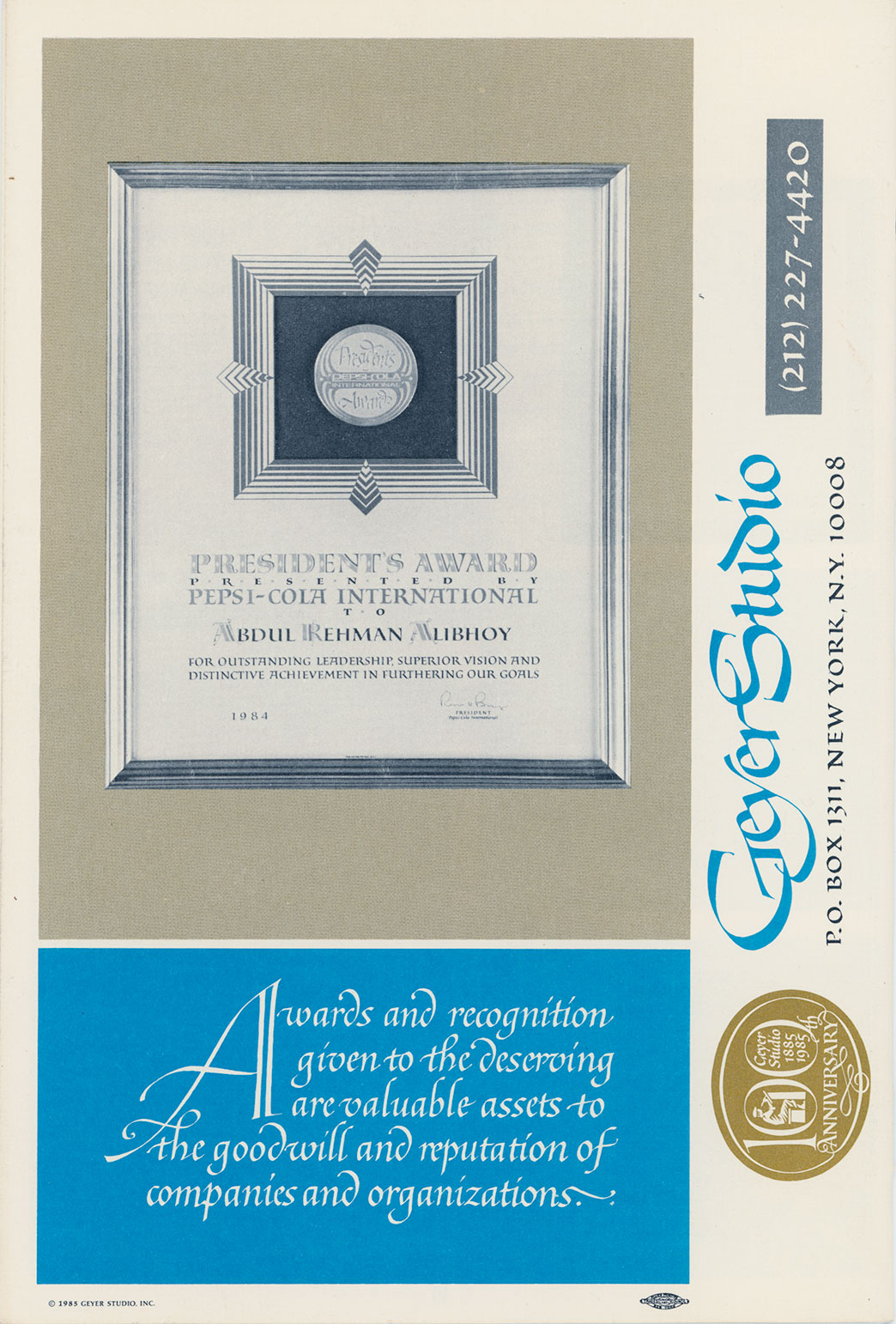
Geyer Studio, a calligraphy studio in New York City, for whom Ismar David consulted , did design work and taught workshops from approximately 1969–1987.
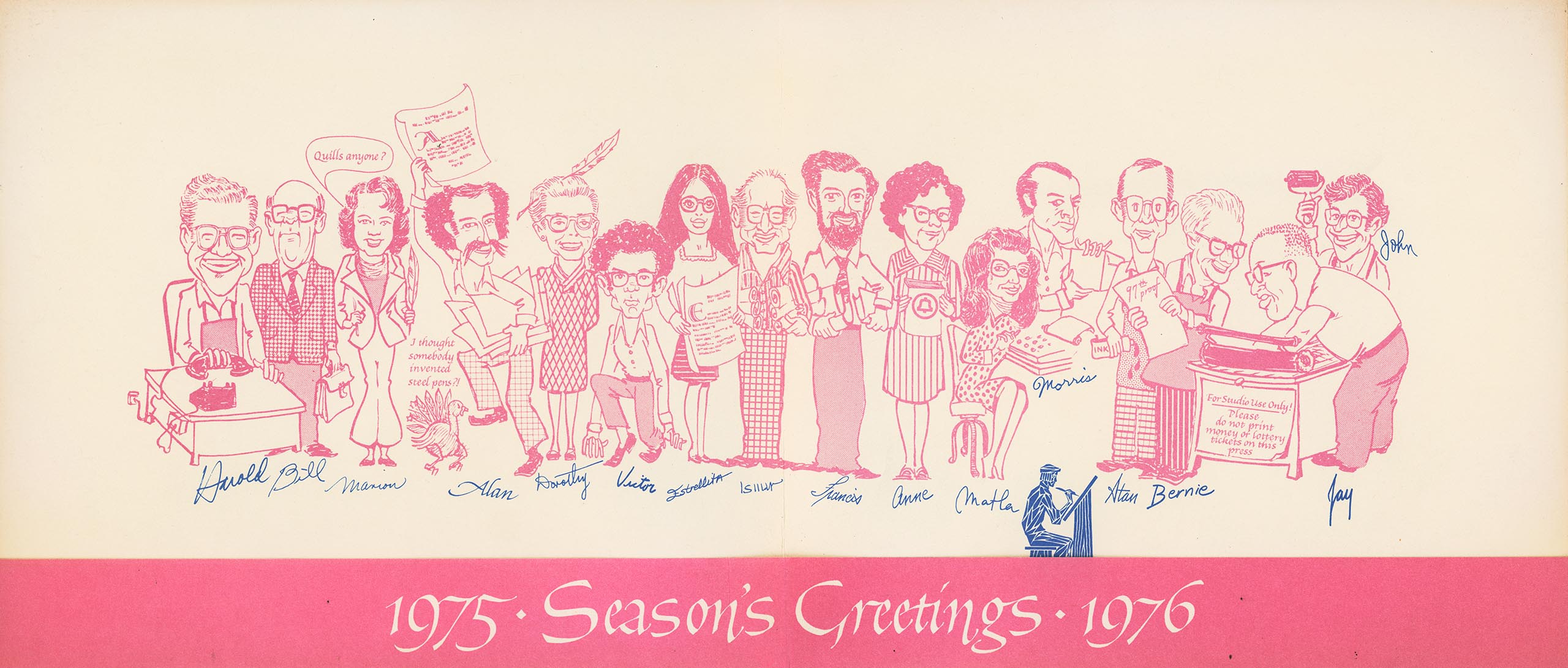
Geyer Studio Greeting Card, 1975/76.
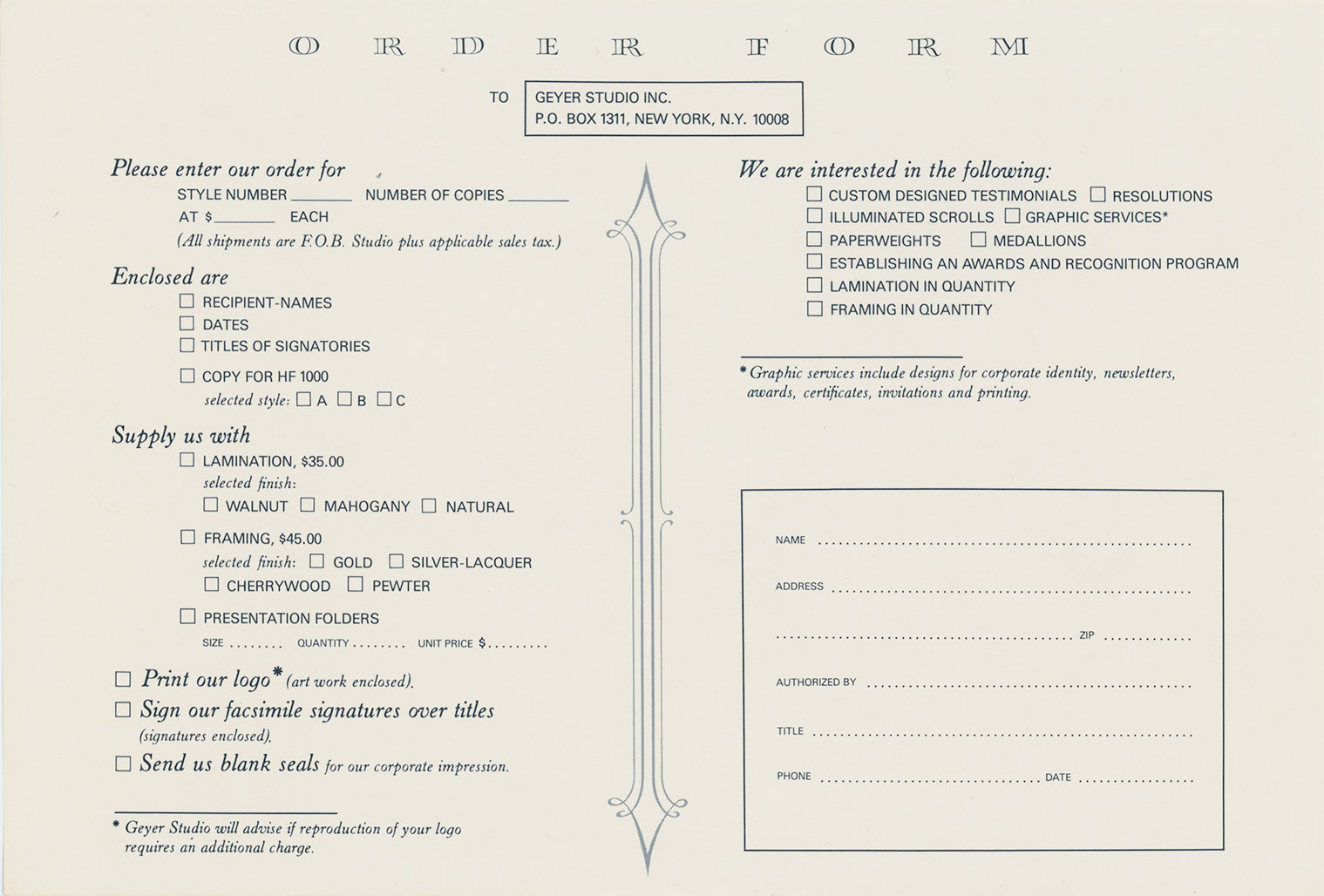
Geyer Studio, one of several calligraphy/engrossing studios in NYC. Another was Malcolm & Hayes. These establishments had been around for a long time. Their bread and butter was producing and filling in the names of certificates of all kinds. They also made individual, one-of-a-kind proclamations and citations. According to Marion Andrews, an engrosser from earlier days and an accomplished watercolorist, old Mr. Geyer used to say, “If you can’t make a living between 9 and 5, you should get out of the business.” Harold Yardlan was the second owner of Geyer Studio. His daughter Stephanie succeeded him.
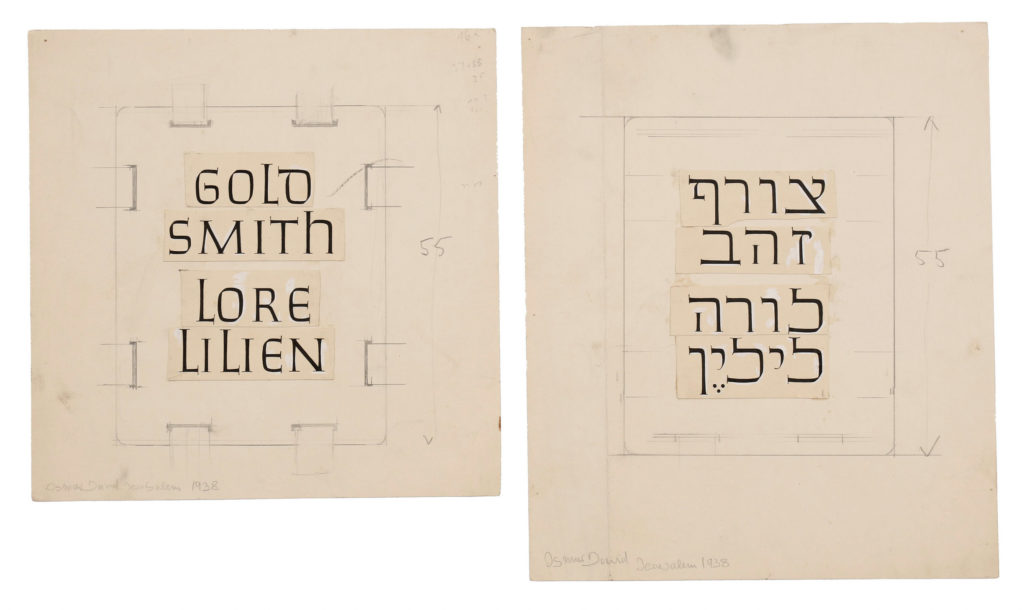
Lore Lilien was married to Otto M. Lilien. The couple emigrated from Berlin to Jerusalem and applied for citizenship in 1939, with their two daughters.
Otto Magnus Jaacob Lilien, 1907–1991, electrical engineer, expert in photogravure, author
Otto Lilien was the son of Ephraim Moses Lilien (1874– 1925) an illustrator and printmaker, particularly noted for his art on Jewish themes and sometimes called the “first Zionist artist.” His wife, Lore Lilien, was a goldsmith. The couple emigrated from Berlin to Jerusalem and applied for citizenship in 1939, with their two daughters.
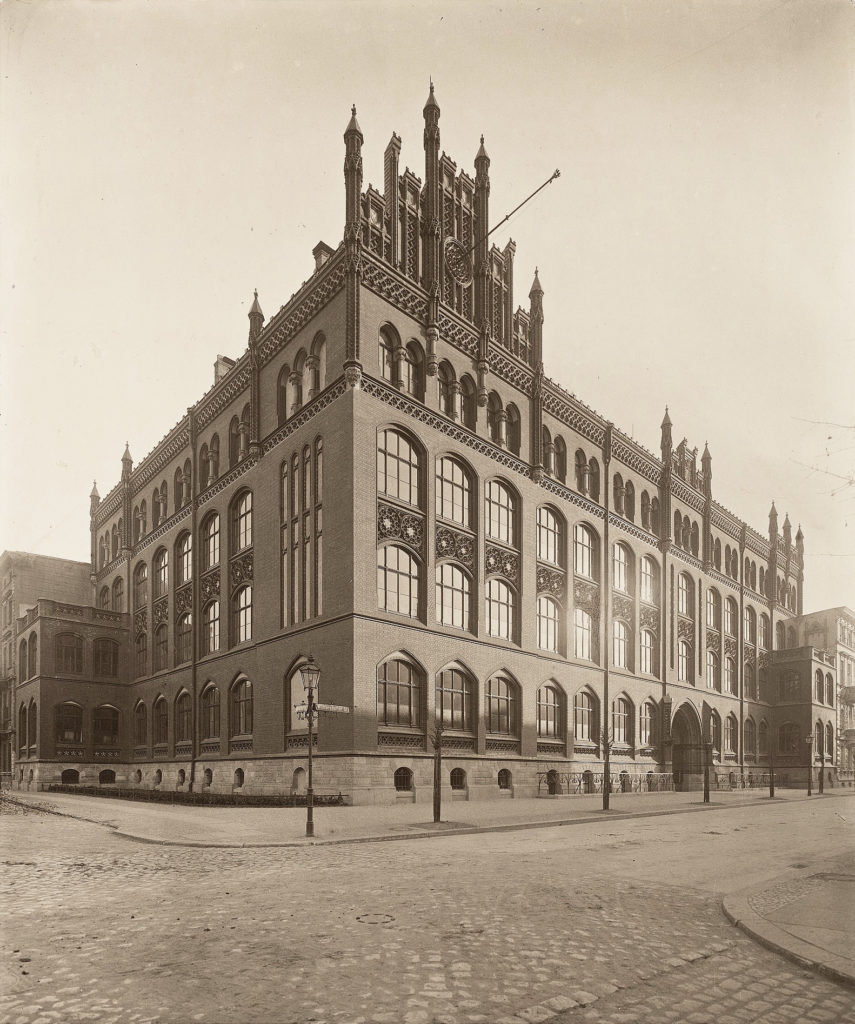
Städtische Kunstgewerbe- und Handwerkerschule Berlin-Charlottenburg, arts & crafts school in Berlin.
Städtische Kunstgewerbe- und Handwerkerschule Berlin-Charlottenburg.
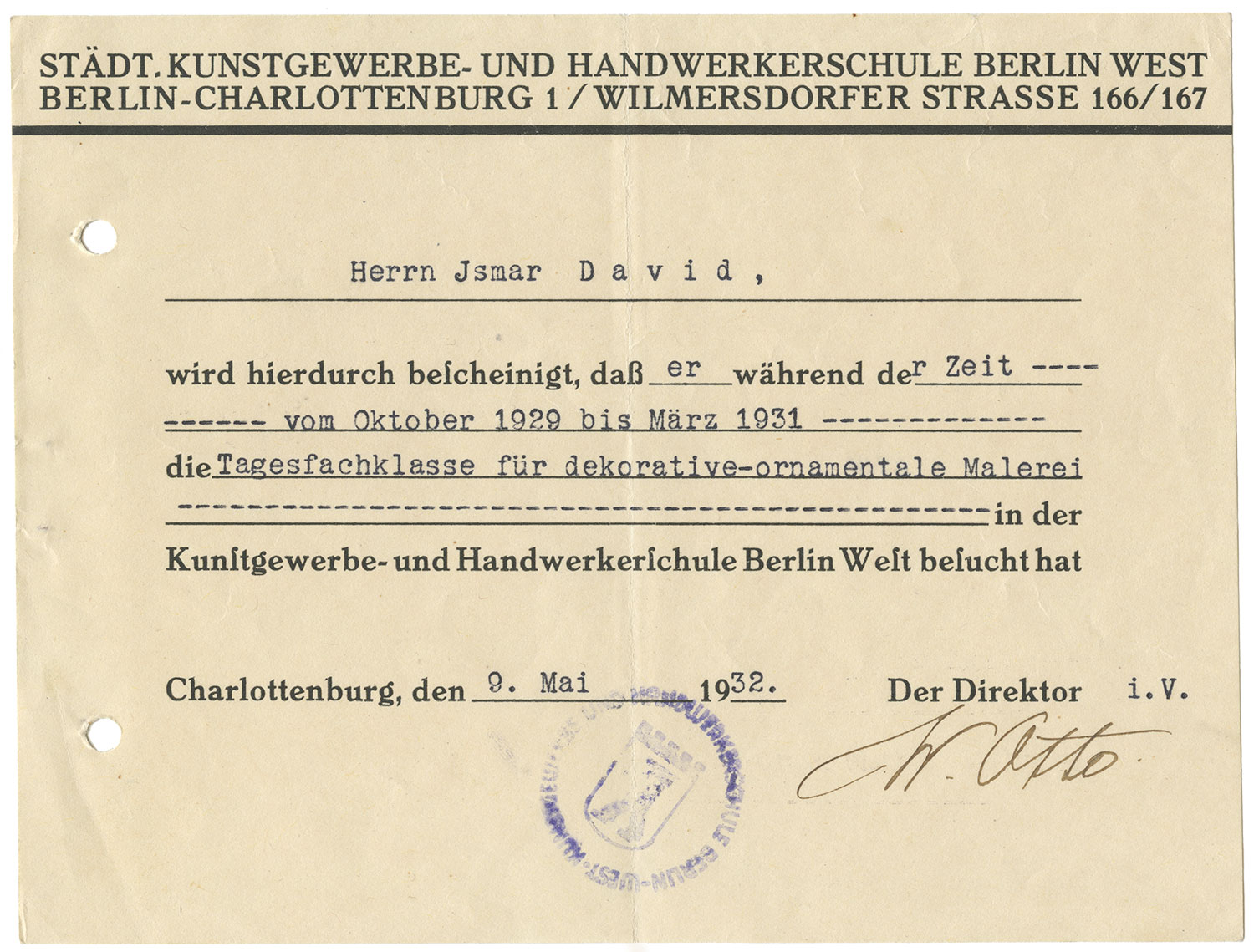
The municipal arts and crafts school in Charlottenburg, Berlin had its beginnings in 1861. The imposing building on Eosanderstrasse was built in 1900. As a result of bombing in 1943, the building and its records burned completely. Ismar David attended the school between 1928 and 1932. His teachers included: Johannes Boehland and Hans Orlowsky.
Ismar David’s certificate from the Städische Kunstgewerbe- und Handwerkerschule Berlin West, Charlottenburg, 1932.
Städtische Handwerker- und Kunstgewerbeschule Breslau, the municipal arts & crafts school in the city of Breslau.
The movement to establish state-funded vocational arts schools in Germany gained traction in the mid nineteenth century with the advent of international expositions and under the influence of British efforts to foster applied art. Many German cities, mostly in the west, founded their own arts and crafts schools. In the large eastern areas of the country, only a handful were initiated, with provincial capital Breslau home to two of them, the Staatliche Akademie für Kunst und Kunstgewerbe and the Städtische Handwerker- und Kunstgewerbeschule.
Ismar David attended the latter, the Municipal Arts and Crafts School of Breslau from the fall of 1927 through the spring of 1928, at the end of his apprenticeship and before he left his hometown for Berlin. The school was still struggling to emerge from the massive trauma inflicted by the aftermath of the First World War and disastrous hyperinflation. Long time director and professor Richard Heyer had retired in 1925 after twenty-five years service and the relatively new administration faced dilapidated and woefully inadequate accommodations for just about everything. (In 1929, the student body would still derisively call their Mardi Gras festivities, “Fest der Hinterhäusler,” which might be roughly translated to Slum Dwellers Celebration.”)1 Städtische Handwerker- und Kunstgewerbeschule Breslau: Bericht 1926, 1927, 1928 der Handwerker- und Kunstgewerbeschule Breslau, p. 8 Under the new director, architect Gustav Wolf, the school developed an extensive renovation plan that included support for a needy student population. In further recognition of the economic austerity of the era, the ethos of the school became “to still make necessities enjoyable, but to net clear effects with low expenditure of power and materials. … Making expensive things for the refined tastes of a small circle of connoisseurs isn’t paramount. Rather, we try to make useful things that most people need in their daily lives.”2 Städtische Handwerker- und Kunstgewerbeschule Breslau: Bericht 1926, 1927, 1928 der Handwerker- und Kunstgewerbeschule Breslau, p. 8
As its name implies the school received significant support from city authorities, with Silesian professional organizations contributing financially as well as administratively. This leadership saw the institution’s role as defending the cultural integrity of geographically isolated Silesia against absorption by a greater Germany and promoting Silesian arts and crafts, while offering the best possible training for the school’s mostly Silesian student body. Work experience was a general prerequisite for students, and the faculty were all active professionals in their respective fields. The multi-disciplinary institution vigorously cultivated cooperation among the various disciplines it offered: interior construction; applied sculpture, painting and graphics; metal work; glass decoration; porcelain painting; ceramics; book arts; tailoring, dressmaking and theater set construction; with each department having its own workshop or extensive series of workshops. (The book arts department alone had workshops in lithography, photochemical plate-making, hand and mechanical typesetting, letterpress and copperplate printing and bookbinding.)
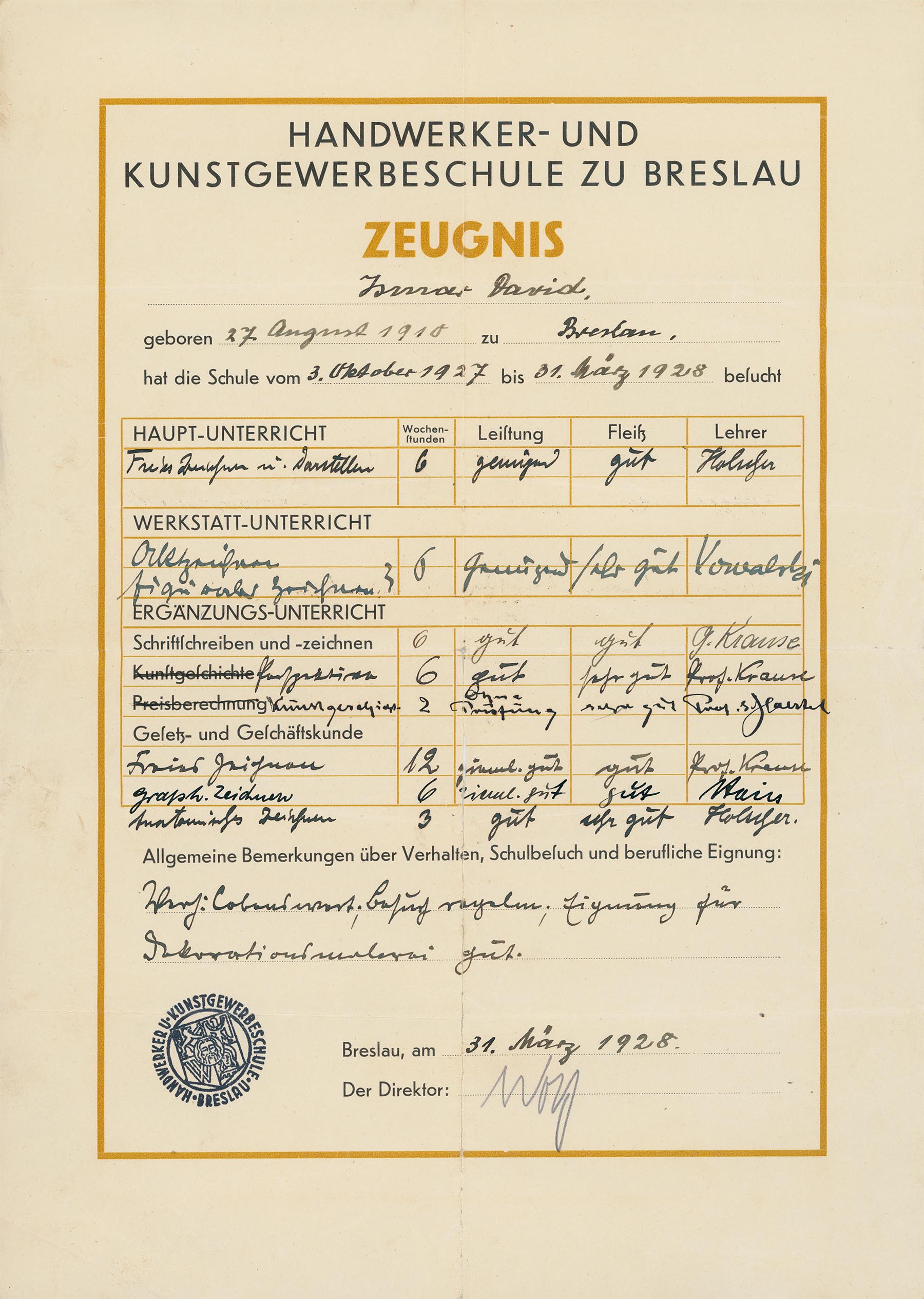
All of Ismar David’s classes, however, came under the heading of general instruction. According to his certificate-cum-report card, Ismar David attended classes for exactly 6 months, with a total of 47 hours of classes per week—which accords with the normal schedule for a full-time attendee in a crafts school in those days (48 hours per week).3 Städtische Handwerker- und Kunstgewerbeschule Breslau: Bericht 1926, 1927, 1928 der Handwerker- und Kunstgewerbeschule Breslau, p. 4 His choice of classes reflected his need to remediate his drawing skills: freehand drawing and representation (Hermann Holscher), nude model/figurative drawing (Ludwig Peter Kowalski), Freehand drawing (Georg Krause), drawing for commercial graphics (Gerhard Stein), anatomic drawing (Holscher), calligraphy and letter drawing (Krause). He had 2 hours a week of art history (Siegfried Haertel) and 6 per week calculating charges (Krause) as well. His teachers all deemed his work “sufficient” to “good” and his conduct “praiseworthy.” They affirmed his suitability for decorative painting. He was ready for his next step, the Municipal Arts and Crafts School Charlottenburg in Berlin.
Certificate from the Handwerker- und Kunstgewerbeschule zu Breslau.
MAIN INSTRUCTION
Week-hours
Grade
Effort
Teacher
Free drawing and representation
6
sufficient
good
Holscher
STUDIO INSTRUCTION
Nude model Figurative drawing
6
sufficient
Very good
Kowalski
SUPPLEMENTARY INSTRUCTION
Calligraphy and letter drawing
6
good
good
G. Krause
Calculating charges
6
good
Very good
Prof. Krause
Art history
2
Without exam
Very good
Prof. Haertel
Law and business administration
Free drawing
12
Suffiently good
good
Prof. Krause
Graphic drawing
6
Rather good
good
Stein
Anatomic drawing
3
good
Very good
Holscher
General remarks about conduct, attendance and professional suitability: Conduct: commendable, regular attendance; suitability for decorative painting: good